

Everything Apple announced at its September event: iPhone Duo, iPhone 18 Pro, new Apple Watches, and AirPods 5
[post_content]
Disclaimer: This article has been automatically aggregated from
The “Surprise and Shine” September launch event was one of Apple’s crispest, most elaborate, and most loaded launch events in a while. Instead of leaving the minute details in the spec sheet or fine print, Apple actually included them in its keynote presentation, not just for its big reveal but for all the devices it unveiled on September 9, 2026.
While the ‘Surprise’ bit was covered by the new iPhone Duo, ‘Shine’ probably refers to the new colors in the iPhone 18 Pro lineup. Beyond these, Apple also announced two new Apple Watches and a refresh for the regular AirPods (not the Pro ones). Given that there’s a lot of ground to cover, here’s everything Apple announced at its September 2026 event.
Apple September event at a glance
| Product | Starting Price | Standout Feature | Pre-order / Availability |
| iPhone Duo | $1,999 | First foldable iPhone; 7.6-inch inner display | October 16 / October 23 |
| iPhone 18 Pro | $1,199 | Variable aperture camera | September 12 / September 18 |
| iPhone 18 Pro Max | $1,299 | Largest iPhone battery gain ever | September 12 / September 18 |
| Apple Watch Series 12 | $399 | New Health Sensing System | Today / September 18 |
| Apple Watch Ultra 4 | $799 | Up to 50-hour battery life | Today / September 18 |
| AirPods 5 | $129 ($149 w/ wireless case) | ANC on Apple’s cheapest AirPods | Today / September 18 |

iPhone Duo; Apple’s first foldable with split-screen multitasking
Apple finally has a foldable iPhone in its portfolio, and it’s called the iPhone Duo. With a form factor similar to the Galaxy Z Fold 8, the phone features titanium frames sandwiched between a Ceramic Shield back, a Ceramic Shield 2 front, and an IP68 rating. Speaking of the frame, the Duo is Apple’s thinnest iPhone when measured unfolded (5.2 mm vs. 5.6 mm on the iPhone Air).
When closed, it’s a 5.4-inch slab roughly the size of a passport. Unfold it, and it reveals a 7.6-inch, iPad-like screen better suited to landscape content than tall-body foldables like the Fold 8 Ultra and Pixel 11 Pro Fold. Both the screens are compatible with Apple’s USB-C Apple Pencil.
Both panels use Super Retina XDR tech (Apple’s way of saying sharp OLED panels) with ProMotion (120Hz refresh rate with LTPO), always-on display support, and a nano-texture coating to cut down on glare (on the inner screen).
Under the Duo’s shiny hood sits the A20 Pro (2nm) chip and a custom vapor chamber, and together they deliver up to 40% better sustained performance than the A19 Pro (3nm). At the same time, the 2nm processing node makes the new chip much more efficient.
Despite having more computational power than the Snapdragon 8 Elite Gen 5 for Galaxy chipset on the Galaxy Z Fold 8, the iPhone Duo matches its rated wireless video playback duration at 26 hours. And yes, the foldable also supports MagSafe charging. Out of the box, Apple’s foldable runs iOS 27 with side-mounted navigation and true split-screen multitasking.
Camera-wise, Duo runs a 48MP Fusion Main sensor with a built-in 2x optical-quality crop, along with the same 48MP Ultra Wide found on the 18 Pro. It also has an under-display selfie camera on the inner screen. Thanks to the foldable screen, the Duo comes with genuinely new camera tricks, including a live outer-screen preview, a kid-focused animation cue, and a split-screen FaceTime mode.
Available in an eSIM-only configuration, the iPhone Duo (256GB) starts at $1,999 in the US. Unlike the iPhone 18 Pro models, pre-orders open on October 16, and general sales begin October 23. You can choose from two options: Night Sky and Star White.
iPhone 18 Pro lineup: Faster chip, bigger batteries, and more
The iPhone 18 Pro retains the same look and feel as the iPhone 17 Pro: a gigantic camera plateau at the back with a triple-camera setup, glass-and-aluminum design (with a color-matched glass back panel), and symmetrical bezels on the front. What’s new is a Burgundy finish, alongside returning favorites like Glacier, Silver, and Black.
On the display side, the Dynamic Island is physically smaller, but instead of showing two Live Activities, it can now show three, giving you more information at once. Otherwise, resolution, peak brightness, and maximum refresh rate remain the same.
Like the iPhone Duo, the iPhone 18 Pro’s performance gains come from the A20 Pro (2nm) chip and a redesigned vapor chamber with triple the surface area of last year’s model. So, whether you throw an hour-long gaming or video-editing session at it, the phone should retain peak performance better than the iPhone 17 Pro.
Software-wise, both phones ship with iOS 27, which brings refined Apple Intelligence features, the new Siri AI experience (still in beta), a refined Liquid Glass visual language, and iPhone Handoff, which lets you use one number on two paired iPhones.
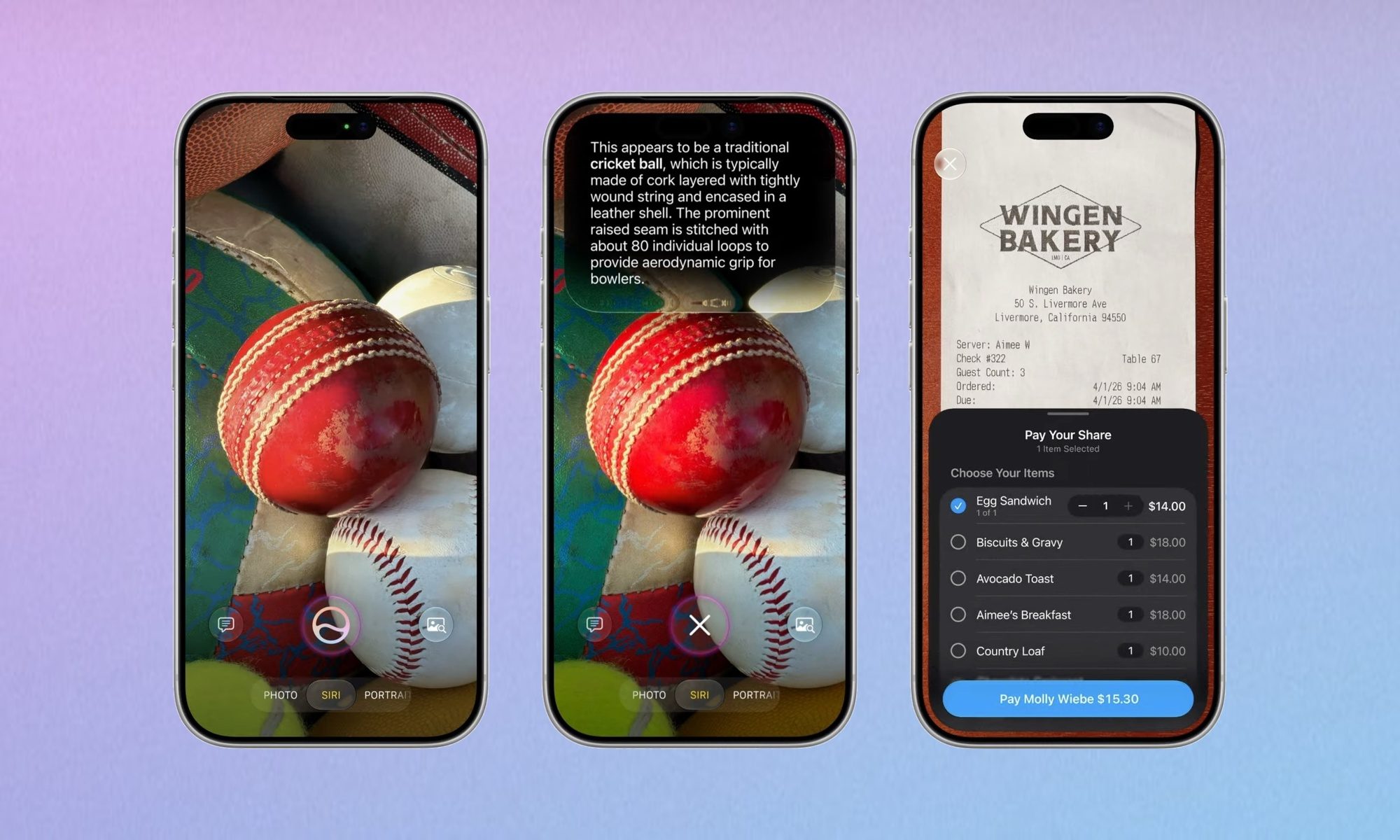
The bigger story here is the variable aperture on the primary camera, a first for any iPhone. Six laser-cut blades physically adjust the opening on the 48MP Fusion Main camera, swinging from f/1.48 for low light to f/4 for sharper focus. A companion feature called Pro controls lets you control aperture, shutter speed, white balance, and a live histogram directly in the Camera app.
Apple has also introduced Reference Image, a security system designed to curb the spread of AI-manipulated photos. The Main camera’s sensor can now sign the metadata it captures, helping verify whether a picture is real or AI-generated. Battery life also improves dramatically on the new iPhones.
The iPhone 18 Pro can last up to 34 hours of video playback (up from 31 hours), while the iPhone 18 Pro Max goes up to 43 hours (up from 37 hours). Apple didn’t miss the opportunity to call this its largest single-generation battery jump. Charging keeps pace, with the 18 Pro hitting 50% in about 15 minutes on a cable (with a 60W charger) or 30 minutes wirelessly (with a 35W adapter).
Pricing lands at $1,199 for the iPhone 18 Pro (256GB) and $1,299 for the iPhone 18 Pro Max (256GB); both are up $100 from last year’s models. Pre-orders begin September 12, while general sales begin September 18.
Apple Watch Series 12 and Ultra 4: A health-first redesign
Both new watch lineups share a rebuilt Health Sensing System. Paired with the new S11 chip, it delivers the most accurate heart-rate tracking of any wearable (according to Apple). The larger optical sensors now sample heart rate every five seconds, while Heart Rate Variability (HRV) is measured up to 24 times more frequently than before.
The metric is split into two distinct readings, one tuned for day-to-day stress and recovery, and another for longer-term cardiovascular insight. Apple Watches then use that data to fuel a new feature called Readiness (a daily score from 0 to 10), something Whoop and Oura have been doing for years.
The Health app on iPhone is getting a couple of upgrades, too. It arrives later this year with a Longevity tab that includes a “Health Age” estimate and the option to book blood panels (roughly 50 biomarkers for $119) via nearly 2,000 Quest Diagnostics locations.
The S11 chip also introduces something unique but genuinely concerning: Audio Intelligence. The suite includes features like Live Rewind (which can replay the last 15 seconds of a conversation), automatic Siri-generated conversation summaries, and sound alerts for deaf and hard-of-hearing users.
That said, the Apple Watch Series 12 starts at $399 and offers up to 24 hours of everyday battery life. On the other hand, the Apple Watch Ultra 4 starts at $799 and pushes battery life to a genuinely useful 50 hours with normal use or 45 hours of continuous GPS tracking in its extended workout mode. You can pre-order either smartwatch right now.
AirPods 5: Improved noise cancellation at an affordable price
Apple’s latest open-ear AirPods 5 offer 50% more noise cancellation than AirPods 4, thanks to a new multiport acoustic architecture and next-gen Adaptive EQ. Transparency mode also sounds more natural, with a new Adaptive Audio mode that toggles between ANC and Transparency depending on what’s happening around you. If this sounds familiar, that’s because the AirPods Pro 3 already have it.
Then there’s Personalized Spatial Audio, which adapts to different ear shapes. Honestly, though, the feature most people will use daily is the hands-free Siri AI integration. Live Translation, initially reserved for AirPods Pro, is now baked into the entire lineup. Battery life goes up to 5 hours of ANC playback per charge, an hour longer than AirPods 4 managed with ANC on, and 22 hours total with the charging case.
On the hardware side, you can choose from two flavors. The standard AirPods 5 run $129, while there’s a $149 version that comes with a wireless charging case. The more expensive version also adds a force-sensor volume swipe right on the stem. Both versions are up for pre-order now, landing on shelves September 18.
Check out our Apple September 2026 page for the entire coverage.
for informational purposes only. We do not claim ownership, accuracy, or liability for the content provided. All rights belong to the original publisher.