

A military radar-cloaking film could be the unlikely fix for one of the biggest foldable phone problems
[post_content]
Disclaimer: This article has been automatically aggregated from
South Korean researchers have built a hair-thin film originally meant to cloak military hardware from radar. Turns out the same material could quietly fix one of the biggest weak points in a specific category of smartphones.
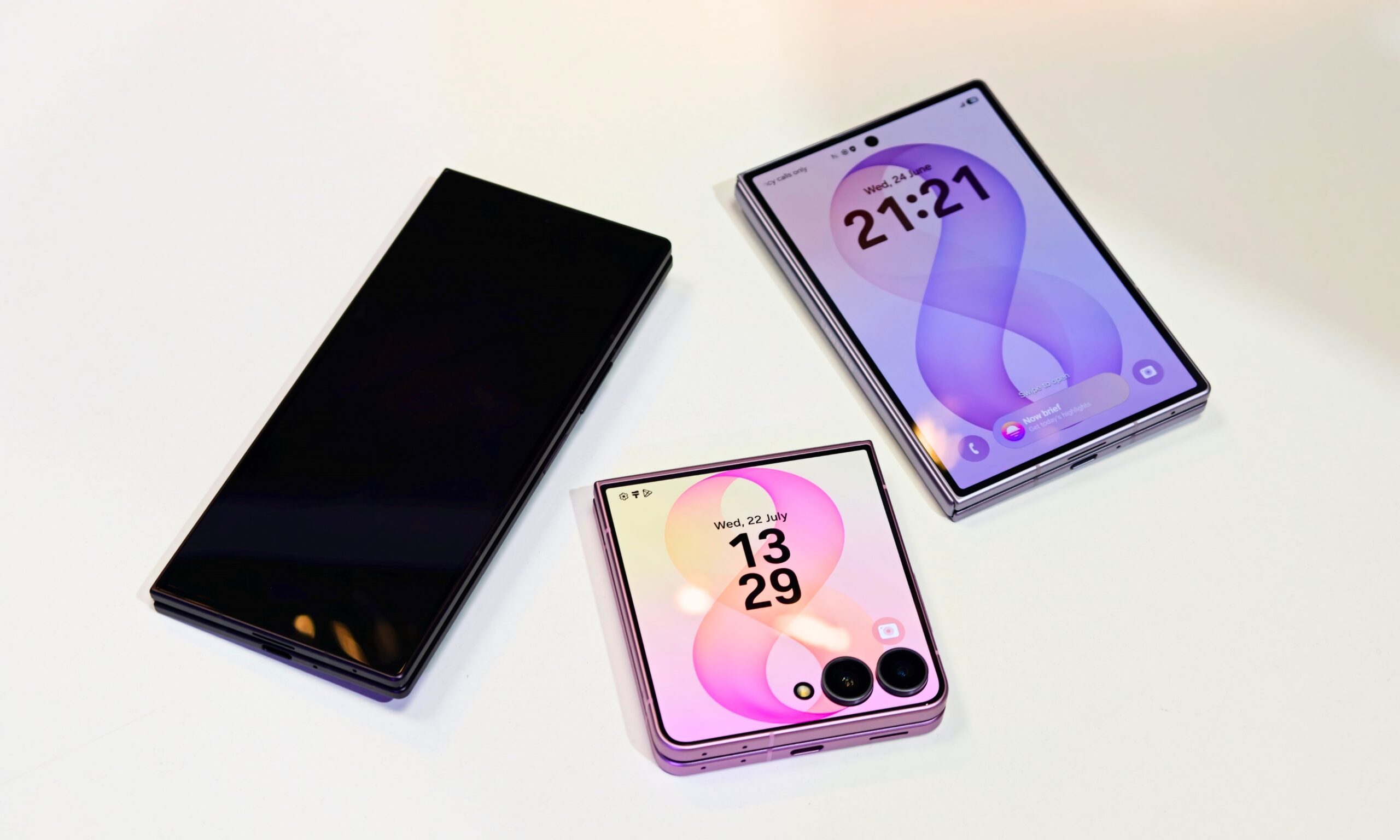
While I’ll admit that sounds like an unusual use for military technology, its incredibly thin, flexible, and tough nature makes it a surprisingly good fit for foldable phones (a product category that’s already getting all the commercial heat), especially around the hinge.

So how does this wonder film actually work?
Researchers at Korea’s KIMS and KIST have fused carbon nanotube (CNT) fibers with MXene (an inorganic compound), effectively stacking them like bricks and mortar.
The nanotube fibers act as the bricks, while MXene fills the gaps like conductive cement. This keeps the layers from slipping and gives electricity a continuous path through the film. At just 17.5 micrometers thick, roughly a fifth the width of a human hair, the film still reaches a tensile strength of 1.02 gigapascals, which is comparable to high-strength steel.
What’s worth mentioning is that it blocks more than 99.9999999% of incoming electromagnetic waves, with a shielding score of up to 90 decibels. And that’s not all. Despite its incredible thinness, the film keeps working even after repeated bending and exposure to heat and humidity.
What does this mean for your next foldable?
Now, it’s important to understand that foldables still rely on bulky, rigid metal components to shield the hinge. However, that metal can crack or peel after enough folds, potentially leaving the electronics inside more vulnerable.
That’s where the ultra-thin, impressively strong carbon film comes in. A film this thin and durable could shield hinge circuitry and ribbon cables without adding stiffness or compromising the phone’s overall strength. In other words, the material could lead to fewer crease failures and slimmer foldable phones down the road.
The same trick could calm cross-talk inside crowded 5G and 6G hardware. When multiple antennas and other components sit close together, their electromagnetic signals can interfere with each other. This super-thin film could act as a thin yet effective barrier between them.
While the research team finalizes core patents, two technology transfer agreements are already underway to bring the foundational CNT fiber production process to commercial manufacturing partners.
If successfully scaled, this micro-thin shield could soon quietly redefine the durability standards of both defense systems and the foldable devices in our pockets.
for informational purposes only. We do not claim ownership, accuracy, or liability for the content provided. All rights belong to the original publisher.