Disclaimer: This article has been automatically aggregated from
The ancient Egyptians practiced human sacrifice around 5,000 years ago, a period shortly after the country was first unified, a new study finds.
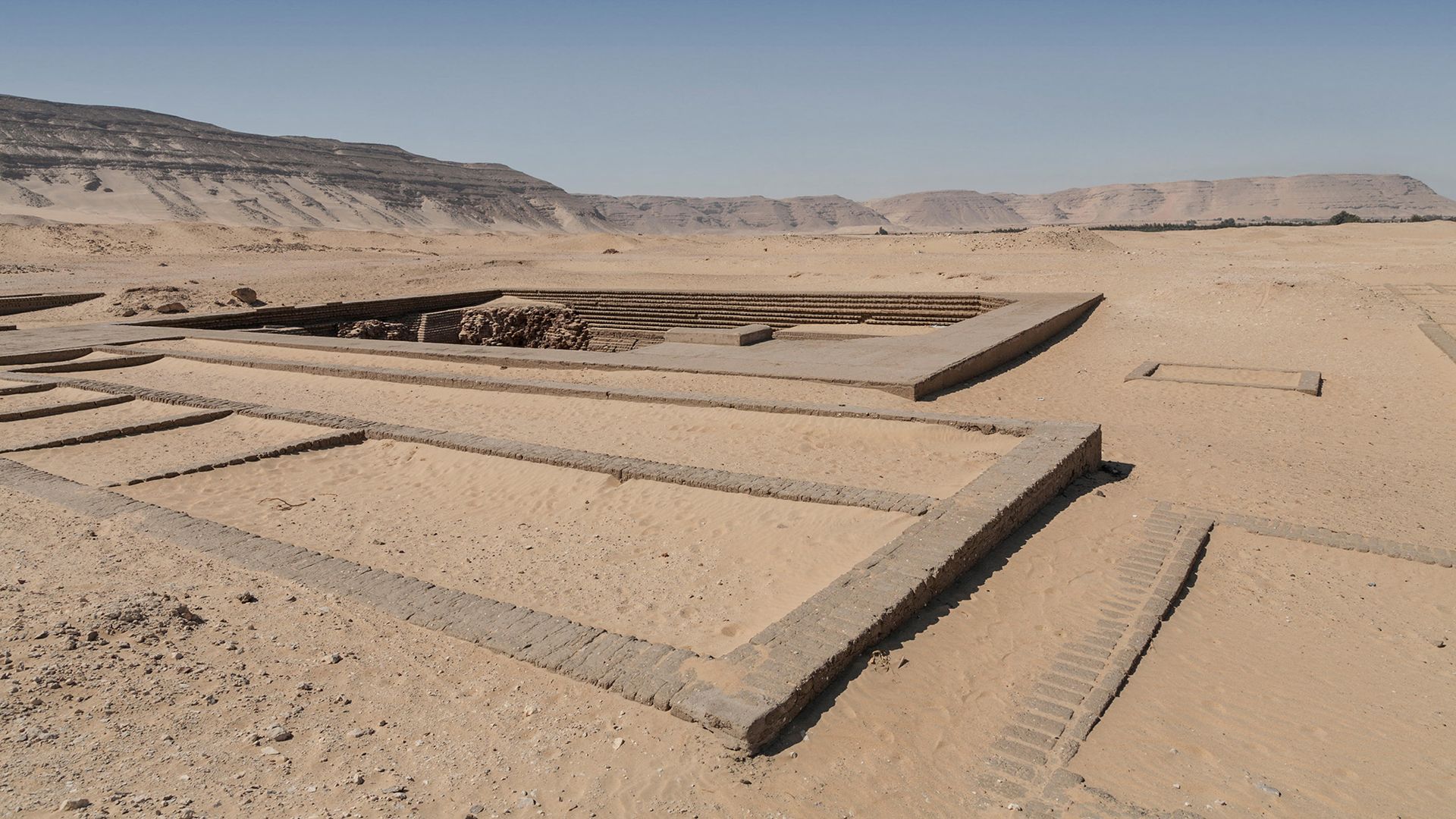
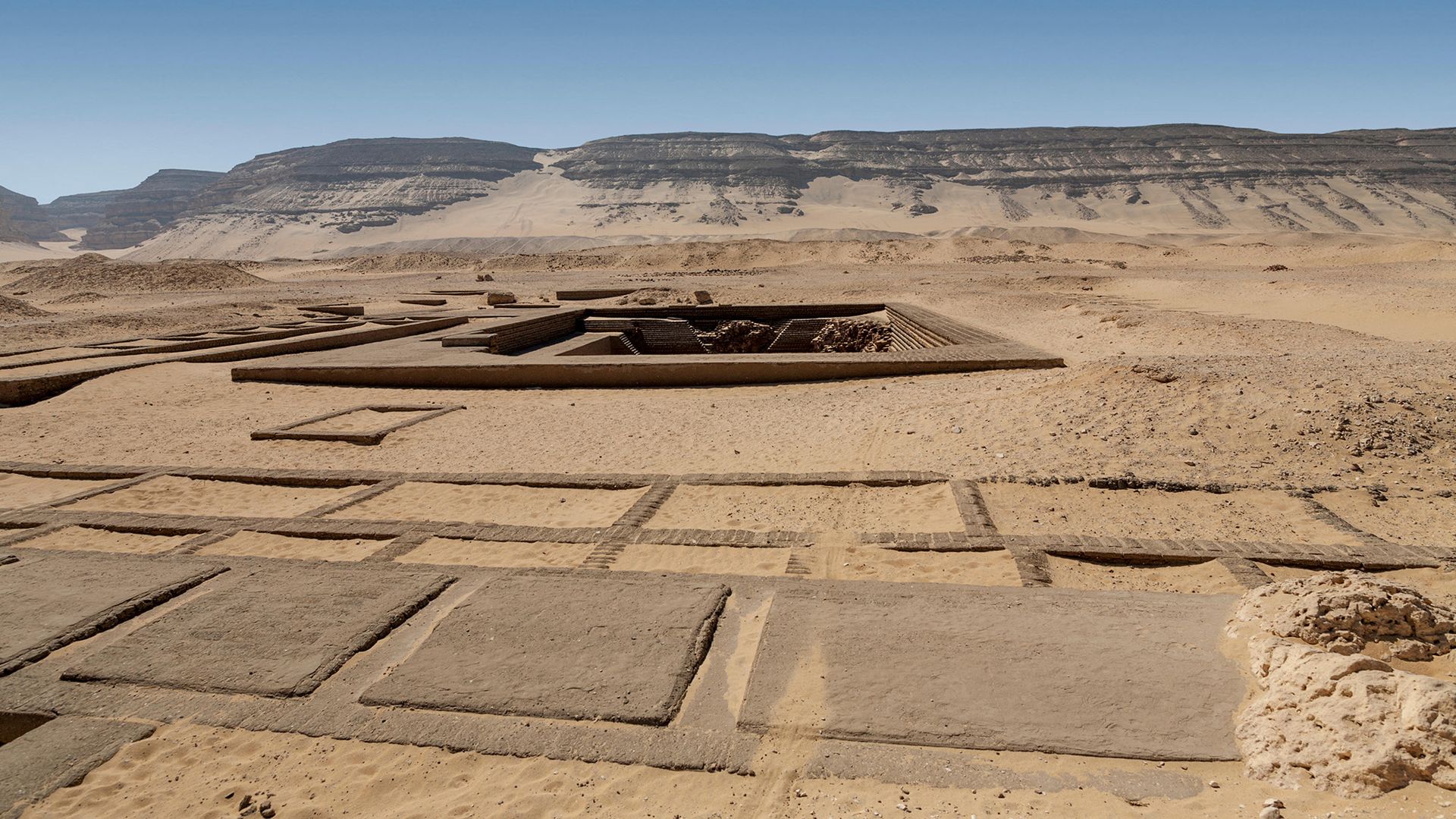
In the new study,Roselyn Campbell, an anthropology researcher at Purdue University, re-examined 46 skulls from individuals who were buried near royal tombs that belonged to King Djer, King Djet and Meretneith (a woman who likely ruled Egypt at times), and were built near the ancient sacred city of Abydos. All three rulers lived during the first dynasty, a period that started around 5,000 years ago when Upper Egypt and Lower Egypt were unified into one kingdom. The sacrificed retainers were buried next to the tomb of the king they had served.
Researchers first excavated the royal burial site in the early 20th century. At the time, the excavator, Flinders Petrie, believed that the hundreds of other burials found near the royal tombs contained nonroyals, such as retainers and other people who served the king. Moreover, it appeared that these nonroyals had been sacrificed after the king they had served died, in the belief that they could serve the king in the afterlife.
Latest Videos FromLive Science
However, Petrie was unable to identify evidence of fatal skeletal trauma, and his idea that they were sacrificed has been debated ever since. Petrie reburied most of the human remains, but 46 skulls were retained and preserved in the Duckworth Collections at the University of Cambridge.
In the new study, published Monday (Oct. 5) in the journal Frontiers in Environmental Archaeology, Campbell re-examined these 46 skulls using modern forensic techniques and information about the marks that different types of trauma leaves on human skeletons. Campbell found that 18 of the skulls have signs of trauma that were likely fatal — indicating that these individuals were likely sacrificed, according to a statement from the journal. Specifically, Campbell found that many of the skulls had linear fractures, which Petrie had mistaken for damage that occurred after burial.
Image credit: Mike P Shepherd via Alamy
The tombs of King Den and King Djer at Abydos. Burials believed to be human sacrifices were found near them.
Image credit: Mike P Shepherd via Alamy
The roughly 5,000-year-old tombs of King Den and King Djer at Abydos. Human sacrifices were buried nearby.
Linear fractures “occur when the cranium strikes or is struck by a relatively large object with low overall force; because of the cranium’s globular shape, the impact of the blow disperses across the cranial vault,” Campbell wrote in the study. “While linear fractures are not always immediately lethal, they often cause intracranial lesions and/or hemorrhage, which can quickly cause loss of consciousness and death if surgery [to relieve pressure] is not performed.”
Campbell told Live Science in an email that it’s difficult to identify the weapon or object that was used. “Based on comparative forensic and archaeological studies, the most likely implement would have been flat and relatively light, probably made out of something like wood rather than stone,” she said.
Get the world’s most fascinating discoveries delivered straight to your inbox.
The practice of human sacrifice seems to have ended in the second dynasty of Egypt. Evidence for human sacrifice is limited and seems to be confined mainly to the first dynasty. Petrie theorized that they were retainers to the king based on the fact that some were buried with gravestones that had titles such as seal-bearer which suggested that they served the king.
“As far as we can tell, this particular type of retainer sacrifice seems to have ended with the close of the First Dynasty, which means it [lasted] around two centuries or possibly less,” Campbell said.
Jacobus van Dijk, an Egyptologist at Groningen University in the Netherlands who was not involved with the study, welcomed the new research. The “existence of retainer sacrifice in early Egypt has always been controversial and Dr Campbell’s research adds an important argument in support of scholars who, like myself, believe this custom was practised in Egypt in the early dynastic period,” he told Live Science in an email.
He noted he was surprised at the method used for human sacrifice, because depictions of ritual killing on wooden labels “seems to indicate that the victim was kneeling with his hands tied behind his back being stabbed in the chest with a knife.”
Campbell, R. A. (2026). New data from old bones: using bioarchaeology and forensics to reassess legacy data from ancient Abydos, Egypt. Frontiers in Environmental Archaeology, 5. https://doi.org/10.3389/fearc.2026.1858940
Are you a fan of mummies and hieroglyphs? Find out with our ancient Egypt quiz!
for informational purposes only. We do not claim ownership, accuracy, or liability for the content provided. All rights belong to the original publisher.
Contains information related to marketing campaigns of the user. These are shared with Google AdWords / Google Ads when the Google Ads and Google Analytics accounts are linked together.
90 days
__utma
ID used to identify users and sessions
2 years after last activity
__utmt
Used to monitor number of Google Analytics server requests
10 minutes
__utmb
Used to distinguish new sessions and visits. This cookie is set when the GA.js javascript library is loaded and there is no existing __utmb cookie. The cookie is updated every time data is sent to the Google Analytics server.
30 minutes after last activity
__utmc
Used only with old Urchin versions of Google Analytics and not with GA.js. Was used to distinguish between new sessions and visits at the end of a session.
End of session (browser)
__utmz
Contains information about the traffic source or campaign that directed user to the website. The cookie is set when the GA.js javascript is loaded and updated when data is sent to the Google Anaytics server
6 months after last activity
__utmv
Contains custom information set by the web developer via the _setCustomVar method in Google Analytics. This cookie is updated every time new data is sent to the Google Analytics server.
2 years after last activity
__utmx
Used to determine whether a user is included in an A / B or Multivariate test.
18 months
_ga
ID used to identify users
2 years
_gali
Used by Google Analytics to determine which links on a page are being clicked
30 seconds
_ga_
ID used to identify users
2 years
_gid
ID used to identify users for 24 hours after last activity
24 hours
_gat
Used to monitor number of Google Analytics server requests when using Google Tag Manager