

22 years of science! NASA’s Roman Space Telescope doubles its lifetime with super-precise engine burn
[post_content]
Disclaimer: This article has been automatically aggregated from
NASA’s newly launched Nancy Grace Roman Space Telescope is set to extend its lifespan and double its exciting potential for discovery thanks to an efficient use of fuel on its way to its final orbit.
“As a result of exquisite planning by our orbital dynamics team, brilliant execution by the operations team, and a precise launch from SpaceX, Roman has fuel for at least 22 years of potential science operations,” said Jamie Dunn, the center director at NASA’s Goddard Space Flight Center, in a statement.
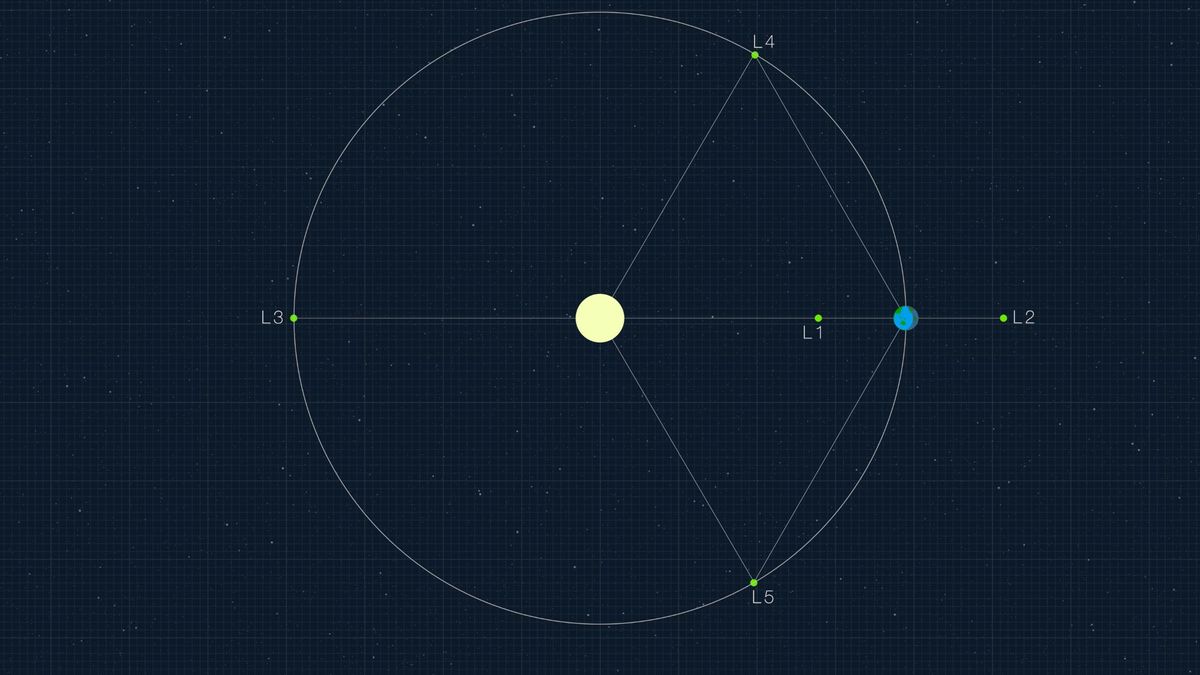
The space telescope, which launched from Cape Canaveral on Aug. 30 on a mission to measure dark energy and search for exoplanets, is headed to the L2 Lagrange point. There, it will join the likes of the James Webb Space Telescope on the opposite side of Earth to the sun. Its primary mission will last five years, and scientists were hoping for an additional five years if funding allowed.. Now, however, that potential extended mission could go on for a lot longer — and it’s all thanks to the spacecraft coming in less massive than the original design had projected.
At the beginning of Roman’s design process, the fuel capacity was chosen to permit a maximum mass of 21,605 pounds (9,800 kilograms), yet the finished spacecraft came in lighter at 17,760 pounds (8,065 kilograms). And because it was lighter, there was a surplus of available mass that could be used for more fuel.
“A spacecraft’s mass changes throughout the design and build process, so we base the propellant on a set maximum value so we won’t come up short,” Alison Rao, who leads Roman’s propulsion systems at NASA Goddard, said in the statement. “We track the propellant needed based on actual mass throughout integration and testing as well, to make sure we have wiggle room. Since Roman’s [mass] was lower than we budgeted for, we were able to fill the propellant tanks to their capacity rather than only filling them as much as we needed to for the 10-year requirement.”
The extra fuel loaded onto the telescope before launch meant it had enough for at least a 14-year mission. Then, within a day of launching, the space telescope had to fire its engine for three minutes to push it onto a trajectory to take it to L2. This engine burn was more precise and hence more efficient than anyone could have hoped for, sending Roman on its way to L2 with 99% accuracy. In doing so, it used only 40 pounds (18 kilograms) of fuel, which is less than 10% of the 441 pounds (200 kilograms) of fuel that had been budgeted for the maneuver. This is thought to have bought Roman an additional four years of life, bringing the tally to 18 years.
Then there’s the added bonus. The precision with which the Aug. 31 engine burn was conducted means that the second course correction, required to take Roman into its orbit at L2 in early December, will also now require much less fuel. This will add yet another four years to Roman’s operational lifetime, so long as nothing goes wrong with the telescope. Once in orbit at L2, only minor burns once every 28 days are needed for station keeping — a negligible amount of fuel.
In total, this observatory could be probing the final frontier and making incredible discoveries for at least the next 22 years, taking it up to 2048 at minimum. For the next two or three decades, we’re going to be hearing a lot about the Nancy Grace Roman Space Telescope.
for informational purposes only. We do not claim ownership, accuracy, or liability for the content provided. All rights belong to the original publisher.