

25 years ago, a NASA astronaut captured this haunting photo of the 9/11 attacks — Earth from space
[post_content]
Disclaimer: This article has been automatically aggregated from
QUICK FACTS
Where is it? New York City, NY [40.71113953, -74.01078602]
What’s in the photo? A massive plume of smoke blowing from Manhattan in the wake of 9/11
Who took the photo? NASA astronaut Frank Culbertson, on board the ISS
When was it taken? Sept. 11, 2001
This iconic photo, captured by an American astronaut on board the International Space Station (ISS), shows a lengthy trail of thick smoke pouring across New York City in the immediate aftermath of the 9/11 attacks. A quarter of a century later, the image is as haunting as ever.
On the morning of Sept. 11, 2001, members of the terrorist group al-Qaeda hijacked four passenger airliners and crashed two of them into the twin towers — a pair of 110-story skyscrapers at the heart of the World Trade Center in lower Manhattan. The impact of these collisions, which occurred roughly 17 minutes apart, eventually caused both buildings to collapse.
Shortly after the second tower was hit, the third hijacked plane crashed into the Pentagon, the headquarters of the Department of Defense in Arlington, Virginia. Another attack — likely intended for Washington, D.C. — was thwarted when the passengers of a fourth plane fought back against their hijackers, causing the aircraft to crash near Shanksville, Pennsylvania. In total, 2,977 people were killed across the different attacks, according to the 9/11 Memorial and Museum.
NASA astronaut and ISS commander Frank Culbertson — the only American not on Earth at the time of the attacks — passed over New York City shortly after being told about what was happening back home. He photographed the thick plume of smoke blowing away from Manhattan, at an altitude of roughly 250 miles (400 kilometers) above Earth’s surface.
If you look closely, you may be able to see what Culbertson described as an “odd bloom” around the base of the column of smoke rising from the towers. This is likely a sign that the image was captured “around the time of, or shortly after, the collapse of the second tower,” Culbertson said.
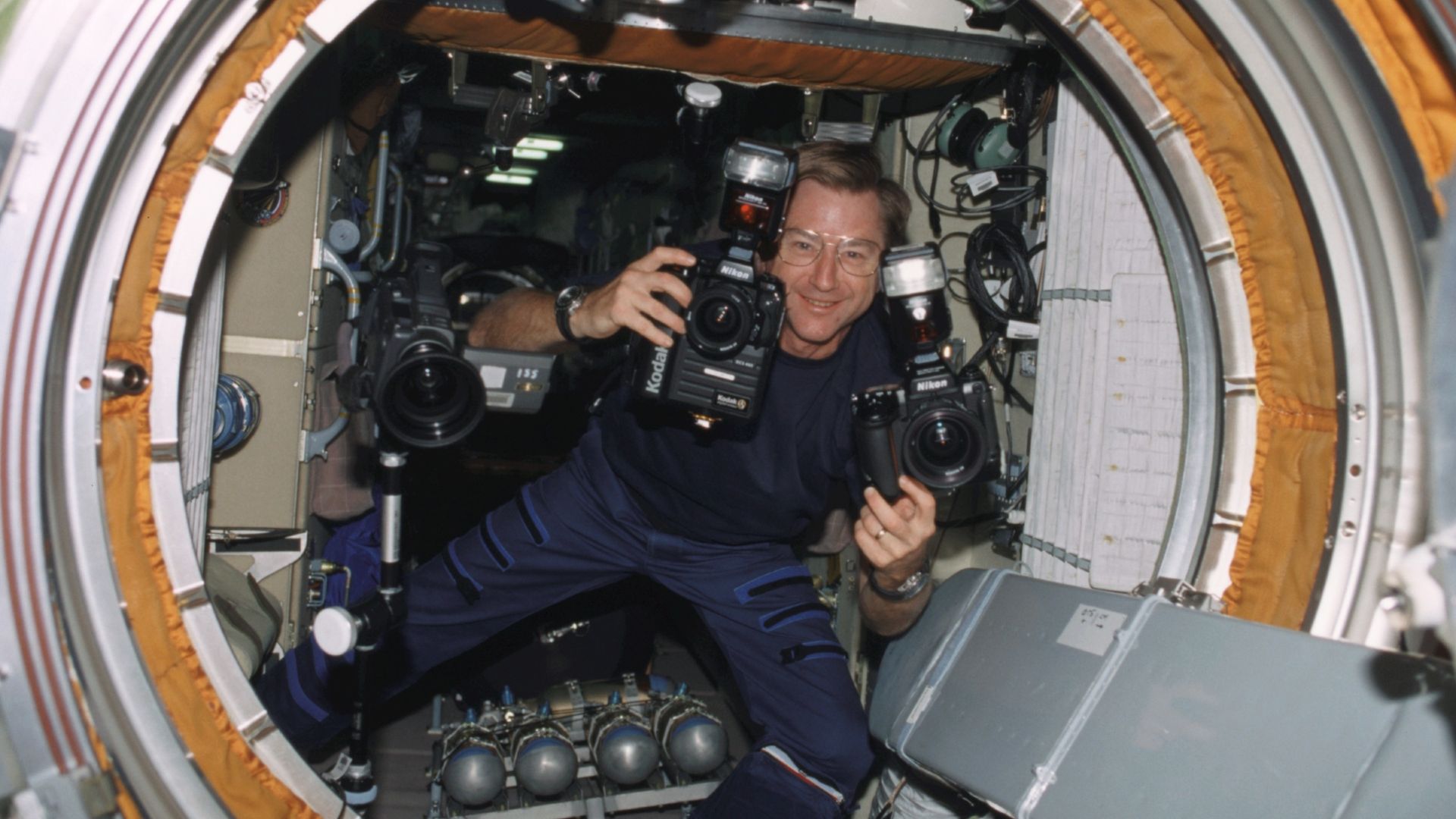
NASA astronaut and ISS commander Frank Culbertson captured the aftermath of 9/11 from space. This photo, taken Sept. 17, 2001, shows him holding his cameras in zero gravity.
(Image credit: NASA)
Culbertson wrote several letters in the days following the attacks, sharing his unique perspective of the events. “It’s horrible to see smoke pouring from wounds in your own country from such a fantastic vantage point,” Culbertson wrote on Sept. 13. “The dichotomy of being on a spacecraft dedicated to improving life on the earth and watching life being destroyed by such willful, terrible acts is jolting to the psyche.”
While in space, Culbertson learned that the pilot of the plane that was later hijacked and crashed into the Pentagon was his former flight school classmate Charles “Chic” Burlingame. When the ISS later passed over the Pentagon, the astronauts could see the large gash in the side of the building where the third plane had crashed. “Tears don’t flow the same in space,” Culbertson wrote while discussing his friend.
Get the world’s most fascinating discoveries delivered straight to your inbox.
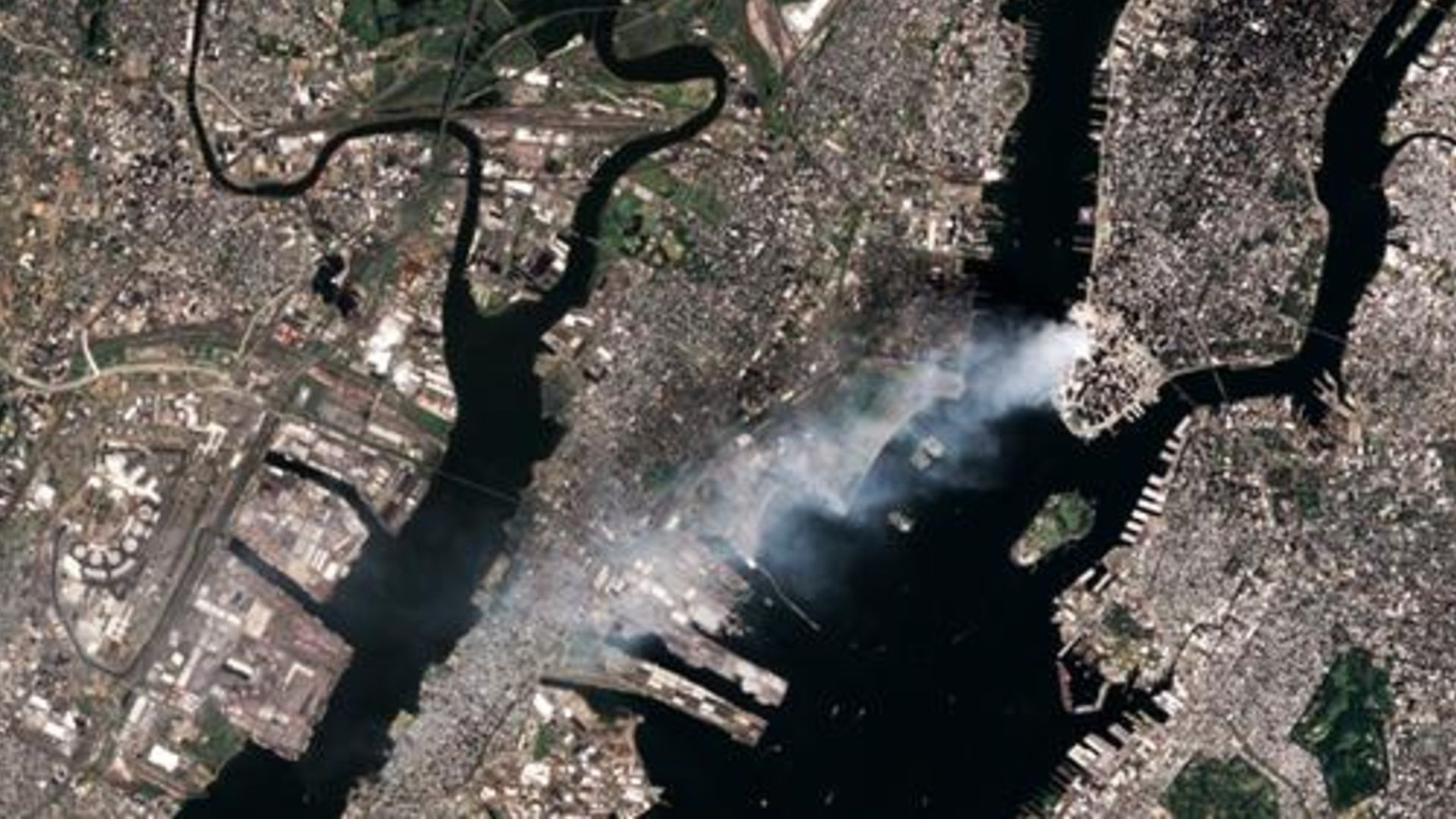
Additional imagery — captured by the Landsat 7 satellite on Sept. 12, 2001 — shows that smoke continued to pour from Ground Zero for at least 24 hours.
(Image credit: USGS/Landsat 7)
In 2017, Culbertson revealed that there was another striking thing he and the rest of his crew noticed in the wake of the attacks, according to Live Science’s sister site Space.com. “One of the most startling effects was that within about two orbits, all of the contrails that are normally crisscrossing the United States had disappeared because they had grounded all the airplanes,” he said.
However, there was one exception. The astronauts noticed a single contrail moving eastward across the Midwest. “That was Air Force One headed back to D.C. with President Bush,” Culbertson said. It was a “very sobering” sight, he added.
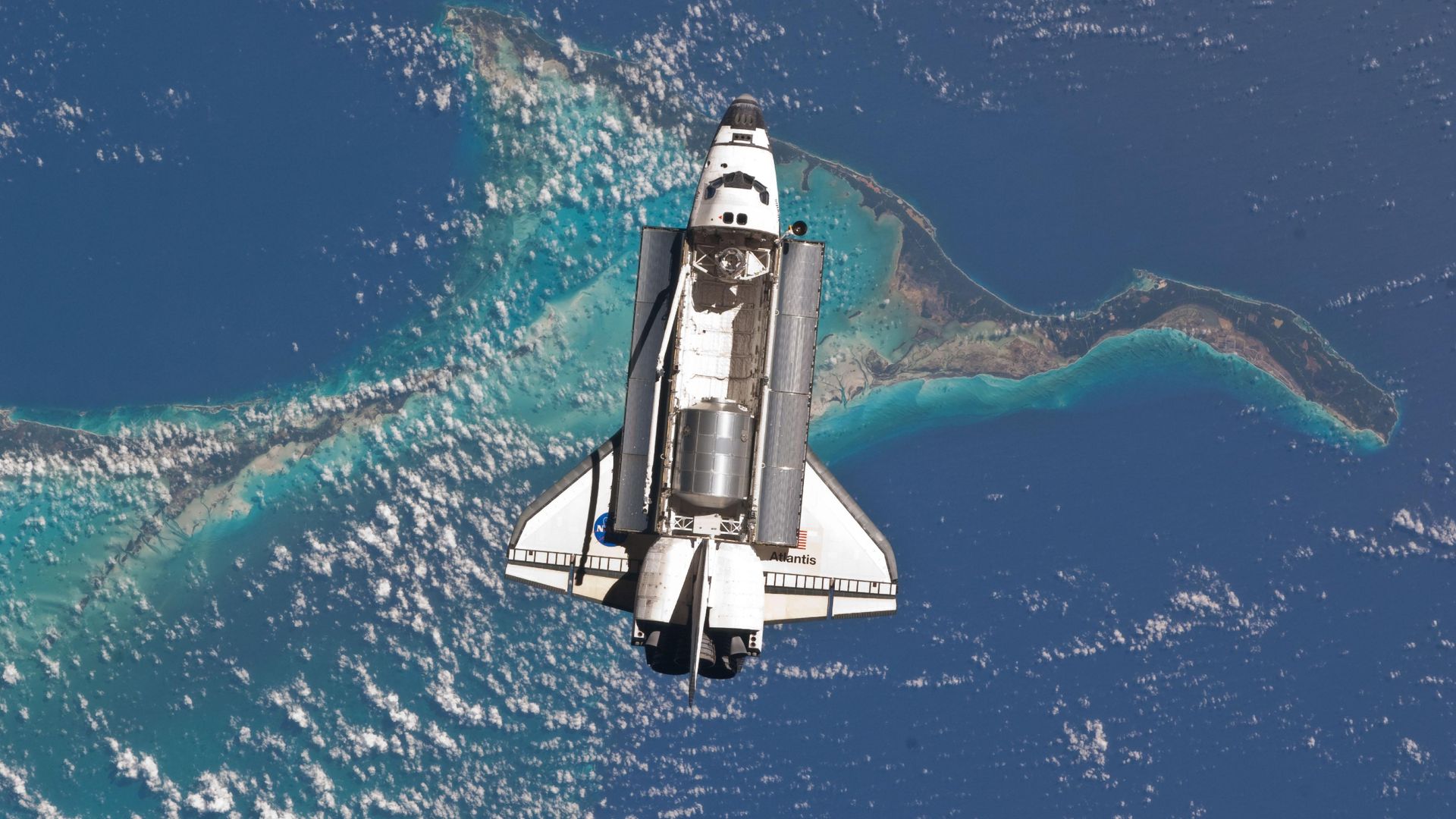
This 2011 astronaut photo captured one of NASA’s iconic space shuttles passing between Earth and the International Space Station for the very last time.
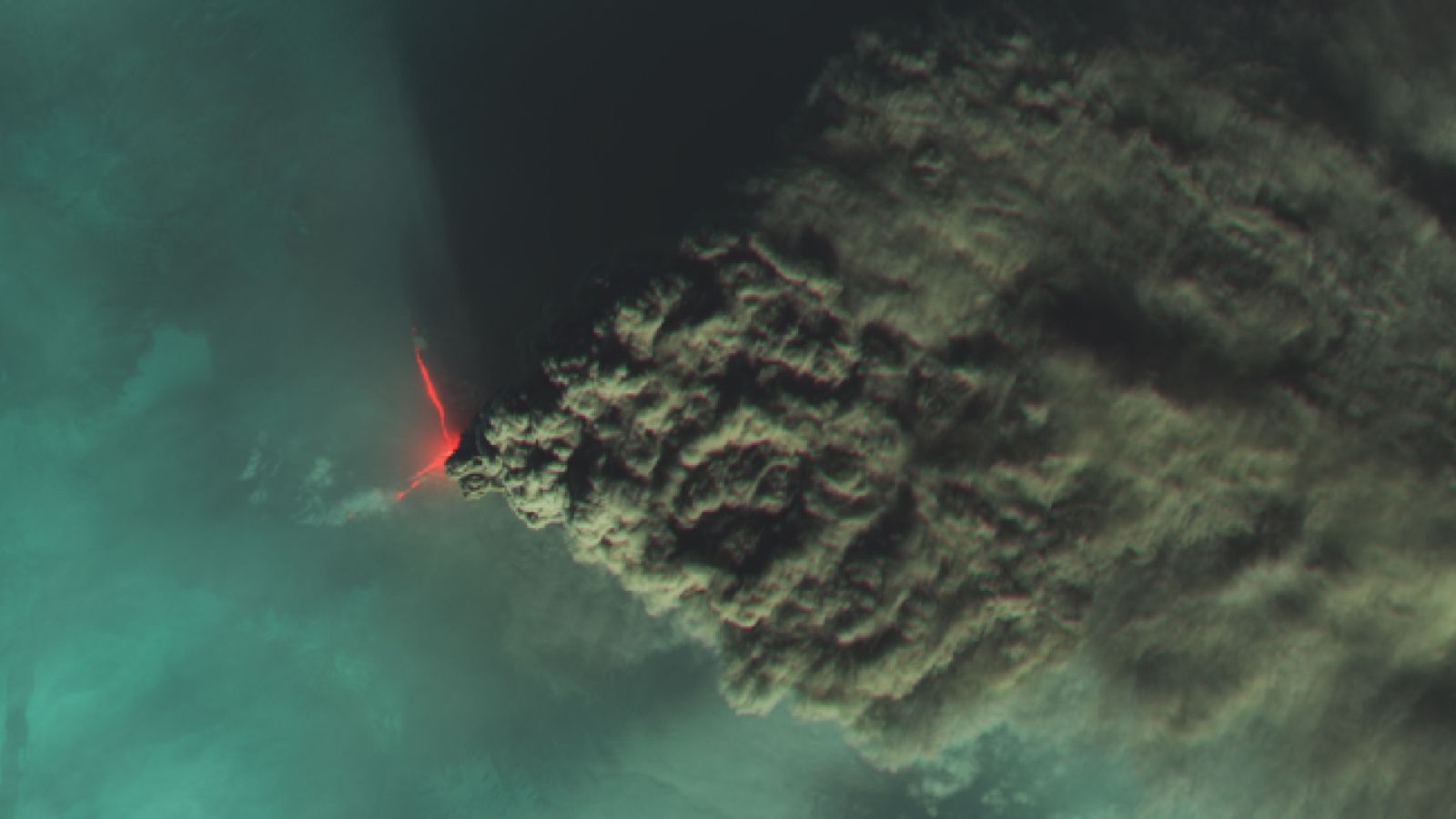
A false-color satellite photo from 2023 shows a devilish pair of lava flows and an enormous plume of smoke spewing from Klyuchevskoy, the tallest volcano in Europe and Asia.
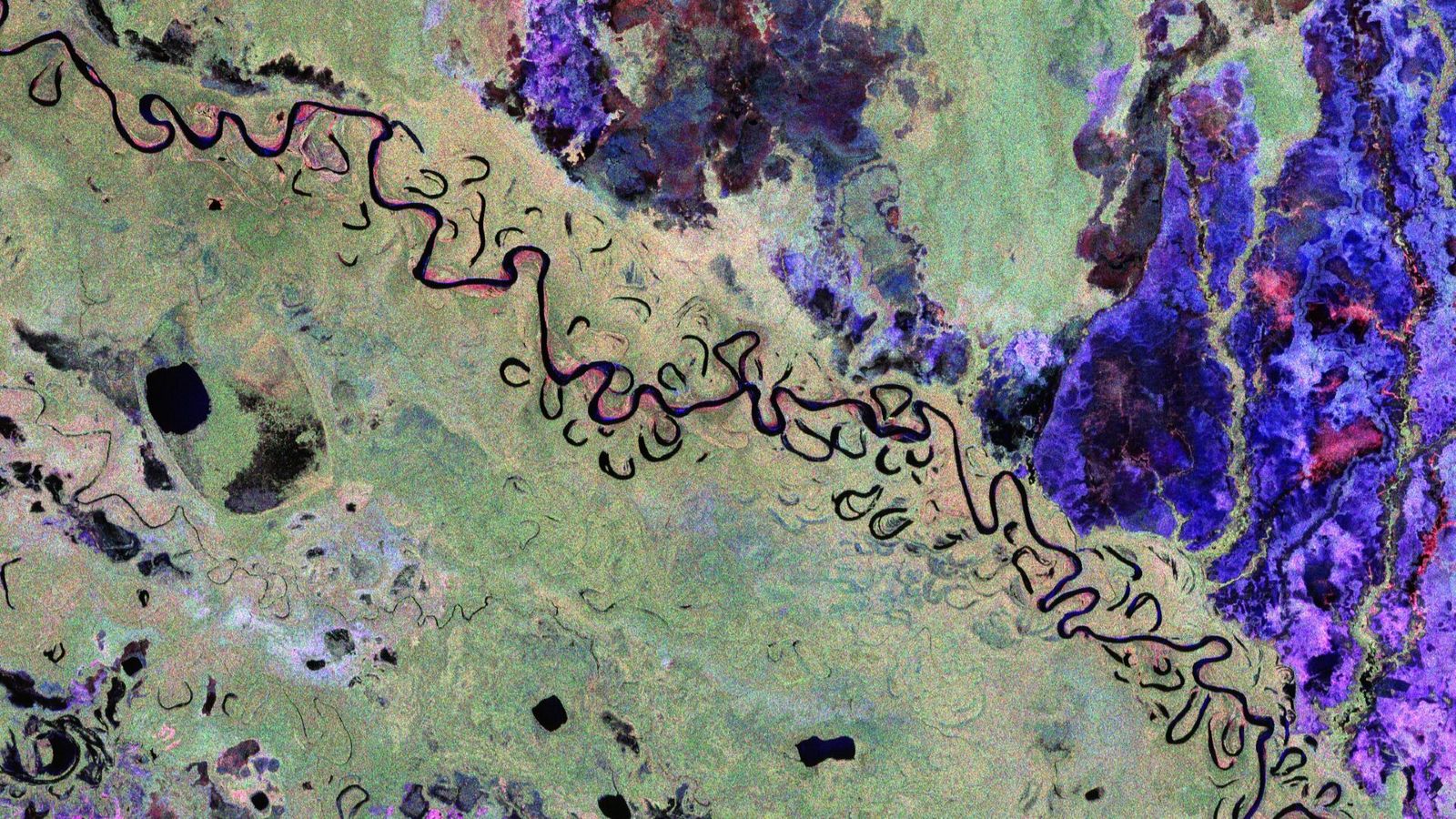
The first false-color image from ESA’s newly operational Biomass satellite shows off a unique perspective of the rainforests, grasslands and wetlands surrounding a winding river in Bolivia.
for informational purposes only. We do not claim ownership, accuracy, or liability for the content provided. All rights belong to the original publisher.
Share this:
- Share on Facebook (Opens in new window) Facebook
- Share on X (Opens in new window) X
- Print (Opens in new window) Print
- Share on LinkedIn (Opens in new window) LinkedIn
- Share on Threads (Opens in new window) Threads
- Share on Mastodon (Opens in new window) Mastodon
- Share on Bluesky (Opens in new window) Bluesky
- Share on Telegram (Opens in new window) Telegram
- Share on Pinterest (Opens in new window) Pinterest
- Share on WhatsApp (Opens in new window) WhatsApp
- Share on Nextdoor (Opens in new window) Nextdoor
- Email a link to a friend (Opens in new window) Email
- Share on Tumblr (Opens in new window) Tumblr
- Share on Reddit (Opens in new window) Reddit