Disclaimer: This article has been automatically aggregated from
A picture of a distant, shark-shaped cloud of gas in space has earned the top prize in a Royal Observatory Greenwich contest for amateur space photographers.
Dubbed “The Quiet Predator,” the image by skywatcher Ali Alobaidly shows off the Shark Nebula (LDN 1235), which is roughly 650 light-years from Earth in the constellation Cepheus (the Whale). (For perspective, the nearest star system to our planet is only about 4 light-years away.) The stunning image was chosen as the overall winner of the Royal Observatory Greenwich’s 18th ZWO Astronomy Photographer of the Year contest, whose honorees were announced Thursday (Sept. 17).
Alobaidly took the prize-winning image from the Jahra governorate in Kuwait over two days in August 2025, using an Askar 140 APO telescope, a Sky-Watcher EQ8-R mount and a ZWO ASI2600MM Pro camera.
Latest Videos FromLive Science
“The juxtaposition of an oceanic predator, prowling the skies above the Kuwaiti desert, is something I find deeply poetic, and it is what first drew me to this remarkable region of the sky,” Alobaidly said in a statement. “To me, it represents perfectly my love for both the universe, and the deserts of my ancestors.”
Alobaidly’s work, as well as 10 ZWO Astronomy Photographer of the Year category winners, will be on display at the National Maritime Museum in London starting Friday (Sept. 18). Alobaidly received a prize of 10,000 British pounds (about $13,300), while category winners and runners-up received various smaller cash prizes.
Below are several of the individual category winners, along with their breathtaking photos.
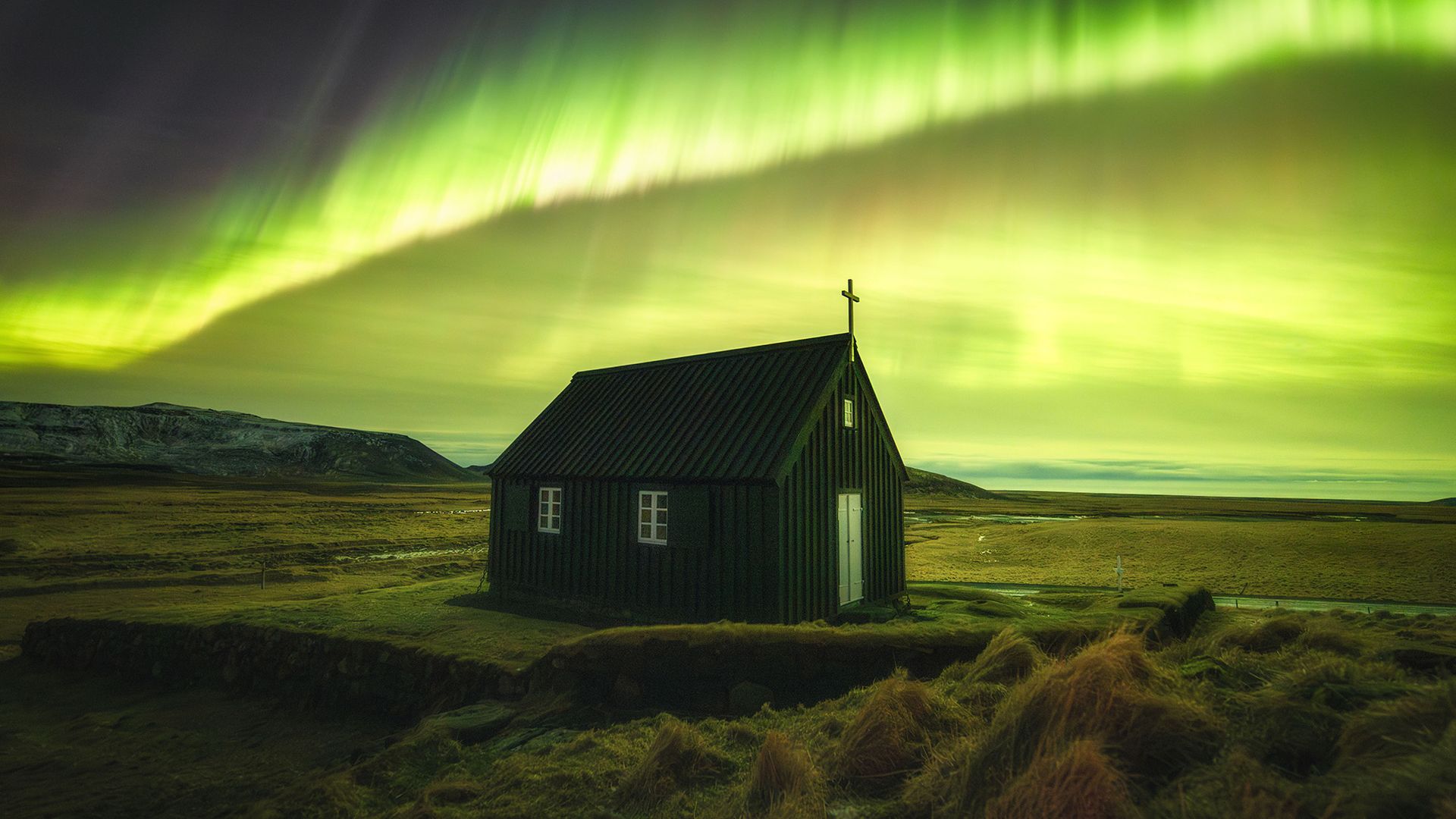
Aurorae: “The Crown,” by Radoslav Sviretsov (Bulgaria). This image was captured during a strong northern lights display at a small church between Keflavík and Reykjavík, Iceland. The statement noted that the location is “far from light pollution — a place where the sky remains dark and truly alive.”
Get the world’s most fascinating discoveries delivered straight to your inbox.
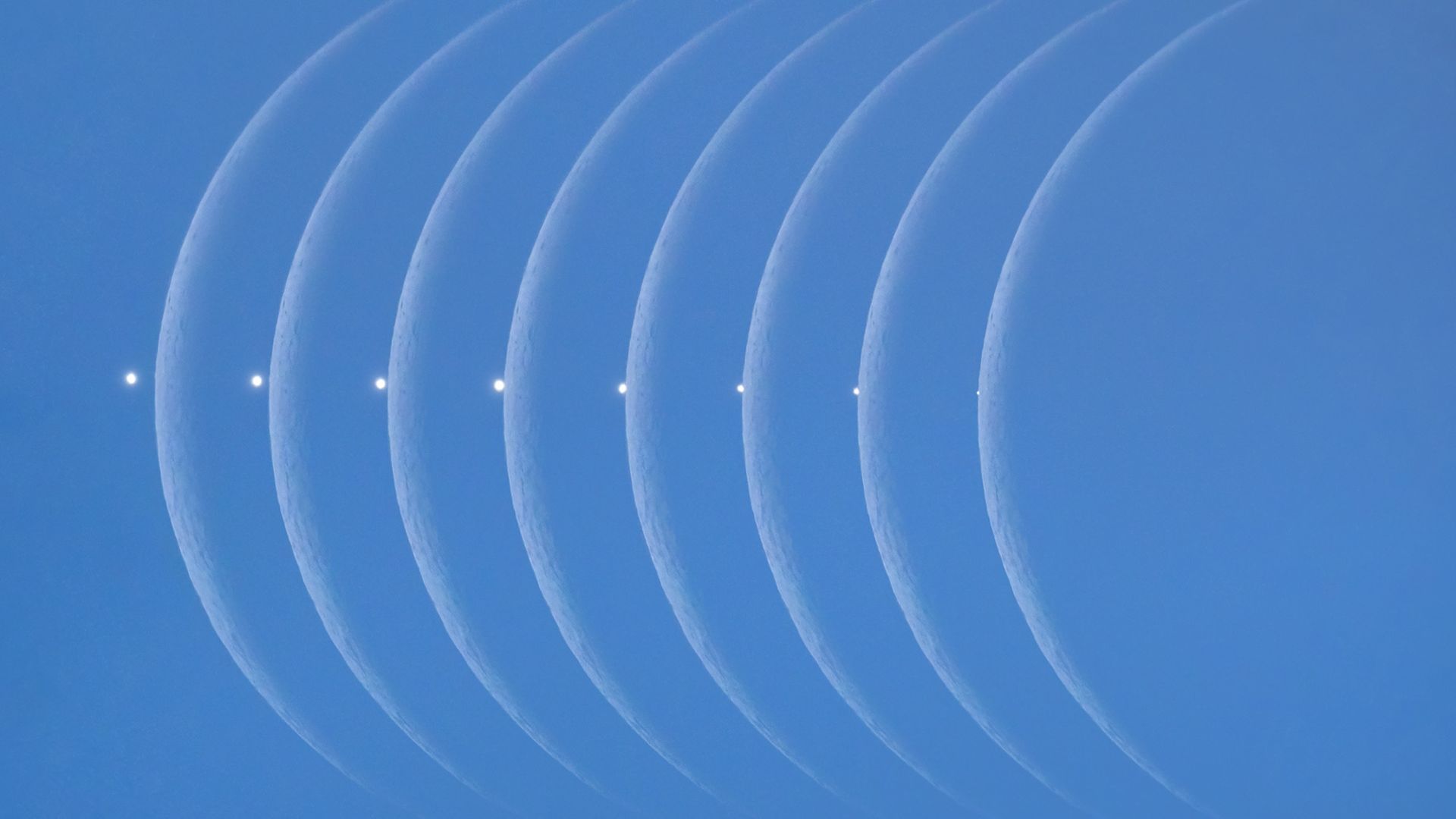
Our Moon: “Venusian Pearl on the Moon,” by Petr Horalek (Czechia). This image was taken on Sept. 19, 2025, when the moon passed in front of Venus from the perspective of select locations on Earth. “The most beautiful moment was when Venus had just started to disappear behind the crescent. It looked like a bright pearl on the lunar limb,” the observatory judges stated. (Horalek is no newcomer to astrophotography, and Live Science has featured several of his incredible images before.)
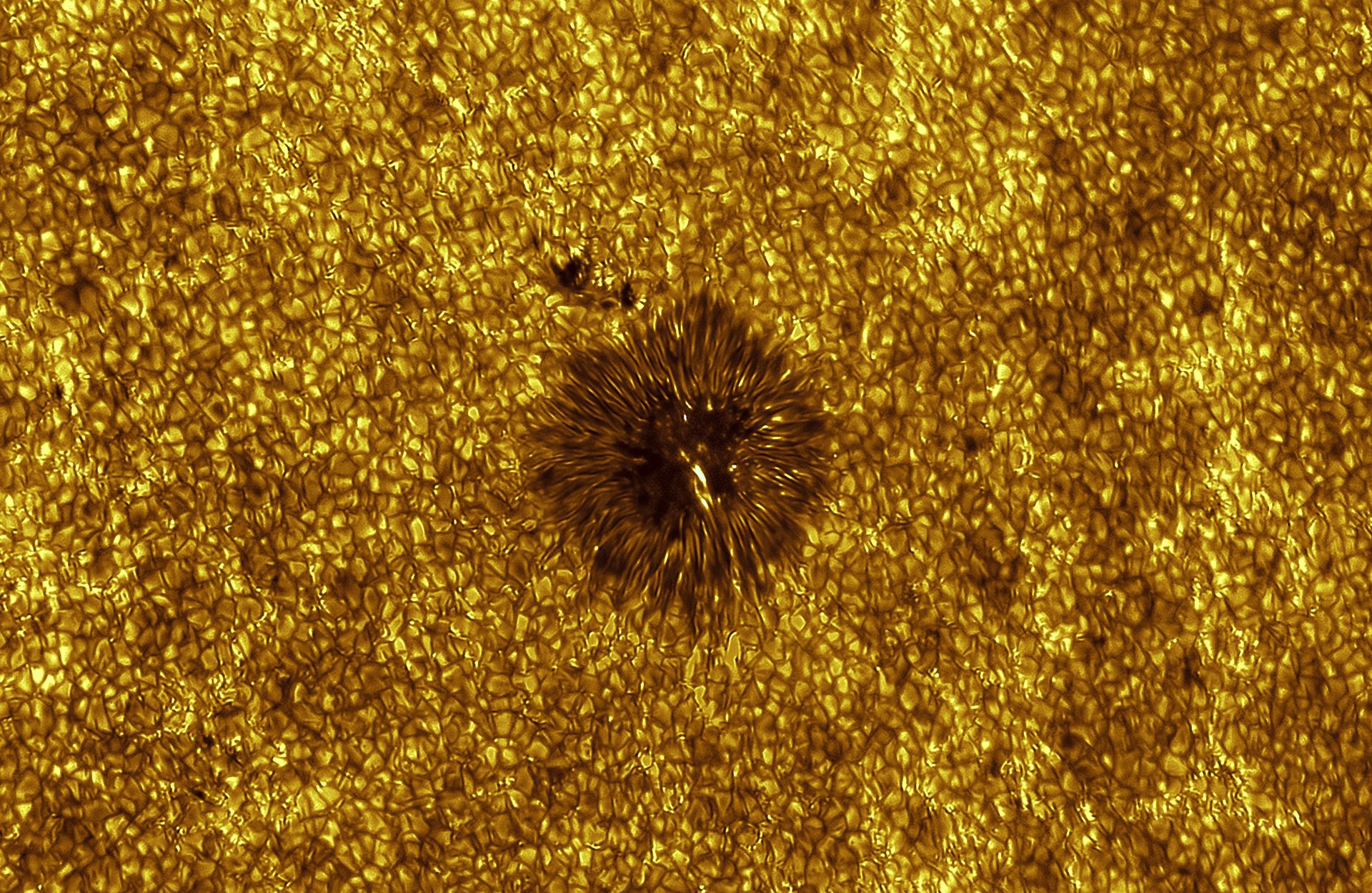
Our Sun: “Active Region 4122,” by Miguel Claro (Portugal). Claro, a frequent contributor to Space.com, a sister site of Live Science, used a new dual-band telescope to capture the sun’s photosphere, or visible surface layer. Claro’s work shows convection cells, which are superheated gas or plasma regions on the sun, as well as bright spots between these regions.
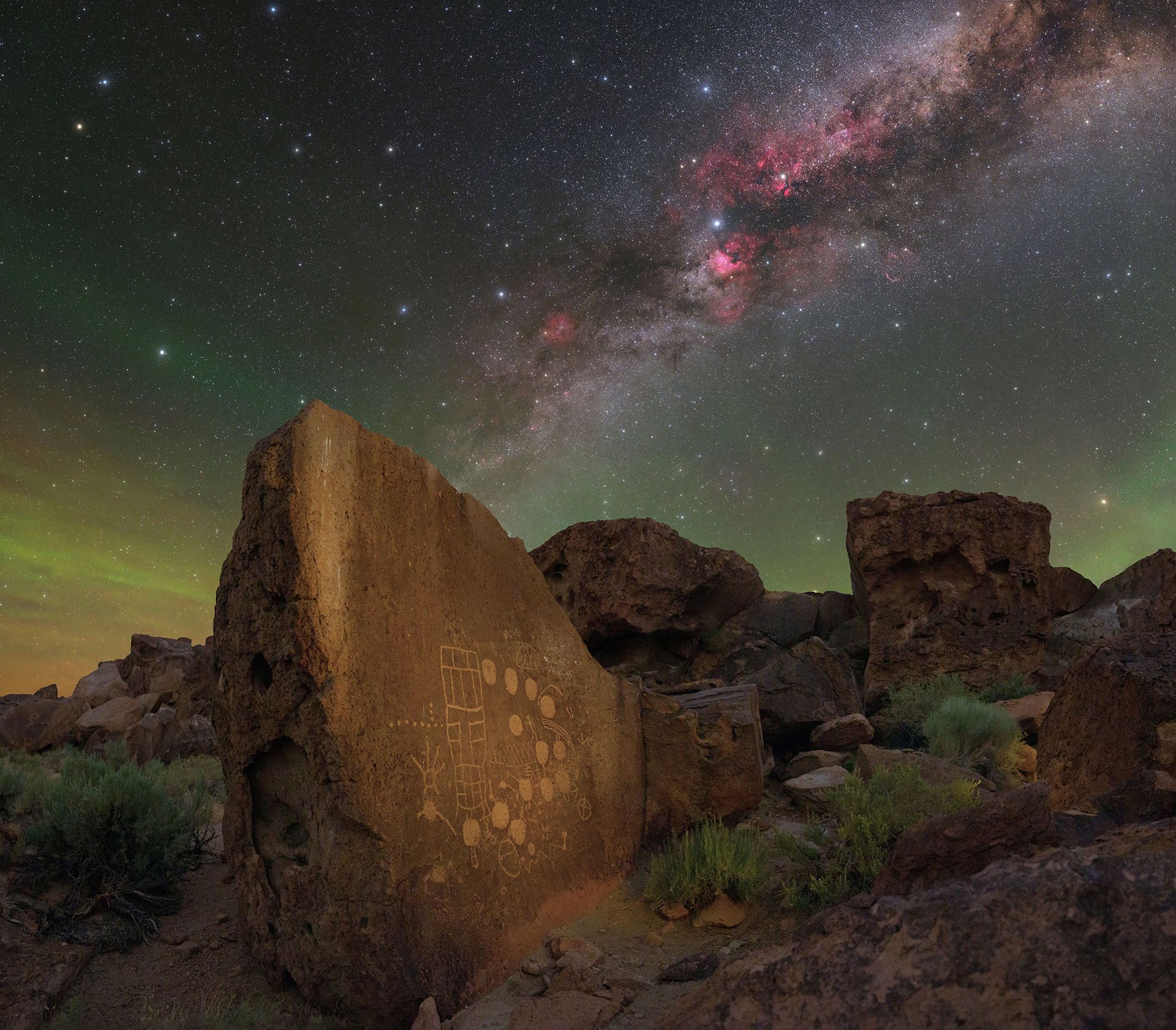
People and Space: “A Message from the Ancients,” by Max Inwood (Aotearoa/New Zealand). Inwood showcased petroglyphs (ancient rock art) in California’s desert in his prize-winning photo. The petroglyph in the image is believed to show the 13 full moons Earth usually witnesses each year.
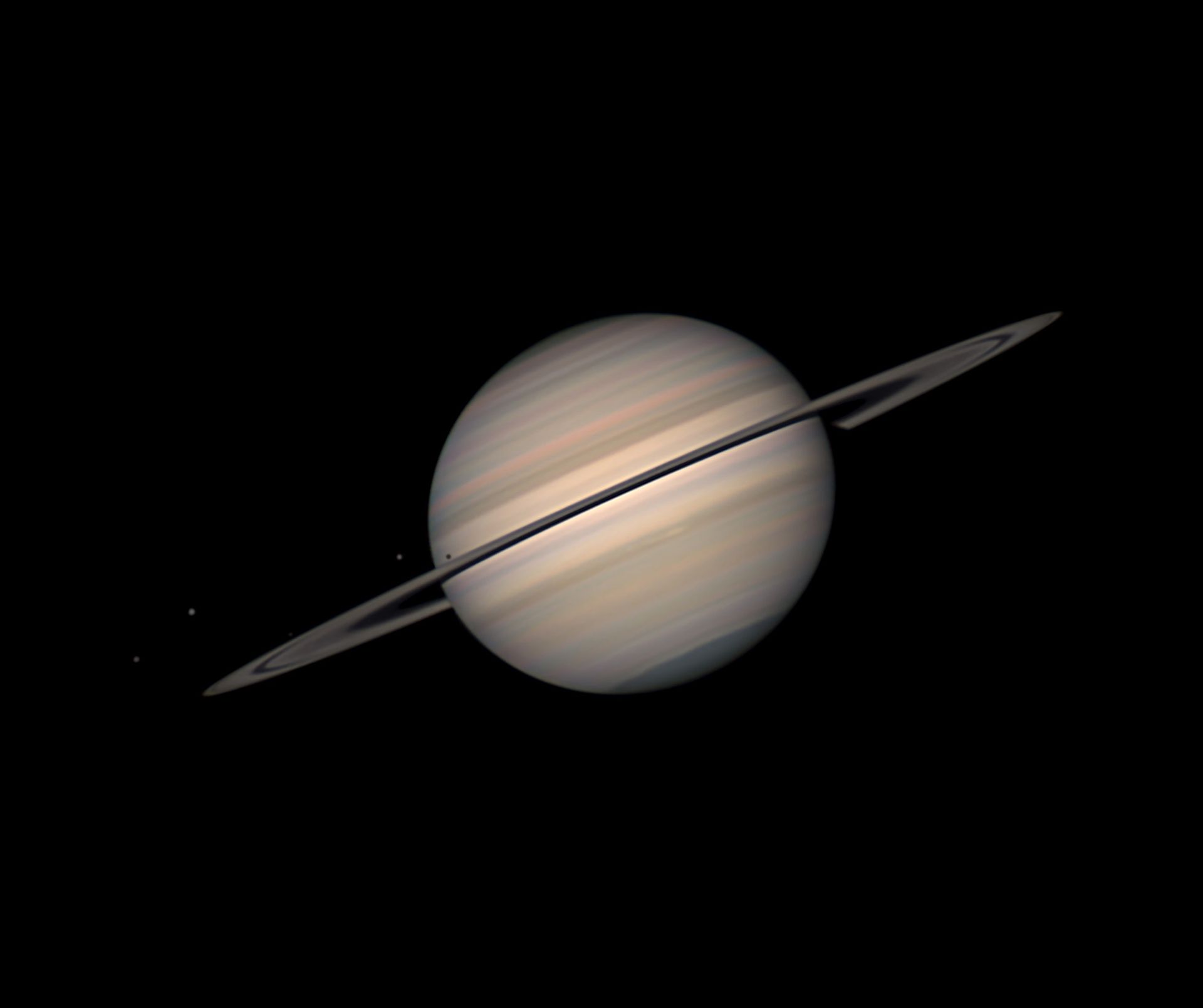
Planets, Comets & Asteroids: “Saturnian Equinox,” by Tom Williams (U.K.). Saturn’s rings appear edge-on from the perspective of Earth in this 2025 image showing a rare event during the planet’s near-30-year circuit of the sun. Williams’ photo displays “the start of local spring in the planet’s southern hemisphere,” observatory representatives stated.
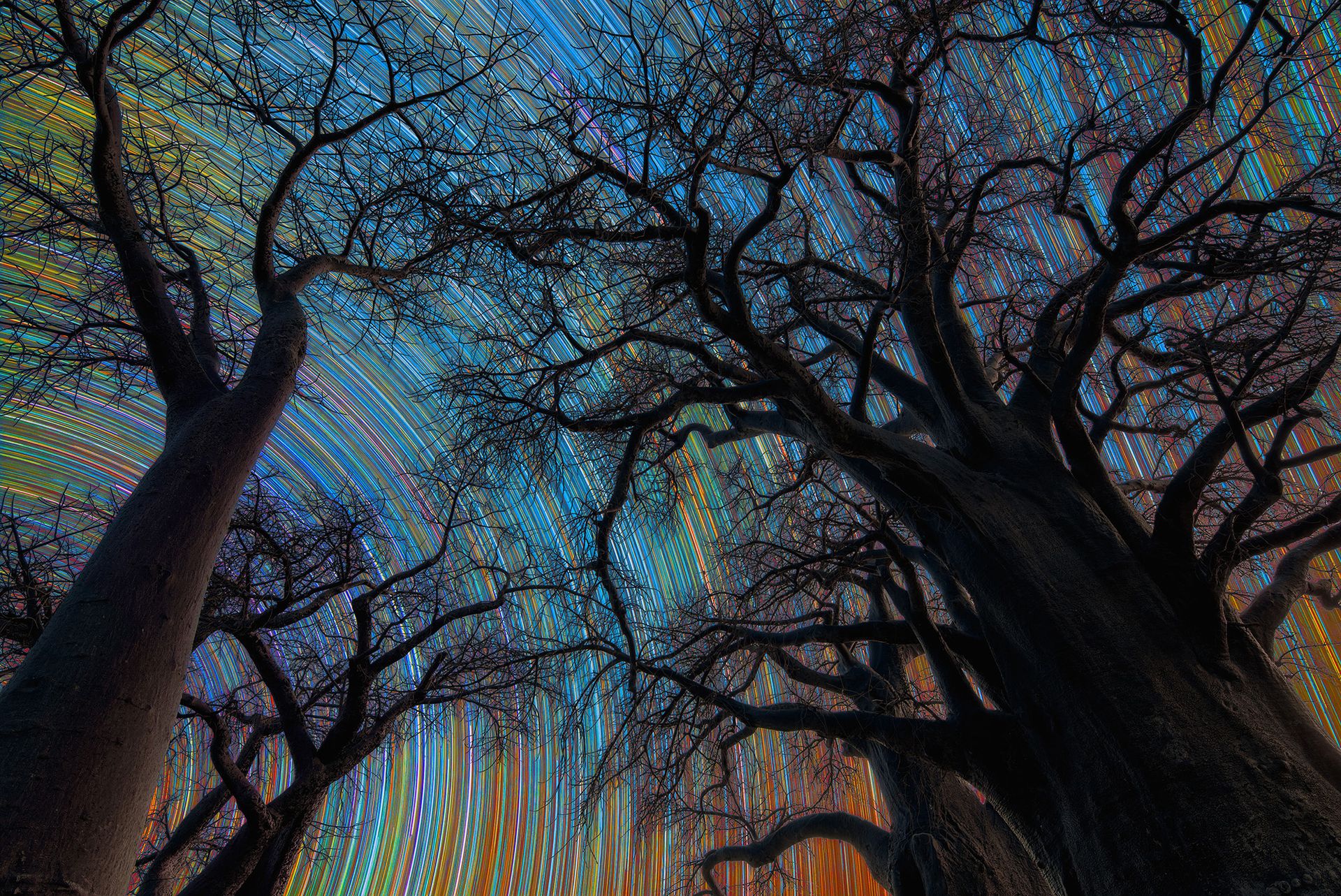
Skyscapes: “Botswana Star Trail,” by Stefano Pellegrini (Italy). This image was captured in Botswana in a location called Nxai Pan, which has large baobab trees. “Pellegrini played with the exposure and saturation, resulting in this almost psychedelic image,” observatory representatives said.
To see the full list of winners and the judges’ statements, visit the contest website.
for informational purposes only. We do not claim ownership, accuracy, or liability for the content provided. All rights belong to the original publisher.
Contains information related to marketing campaigns of the user. These are shared with Google AdWords / Google Ads when the Google Ads and Google Analytics accounts are linked together.
90 days
__utma
ID used to identify users and sessions
2 years after last activity
__utmt
Used to monitor number of Google Analytics server requests
10 minutes
__utmb
Used to distinguish new sessions and visits. This cookie is set when the GA.js javascript library is loaded and there is no existing __utmb cookie. The cookie is updated every time data is sent to the Google Analytics server.
30 minutes after last activity
__utmc
Used only with old Urchin versions of Google Analytics and not with GA.js. Was used to distinguish between new sessions and visits at the end of a session.
End of session (browser)
__utmz
Contains information about the traffic source or campaign that directed user to the website. The cookie is set when the GA.js javascript is loaded and updated when data is sent to the Google Anaytics server
6 months after last activity
__utmv
Contains custom information set by the web developer via the _setCustomVar method in Google Analytics. This cookie is updated every time new data is sent to the Google Analytics server.
2 years after last activity
__utmx
Used to determine whether a user is included in an A / B or Multivariate test.
18 months
_ga
ID used to identify users
2 years
_gali
Used by Google Analytics to determine which links on a page are being clicked
30 seconds
_ga_
ID used to identify users
2 years
_gid
ID used to identify users for 24 hours after last activity
24 hours
_gat
Used to monitor number of Google Analytics server requests when using Google Tag Manager