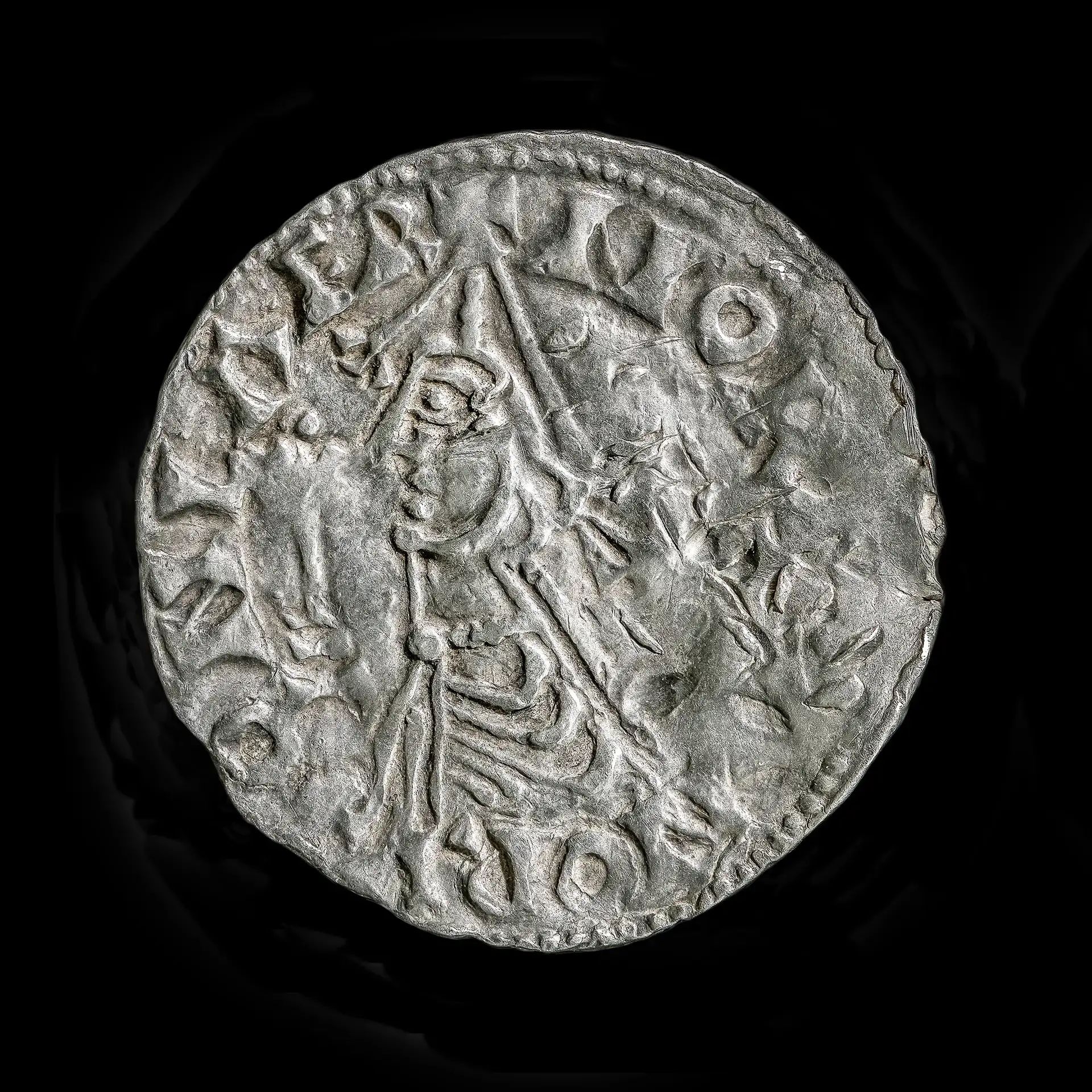
A rare silver coin minted during the reign of a famous Viking king has been discovered in a massive hoard in Norway that now comprises 5,500 coins and counting.
The coin is inscribed with the name of the Norwegian king Olaf Haraldsson, who ruled from 1015 to 1028 and, as St. Olaf or “Olaf the Holy,” is considered the national saint of Norway.
Fewer than 20 coins minted during Olaf’s reign have ever been discovered, and the newfound coin is a “national treasure,” according to a statement from the University of Oslo’s Museum of Cultural History.
Latest Videos FromLive Science
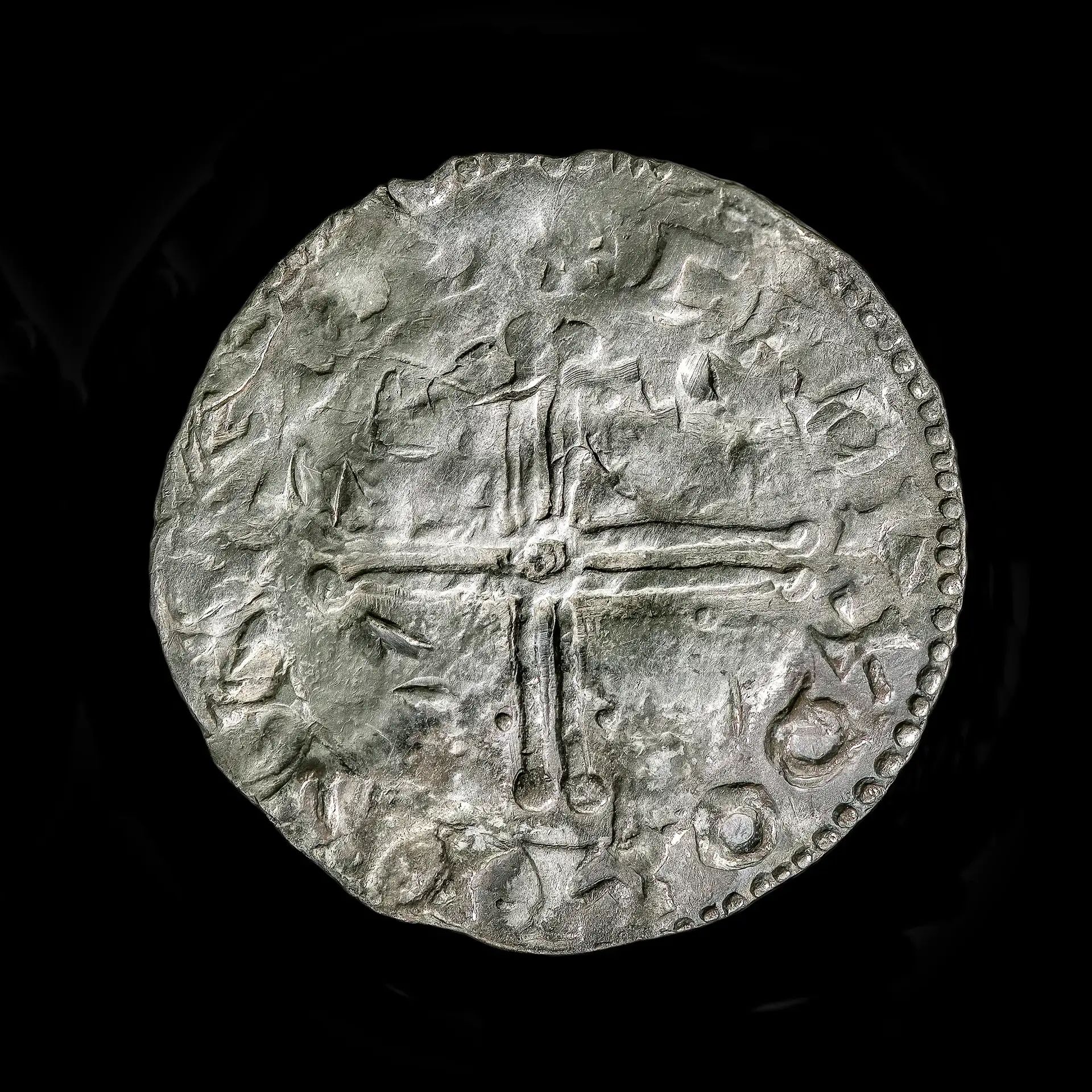
“Here we have a coin bearing the king’s portrait and a cross, with another cross on the reverse,” University of Oslo coin expert Svein Gullbekk said in the statement. “It is a Christianisation coin on a grand scale.”
Olaf is credited with establishing Christianity in Norway — an early step toward its full conversion about a generation later.
“We can see how King Olaf used coinage to legitimise the new faith and to establish himself as a Christian king of European standing,” Gullbekk said. “This is branding.”
Viking king
Haraldsson learned about Christianity when he joined Viking raids against England and France as a young man, and he was baptized in the French city of Rouen in about 1013, according to the statement.
Get the world’s most fascinating discoveries delivered straight to your inbox.
He became Norway’s king in 1015, and in about 1024 proclaimed that only Christianity would be legal, according to the University of Bergen. Much of Norway, however, remained faithful to the Norse gods during his rule, especially around the central Trøndelag region and in the eastern parts of the country.
The front of the silver coin portrays “Olaf the Holy,” who is now Norway’s national saint.
(Image credit: Lill-Ann Chepstow-Lusty / Museum of Cultural History)
But Olaf was made a Christian saint shortly after his death in 1030. He is now recognized as one of the first Christian kings of Norway and the first Norwegian king to issue coins in his own name.
The newfound coin is part of the Mørstad Hoard, which was discovered near the village of Rena in April. At that time, the buried hoard was described as the largest ever found in Norway and was estimated to contain almost 3,000 silver coins. However, subsequent research has determined that it includes anywhere from 5,500 to more than 6,000 coins, the statement said.
Mistaken identity
Anne Skogsfjord, a museum researcher charged with cataloging the coins, thought the Olaf coin was an Anglo-Saxon penny at first. But then she read the inscription and realized it was minted in Norway under Olaf.
“I could see that it read ONLAF R+ NORMANORV. … Could this really be a coin of Olaf Haraldsson that I was holding?” Skogsfjord said in the statement. “And it was! It was a very special moment.”
Olaf Haraldsson was one of Norway’s first Christian kings; the other side of the coin features a cross.
(Image credit: Lill-Ann Chepstow-Lusty / Museum of Cultural History)
The coin was struck between about 1024 and 1028, near the end of the Viking Age, and circulated for 20 to 25 years before someone deposited it in the hoard, the statement said.
Although the minting of the coin was a political and religious act, the coin also seems to have been used as currency; both sides bear numerous small cut marks, which was a common way of determining whether a coin was made completely of silver.
Gullbekk said Haraldsson himself had decided what the coins would look like and may have been present when they were minted.
“It is entirely possible that this very coin from Mørstad was once held in the king’s own hand,” he said in the statement.
See how much you know about ancient norsemen with our Viking quiz!
for informational purposes only. We do not claim ownership, accuracy, or liability for the content provided. All rights belong to the original publisher.
Contains information related to marketing campaigns of the user. These are shared with Google AdWords / Google Ads when the Google Ads and Google Analytics accounts are linked together.
90 days
__utma
ID used to identify users and sessions
2 years after last activity
__utmt
Used to monitor number of Google Analytics server requests
10 minutes
__utmb
Used to distinguish new sessions and visits. This cookie is set when the GA.js javascript library is loaded and there is no existing __utmb cookie. The cookie is updated every time data is sent to the Google Analytics server.
30 minutes after last activity
__utmc
Used only with old Urchin versions of Google Analytics and not with GA.js. Was used to distinguish between new sessions and visits at the end of a session.
End of session (browser)
__utmz
Contains information about the traffic source or campaign that directed user to the website. The cookie is set when the GA.js javascript is loaded and updated when data is sent to the Google Anaytics server
6 months after last activity
__utmv
Contains custom information set by the web developer via the _setCustomVar method in Google Analytics. This cookie is updated every time new data is sent to the Google Analytics server.
2 years after last activity
__utmx
Used to determine whether a user is included in an A / B or Multivariate test.
18 months
_ga
ID used to identify users
2 years
_gali
Used by Google Analytics to determine which links on a page are being clicked
30 seconds
_ga_
ID used to identify users
2 years
_gid
ID used to identify users for 24 hours after last activity
24 hours
_gat
Used to monitor number of Google Analytics server requests when using Google Tag Manager