It’s no secret that Apple silicon revolutionized mobile computing. The Arm-based chips brought snappy performance, high efficiency, and long battery life to the Mac lineup, and especially to MacBooks. Windows laptops weren’t left out for very long, as Qualcomm launched its own Snapdragon X-series processors in 2024. These weren’t the first Windows on Arm chips from Qualcomm, but they were the ones good enough to make people consider leaving Intel and AMD. Now, the Snapdragon X2 series is here, and Qualcomm’s second try at making laptop Arm chips, and they iron out the (very few) kinks of the first generation.
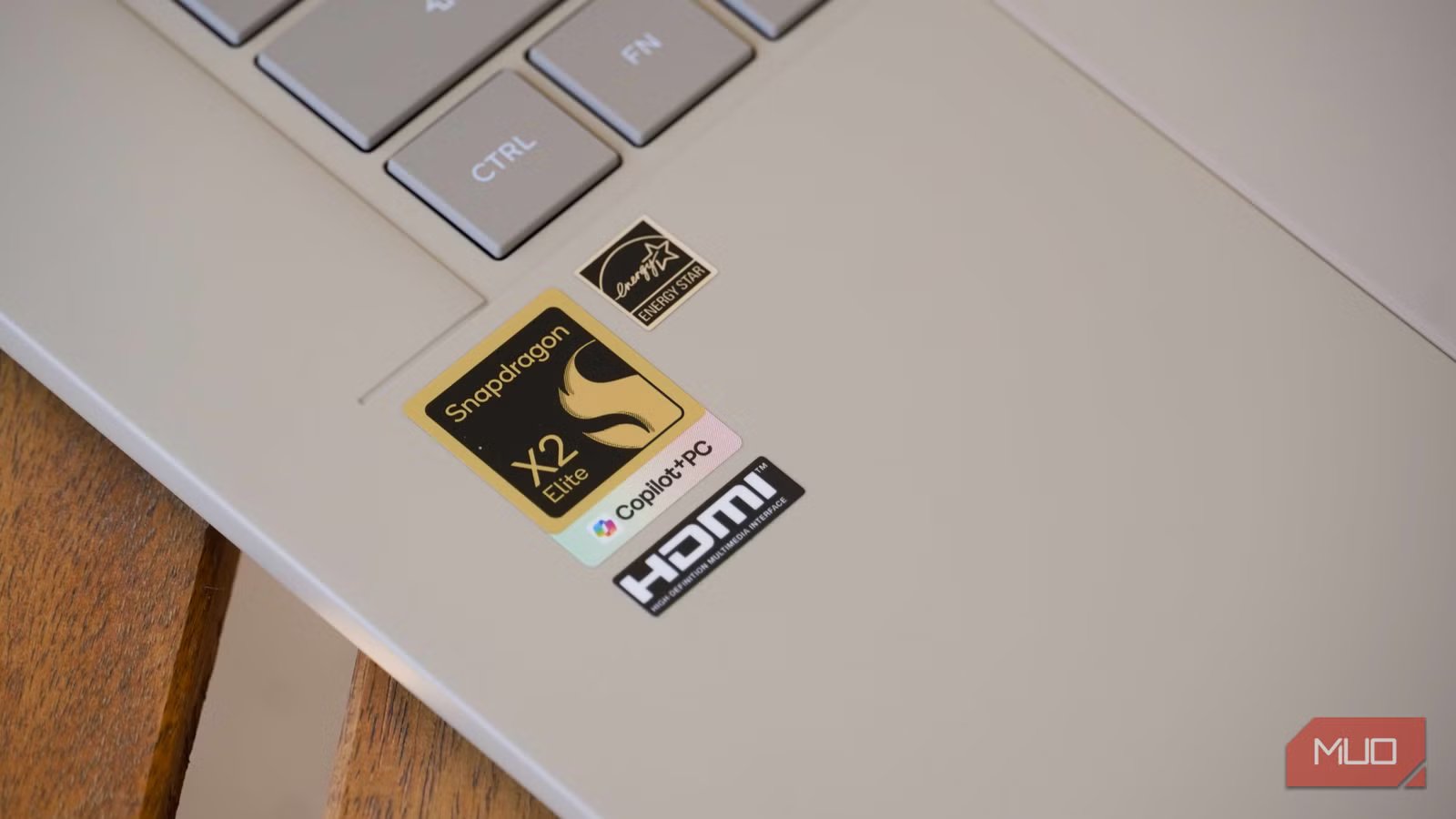
Well, most of them. Gaming is still an issue, and I’d like to see the Snapdragon X lineup in more laptop models. However, the Snapdragon X2 series introduces more powerful chip variants this year — including two SKUs branded as “Snapdragon X2 Elite Extreme.” I tried the Asus Zenbook A16, a pro-caliber Windows laptop with an 18-core Snapdragon X2 Elite Extreme, and it makes me never want to use an Intel or AMD chip again.

Asus Zenbook A16 review: I’ve never used a 16-inch laptop this light — and it has 18 cores
A lightweight, slimline, powerful 16-inch Snapdragon unit.
Intel isn’t the performance champ anymore
Arm chips, including Apple silicon and Snapdragon, are competitive

For a while, Windows on Arm laptops were less capable than Intel and AMD offerings, and both hardware and software limitations explained why. Now, Arm-based processors are so capable that they’re not just matching x86 chips — they’re crushing them. Before using the Snapdragon X2 Elite Extreme, my Snapdragon X experiences were with the budget Snapdragon X and Snapdragon X Plus tiers. This was still a refreshing change of pace compared to Intel laptops, but the performance and build quality of the entire package fell short compared to MacBooks with Apple M-series chips.
Asus’ Zenbook A16 is the complete package, and it’s a pretty incredible value. The laptop is as cheap as $1,699 at Best Buy, and that gets you a 16-inch touchscreen 3K OLED, that 18-core Arm chip, 48GB of RAM, and 1TB of storage. With the state of memory pricing these days, I’m surprised you can get 48GB RAM for under $2,000. A chip is only as good as the laptop it’s inside, so it’s nice to see a new high-end Snapdragon processor in a laptop with a chassis and build quality premium enough to match.
The performance isn’t even the best part about the Snapdragon X2 Elite Extreme (more on that later), but it’s still enough to crush Intel. My colleague Gavin Phillips ran the Zenbook A16 through a benchmarking suite, and the results were stunning. Usually, Arm chips excel in single-core performance. This was the case here, too, with the Snapdragon X2 Elite Extreme coming out ahead of the Intel Core Ultra 9 386H in the Lenovo Yoga Pro 9. But the multi-core tests showed an even bigger gap.

Our tests (and Geekbench 6 averaged data) showed the Snapdragon X2 Elite Extreme falls right in line with recent Apple silicon Pro and Max generations. It scored 22,227 in Geekbench 6’s multi-core tests, which gauge how a chip performs in intensive tasks like rendering, compiling, and virtualization. Single-core performance is arguably more important, as this tells you how snappy a laptop will feel during basic tasks like launching apps or browsing the web. The Snapdragon X2 Elite Extreme is good at both.
Battery life is the selling point
Intel is sometimes as fast, but it’s never as efficient
The one reason I invested in Apple silicon MacBooks and never looked back is battery life. Standby power draw and thermals were other perks, but they both trace back to the superb efficiency of Arm as well. While the Snapdragon X2 Elite Extreme and Asus Zenbook A16 aren’t quite as good a pair as my Apple M5 and MacBook Pro, it’s close. You can use the Zenbook A16 for a full workday, getting upwards of 12 hours on a single charge, and it’s only powered by a 70Wh battery.
I don’t have to bring a charger with me while I’m working remotely with the Zenbook A16, and I’m currently writing this feature on the road in the middle of a 2,000-mile drive. If you’re a digital nomad that lives in coffee shops and coworking spaces, or simply travels a lot, Snapdragon is for you. Intel chips might match Snapdragon chips in terms of performance with select SKUs, but they do so while drawing significantly more power. I’ve tested many Intel laptops, and they all seem to max out at a few hours of battery life with only light tasks. The common denominator is that they’re all powered by Intel (and x86) chipsets.

I can’t say the best thing about the Snapdragon X2 Elite Extreme is the platform’s battery life, because I’ve had too many issues with power on Windows laptops. Close the lid, put a Windows laptop in your bag, and there’s a chance it’ll overheat and drain the battery while it’s supposed to be sleeping. Plug in a third-party USB-C charger, and it might kernel panic. These are well-documented issues with Windows laptops, and specifically those with Intel or AMD chips, as discussed on the Microsoft forums. The culprit may be the x86 architecture, because I’ve experienced none of these issues on Snapdragon laptops like the Zenbook A16.
I usually get an hour of work in exchange for 10% of the Zenbook A16 battery life, and that’s with the gorgeous 3K OLED screen at full brightness. Depending on your workflow, you may see even better results. We did a 60-minute 2160p HDR video test (100 percent brightness, full screen), and the battery only dropped by three percent.
When I buy a laptop, I care about its portable performance. I want it to last long on battery power, preserve battery power on standby, and provide the exact same performance unplugged as when the power cable is connected. Very few Intel laptops get this right, if any (I’m yet to use one that meets these criteria). The Zenbook A16 does.
Snapdragon X2 Elite Extreme isn’t fully ready yet
But gaming and AI optimizations are getting better

There’s a big asterisk on everything I’ve explained so far, because Snapdragon-powered Windows laptops are not for me yet. That doesn’t mean they aren’t for you — we all have different needs — but I’d be remiss if I didn’t mention the limitations. In my case, I’m a macOS user through-and-through for productivity. If given the choice, I will always choose a Mac over a Windows PC for work. There’s something I love about Windows, though, and it’s the variety of hardware options. I own a dual-screen Windows laptop (Lenovo Yoga Book 9i) and two Windows gaming handhelds (Asus ROG Ally, Lenovo Legion Go), and I could never get those form factors from Apple.
Unfortunately, all three devices are x86-powered, because Snapdragon processors haven’t made their way to more exotic Windows form factors yet. I’m not sure if this will change soon, especially on the handheld gaming side. This is because Snapdragon chips, including the X2 Elite Extreme, are still not perfectly optimized or as performant as traditional options for gaming. And despite being a “Copilot+ PC” with on-device AI features like Microsoft Recall, running your own AI models may be hit-or-miss.
So, the Asus Zenbook A16 isn’t something I’d buy. If you want a Windows productivity laptop with long battery life and incredible performance, the Zenbook A16 could be for you. Instead, I’m left thinking about how my preferred Windows form factors don’t have Snapdragon chips available yet. I never want to use battery-draining Intel chips again, but Snapdragon X2 Elite Extreme needs to arrive on dual-screen laptops and handhelds — while addressing the gaming issues — for me to fully leave Intel behind.

- Operating System
-
Windows 11
- CPU
-
Qualcomm Snapdragon X2 Elite Extreme
- GPU
-
Adreno X2-90
- RAM
-
48GB LPDDR5
- Storage
-
1TB M.2 NVMe PCIe 4
- Battery
-
70Wh
The ASUS Zenbook A16 (2026) is an ultra-light 16-inch laptop powered by Snapdragon X2 Elite Extreme, featuring an 18-core CPU and 80 TOPS NPU for AI workloads. It offers a 3K 120Hz OLED display, up to 48GB RAM, Wi-Fi 7, and 21+ hour battery life in a 1.2kg premium Ceraluminum chassis.