

On this day in space! Sept. 1, 1979: NASA’s Pioneer 11 probe becomes 1st spacecraft to visit Saturn
[post_content]
Disclaimer: This article has been automatically aggregated from
On Sept. 1, 1979, NASA’s robotic space probe Pioneer 11 became the first spacecraft to fly by Saturn.
Pioneer 11 launched in 1973 on a mission to explore the asteroid belt, Jupiter and Saturn. It launched directly toward Jupiter, then used Jupiter’s gravity to slingshot around the planet, make a sharp turn and start flying toward Saturn. Four years and nine months later, it finally made it to Saturn.
During its closest approach, it was about 13,000 miles (2,100 kilometers) above the planet’s cloud tops. Because NASA’s two Voyager probes were also on their way to Saturn at that point, they sent Pioneer 11 straight through Saturn’s rings so it could determine whether it was safe for the Voyagers to do the same thing years down the road. So Pioneer 11 pioneered the way through Saturn’s outer rings, going where no spacecraft had gone before — and nearly colliding with a small moon along the way.
Pioneer 11 actually discovered several moons, along with a new ring, and the first evidence of a magnetic field around Saturn.
Why it mattered
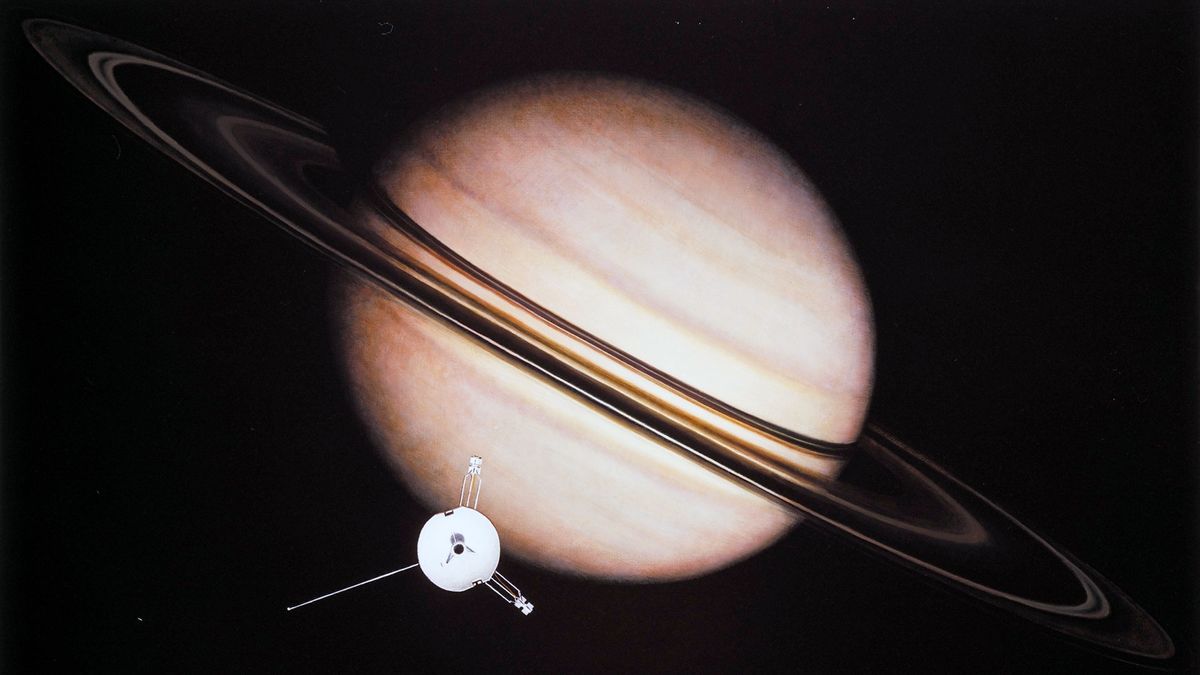
Pioneer 11 may have made history as the first spacecraft to visit Saturn, but its original mission was aimed at a very different planet.
The spacecraft was actually the twin of NASA’s Pioneer 10 probe, which launched toward Jupiter in March 1972 on a mission to prove spacecraft could survive passage through the asteroid belt and the harsh radiation environment at Jupiter. NASA wanted to be sure because of its next two missions, Voyager 1 and Voyager 2, which it hoped to launch on a tour of the outer planets (Jupiter, Saturn, Uranus and Neptune) due to a once-in-175-year alignment of the planets.
But before the Voyagers could launch in 1977, Pioneer 10 and Pioneer 11 had to make the voyage to at least one of those outer planets first. Their target: Jupiter.
Pioneer 11 launched in April 1973, a year after Pioneer 10. By that time, Pioneer 10 had already made it safely through the asteroid belt and en route to Jupiter, which it flew by in May 1974.
Based on Pioneer 10’s success, NASA mission managers decided to slingshot Pioneer 11 around Jupiter in a gravity assist to send it even deeper into space for a Saturn flyby. The probe made it through the asteroid belt in April 1974, then zoomed by Jupiter on Dec. 2 of that year (taking the best photos yet of its Great Red Spot), before flying off toward Saturn.
Pioneer 11 set the stage for Voyager 2’s flyby of Saturn by testing the trajectory that later probe (which was already headed to the outer planets by 1979) would take when it flew by Saturn and headed off to Uranus and Neptune. The spacecraft also used its 12 instruments to observe the planet (as it did for Jupiter), and took 440 images of Saturn during its encounter.
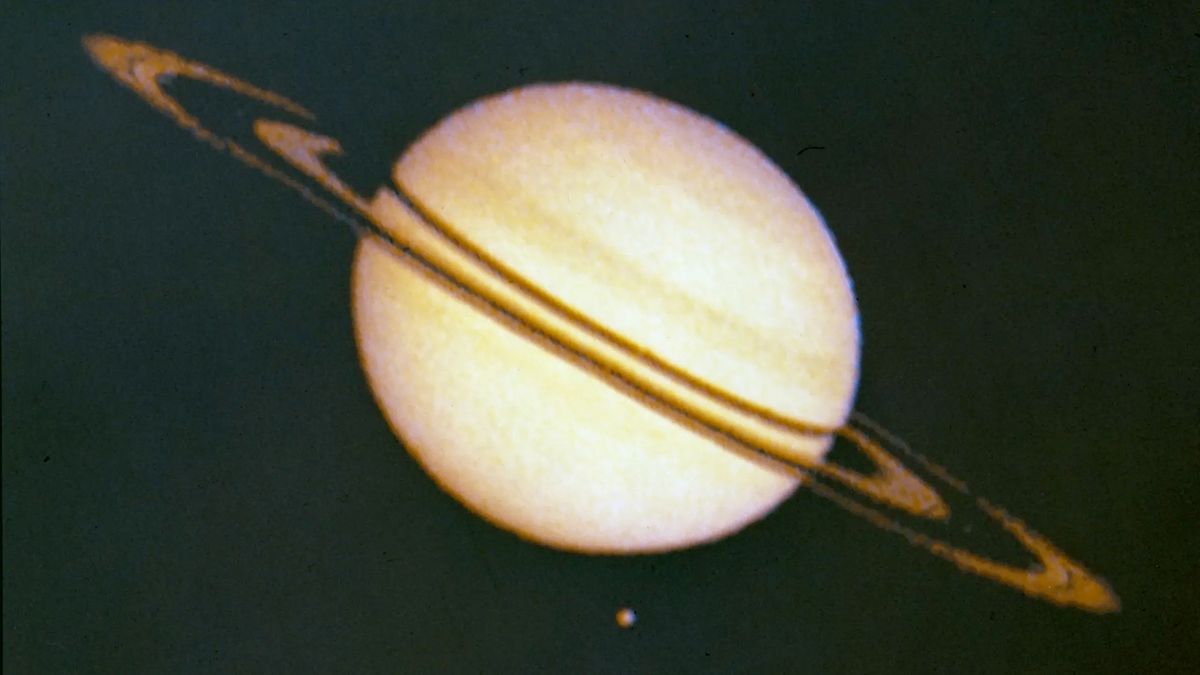
It was Pioneer 11 that helped scientists discover two new moons of Saturn, as well as a previously unseen ring. The flyby also revealed that Saturn’s atmosphere is made of mostly liquid hydrogen and has a magnetic field, NASA has said. Pioneer 11 also photographed Titan, Saturn’s cloud-covered moon, showing it as an orange sphere with an average temperature of minus 315 degrees Fahrenheit (minus 192 degrees Celsius).
Pioneer 11 whipped by Saturn at a whoppping 71,000 mph, but kept studying the planet even as it departed, taking its final observations in October 1979.
While NASA originally hoped Pioneer 11 would last for 21 months, it survived in deep space for 22 years, ultimately passing the outermost planets on Feb. 23, 1990 to begin a trip toward interstellar space.
NASA received its final signal from Pioneer 11 on Nov. 24, 1995, ending its mission. The probe was 4 billion miles from Earth and still moving away. The probe also carried a plaque, designed by Carl Sagan, Frank Drake and Linda Salzman Sagan, designed to help a potential alien civilization learn about humanity and Earth’s location, a sort of precursor to the golden record on the Voyager probes.
Today, you can see a mock-up of Pioneer 11 and Pioneer 10 at the Smithsonian National Air and Space Museum in Washington, D.C.

On this day in space! Aug. 31, 1965: NASA’s ginormous Super Guppy carrier plane takes 1st flight
for informational purposes only. We do not claim ownership, accuracy, or liability for the content provided. All rights belong to the original publisher.