

Viltrox AF 16mm f/1.8 FE (APO) review — a great budget lens
[post_content]
Disclaimer: This article has been automatically aggregated from
Key specs
Type: Full-frame prime lens
Focal length: 16mm
Maximum aperture: f/1.8
Lens mount: Sony FE, Nikon Z
Weight: 19.4 oz (550 g)
Dimensions: 3.35 x 4.06-in (85.2 x 103 mm)
Filter thread: 77 mm
Release date: May 2023
As you know, prime lenses come in a wide range of sizes and focal lengths, and every once in a while, one comes along and seems to grab you by the scruff of your neck. One such lens is the Viltrox AF 16mm f/1.8 FE, which is an impressive and useful lens for astrophotography thanks to its wide-angle field of view and fast maximum aperture.
This lens is one of the wider prime lenses that are available and could be one of the best third-party lenses for astrophotography. With a price of just $464 (£533), this is one of the most cost-effective wide-angle primes, but rather than being a second-rate lens, its build quality and image quality are fantastic. It’s not the best, but it’s undoubtedly a lens you would enjoy.
Image quality is excellent overall, with no need for lens corrections, except for vignette removal when shooting wide open. With near-perfect sharpness and minimal distortion and aberrations straight out of the camera, perhaps the weight of the lens is a small price to pay.
The lens is made up of 15 elements in 12 groups and is built like a tank, with an all-metal body. It is pretty heavy, though, weighing in at 19.4 oz (550 g) despite its relatively compact size. Attach this lens to one of the best Sony cameras and you will have a formidable combination. The 16mm f/1.8 is also available in the Nikon Z-mount.
Viltrox AF 16mm f/1.8 FE lens review
Viltrox AF 16mm f/1.8 FE: Performance
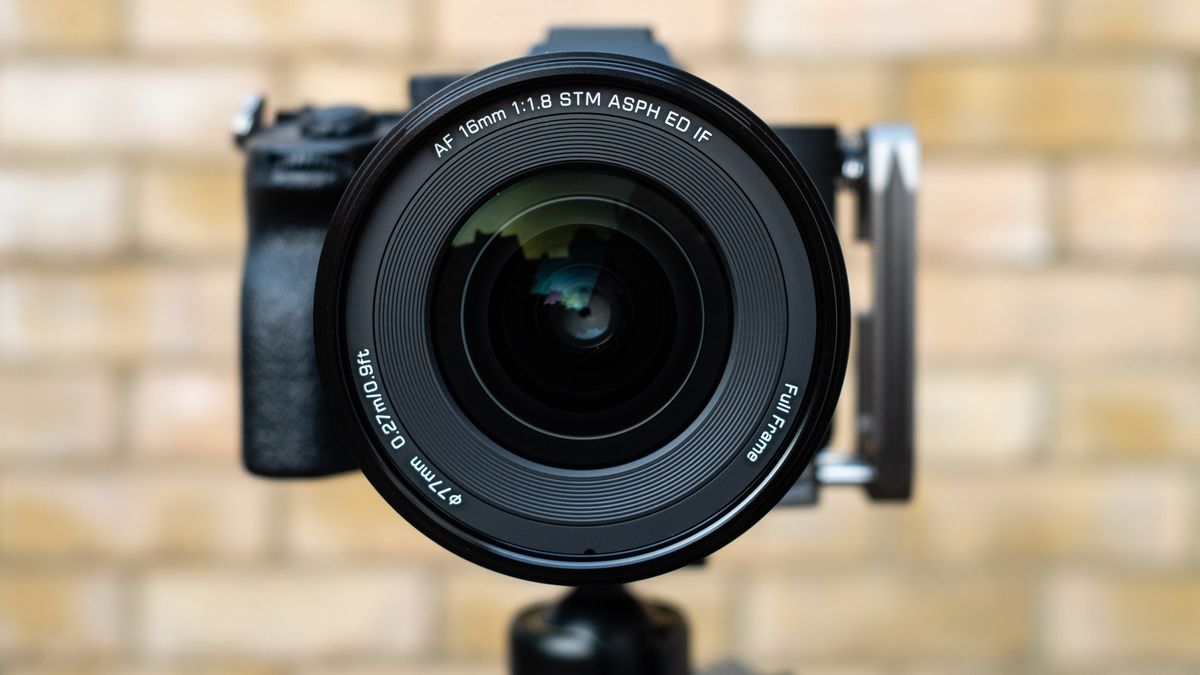
- Great image quality
- Impressively sharp at f/1.8
- Excellent corner sharpness
With a focal length of 16mm and a maximum aperture of f/1.8, this is clearly a great lens for astrophotography from a technical point of view. The light-gathering capabilities are excellent, to say the least, and during testing it was possible to shoot at a range of ISO levels with a moonless sky. Even ISO 800 was often high enough for a correct exposure.
The image quality produced by the 16mm f/1.8 is great, with excellent levels of sharpness across the frame. What’s most important here is that even corner sharpness is fantastic when wide open at f/1.8. This is the aperture setting where vignetting is at its strongest, but it reduces drastically when you stop down to f/2.8 and is completely gone by the time you stop down to f/4.
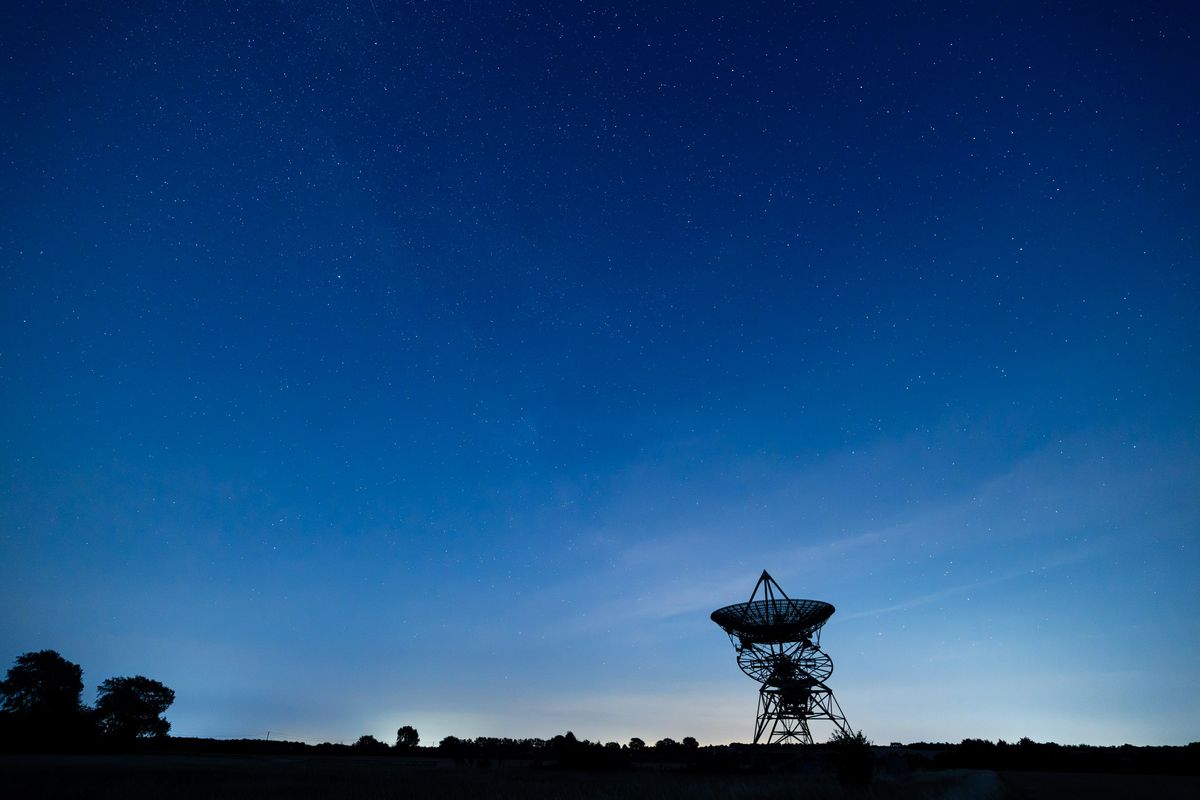
(Image credit: James Abbott)
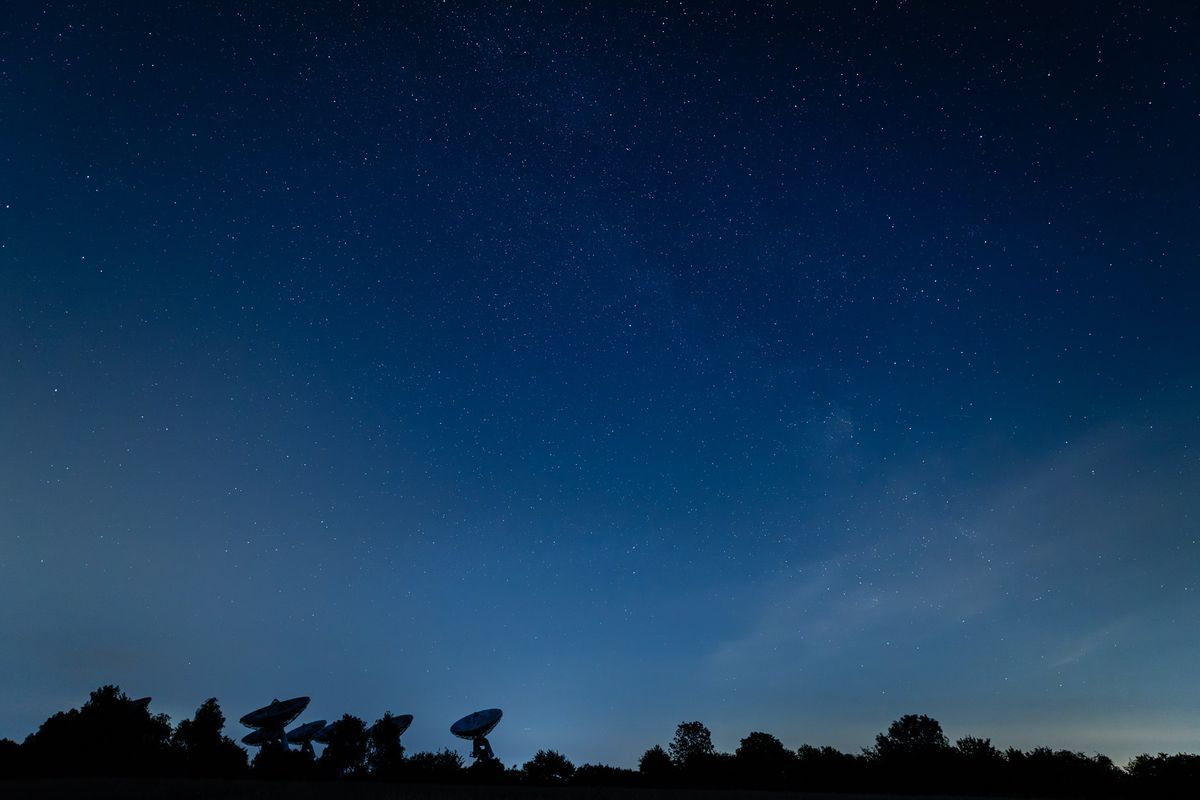
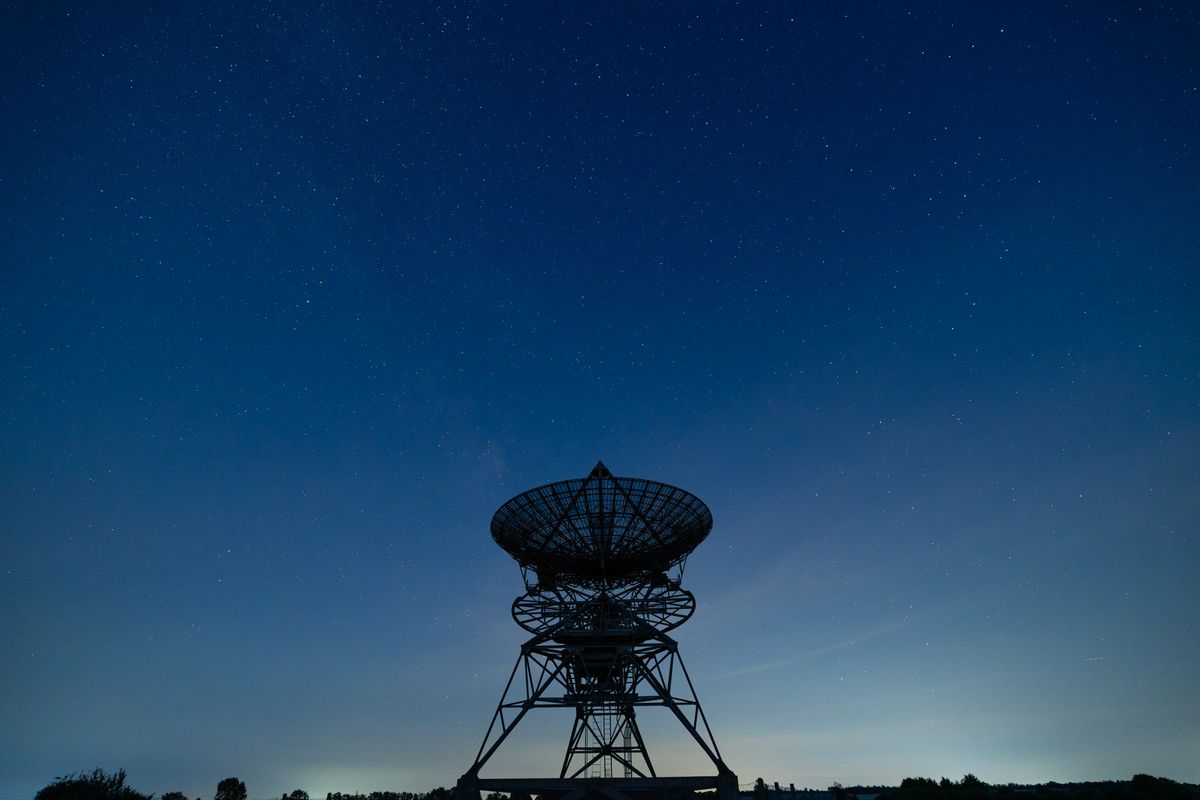

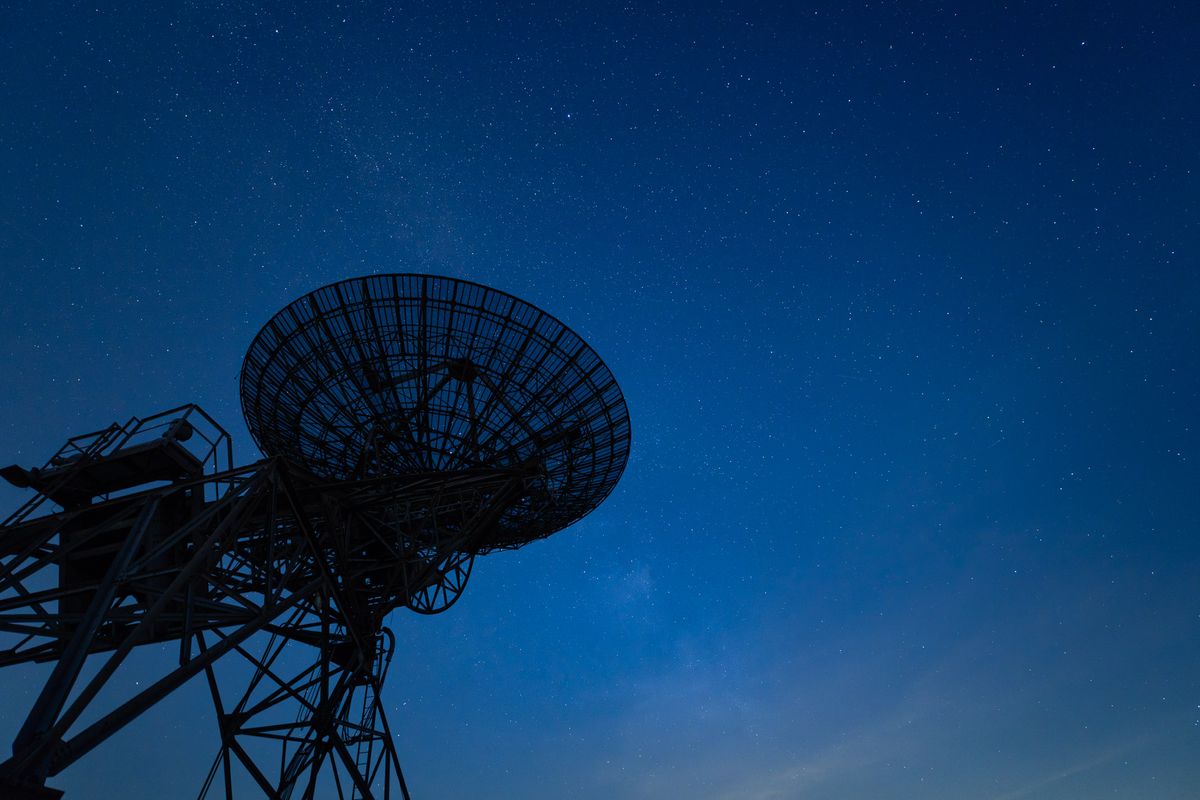
Luckily, though, there is a lens profile in Adobe Camera Raw and Adobe Lightroom that completely removes vignetting. There’s also only minimal chromatic aberration and a tiny amount of barrel distortion, which is impressive given the wide field of view produced by the lens.
As mentioned before, sharpness is great wide open and improves incrementally as you stop down up to the sweet spot of the lens, which is f/8. Sharpness drops slightly at f/11, and it’s at f/16 where diffraction begins to soften the image overall. This increases further when you stop down to f/22.
These latter apertures aren’t relevant to astrophotography; the medium ones aren’t either but the sharpness produced at f/1.8 and f/2.8 is exactly what you want.
Viltrox AF 16mm f/1.8 FE: Design
- Weather-sealed build
- Compact yet heavy
- Great handling
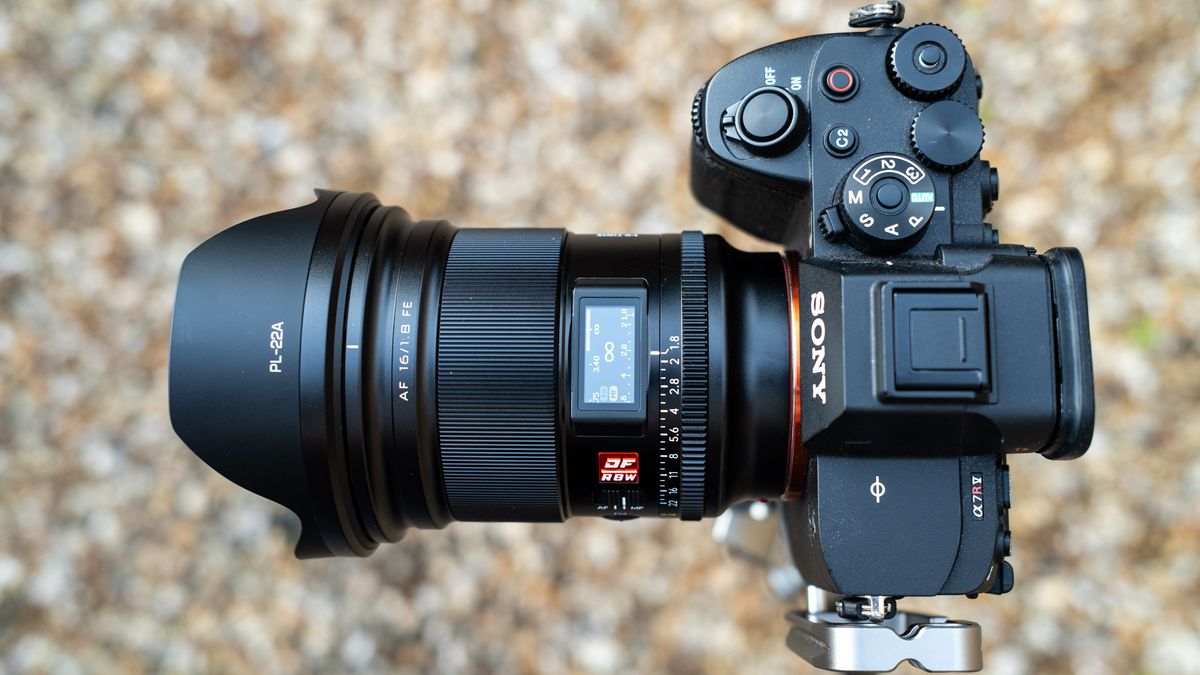
The 16mm f/1.8 lens is something of an oddity in one respect: it’s both compact and heavy considering its size, although this comes down to its optical construction. The lens weighs 19.4 oz (550 g) with a size of just 3.35 x 4.06 in (85.2 x 103 mm). It does, however, balance well with Sony A-series cameras.
The 16mm f/1.8 is made up of 15 elements in 12 groups, including four ED glass and three aspherical lenses. The optical construction is designed to deliver sharpness, detail and high contrast with minimal distortion. It’s fair to say it achieves these. Of course, you will experience some perspective distortion when tilting the lens up to capture more of the night sky when there are ground elements in the foreground.
Unlike some wide-angle lenses, the front element isn’t bulbous, and it features an HD nano multilayer coating with a water-resistant and antifouling coating. The filter thread is also just 77mm, so you can easily attach screw-in and square filters if you use them for your astrophotography.
The minimum focusing distance of the lens is 10.6 inches (27 cm), which is great for landscape photographers but less important for astrophotographers.
(Image credit: James Abbott)
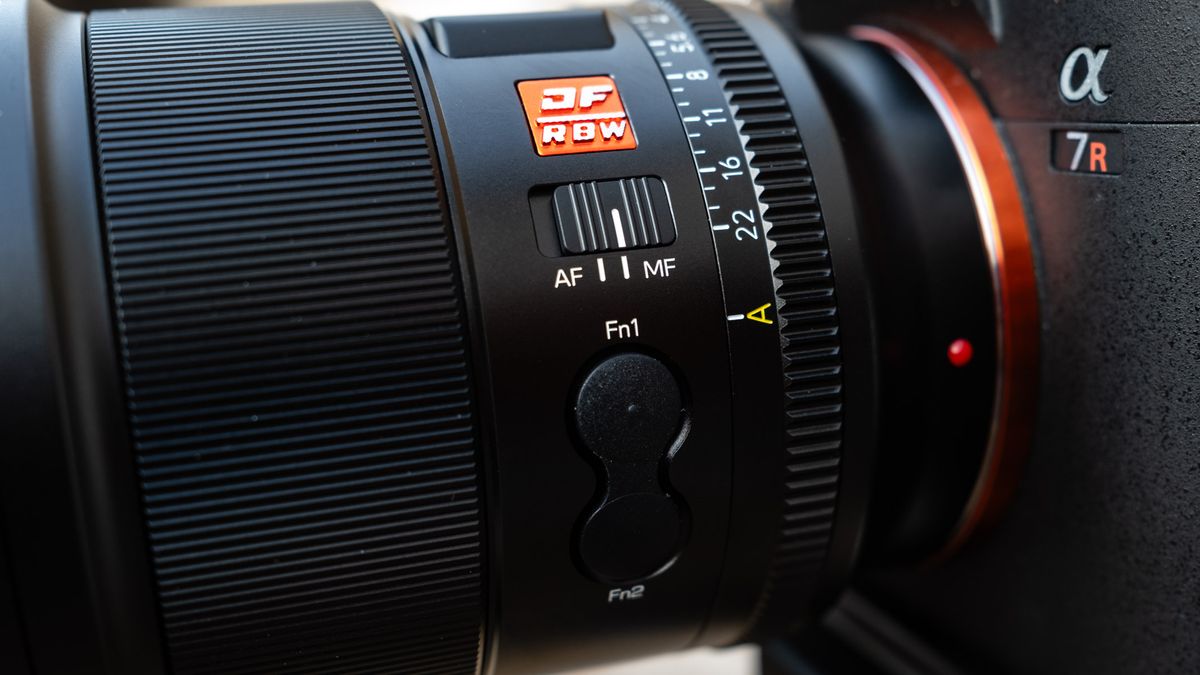
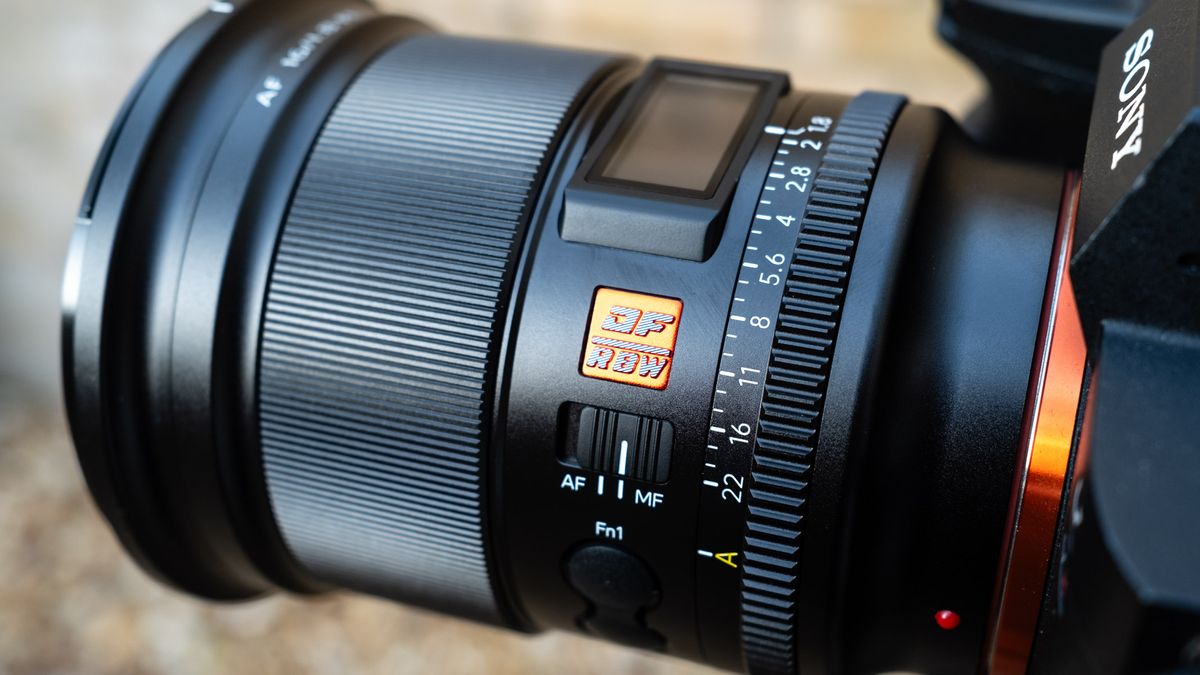
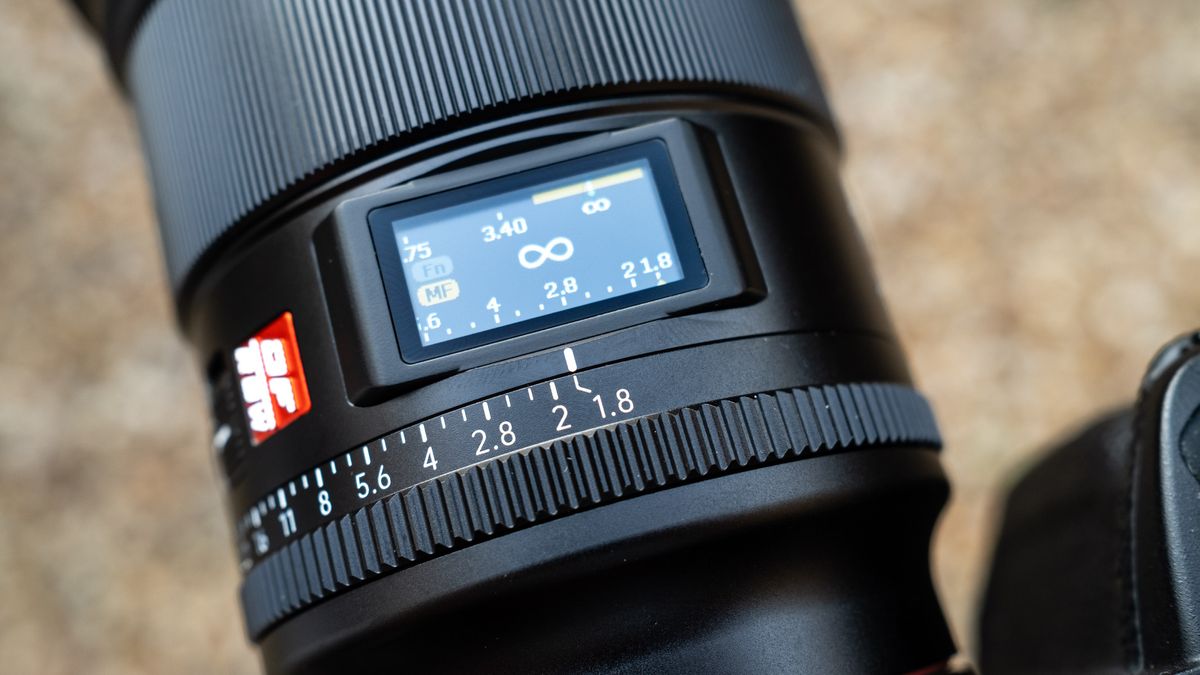
Build quality is impressive thanks to an all-metal body and weather-sealing. This gives the lens a premium look, and it feels robust in the hand. There’s also a useful digital color screen that displays lens information.
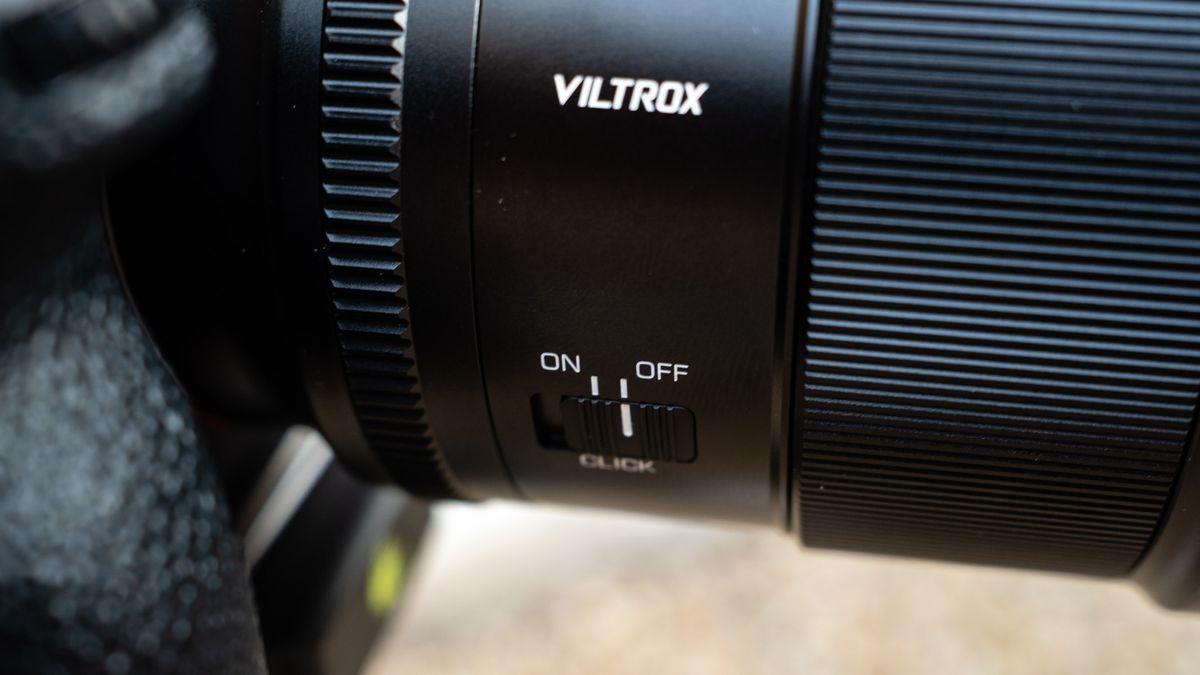
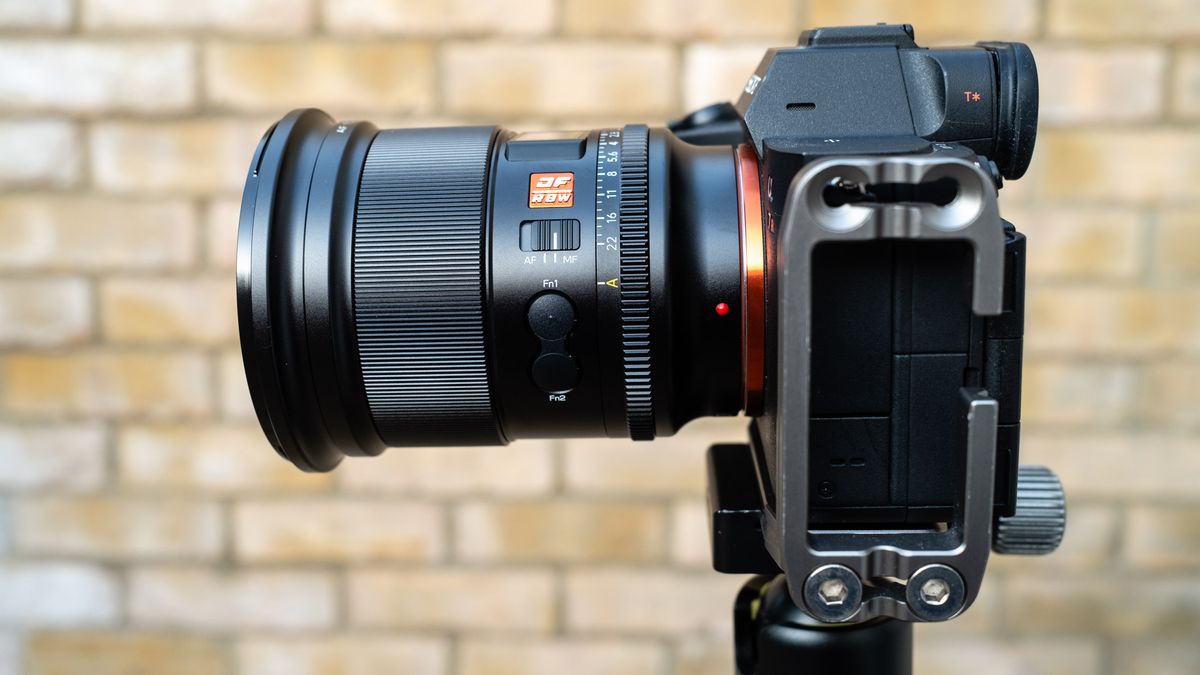
When it comes to controls, there are possibly a few more on this lens than you might find on the average prime. There’s a manual focusing ring that’s wide enough for use when wearing gloves, a manual aperture ring that can be set to stepped and stepless operation using a switch on one side of the lens, two customizable Fn buttons and an AF/MF switch.
Viltrox AF 16mm f/1.8 FE: Functionality
- Small color digital screen
- Customizable Fn buttons
- 105.6-degree field of view
The Viltrox AF 16mm f/1.8 FE is a full-frame lens offering a generous 105.6-degree field of view, allowing you to capture more of the night sky. This lens naturally works with all Sony FE bodies, and if you shoot APS-C, it will give you an equivalent focal length of 24mm. This means if you currently own an APS-C camera but plan to upgrade to full-frame, this lens could comfortably join you on that journey.
As prime lenses go, this one has a few more bells and whistles than most, so there are a few more things to talk about than usual. Focusing is internal, so the front element doesn’t rotate or extend outwards, which is great when using filters.
For astrophotography, manual focus is the only way to go, but this lens also has autofocus for when you’re shooting other subjects. The autofocus isn’t the fastest we’ve seen, taking about 0.25 seconds to lock onto subjects when the lens is wide open, or 0.5 seconds when stopped down. This is driven by an SMT stepping motor, which is quiet but audible.
One feature that you don’t see on many lenses is a small color digital screen on the top of the lens. This shows the focus distance, aperture setting and the active Fn control. Is it a gimmick? A bit. Is it useful? Yes. For astrophotography, the screen is definitely useful because it’s illuminated.
As with most Viltrox lenses, there’s also a USB-C port on the lens mount so it can be powered. This allows you to connect the lens to the Viltrox Lens app via Bluetooth to update firmware and customize the Fn buttons and the digital screen’s welcome screen. This makes firmware updates incredibly easy, which is a great feature to have.
Viltrox AF 16mm f/1.8 FE: User reviews
In online reviews, users consistently highlight the lens’s value and image quality. Build quality comes up time and time again, thanks to the all-metal build.
Many users report that overall, the lens offers much more than you’d expect for the price and even more than some more expensive lenses.
How we tested the Viltrox AF 16mm f/1.8 FE
The Viltrox AF 16mm f/1.8 FE was tested in combination with the Sony A7R V, which offers an unforgivingly high resolution. The lens was tested at night with a focus on astrophotography, and in daylight to assess sharpness, distortion and general functionality for an all-round approach to testing.
Should you buy the Viltrox AF 16mm f/1.8 FE?
Buy it if:
✅ You’re on a budget: The Viltrox AF 16mm f/1.8 FE is less expensive than alternative lenses offering the same focal length and maximum aperture.
✅ You want a wide-angle prime: Thanks to its wide field of view, you can capture more of the night sky, while the fast maximum aperture is ideal for astrophotography.
Don’t buy it if:
❌ You would like flexibility: If you would like the flexibility of a variable focal length, a zoom lens is the only way to go. They are typically slower than primes, though.
❌ You’d like a wider view: This is a lovely wide lens, but you can get wider options as both primes and zooms.
Since there are only a few alternatives to the Viltrox AF 16mm f/1.8 FE, and given that it offers excellent value for money, this is absolutely a lens worth considering if you need a wide-angle prime.
Furthermore, you’ll struggle to find a similar alternative with the same balance of overall build quality and price. Image quality is excellent, even in the corners and edges of the frame when shooting wide open with minimal distortion.
The two customizable Fn buttons and the illuminated color screen that provides useful lens information are extremely helpful when shooting in the dark.
With a price of $464 (£533) and given its build quality, image quality and overall handling, this lens represents excellent value for money. And while it may be a full-frame lens, APS-C users can still enjoy a 24mm equivalent focal length, so it’s a useful lens for astrophotography whichever format you shoot with.
This is a professional-quality lens with a mid-range price tag, and like other Viltrox lenses, you get the lens, a lens hood, front and rear lens caps and a soft lens case in the box.
If this lens isn’t for you
The Viltrox AF 35mm f/1.2 LAB FE is a slightly less wide Viltrox lens with a much faster aperture and is part of the company’s flagship LAB series.
The Sony FE 20mm f/1.8 G is a fantastic wide-angle prime offering excellent image quality in a compact and lightweight form factor.
The Sigma 14mm f/1.4 DG DN Art is something of a beast, both in terms of specs and its size. With a 14mm focal length and f/1.4 maximum aperture, it’s perfect for astrophotography.
for informational purposes only. We do not claim ownership, accuracy, or liability for the content provided. All rights belong to the original publisher.