

Your next ‘cheap’ new EV isn’t coming – unless you buy used
[post_content]
Disclaimer: This article has been automatically aggregated from
The global electric-car market is in a weird pricing flux. In Britain, Hyundai has opened orders for the Ioniq 3, a compact electric hatchback that starts at £22,245, or £18,495 after the country’s £3,750 Electric Car Grant. The 61kWh version can travel up to 308 miles (WLTP range), while higher-end trims add features such as Matrix LED headlights and Hyundai’s new Pleos Connect infotainment system, based on Android Automotive OS.
Cross the Atlantic, however, and that particular proposition disappears. Hyundai has no current plans to bring the Ioniq 3 to the U.S. Meanwhile, Cox Automotive put the average U.S. new-EV transaction price at $54,754 in August 2026. The gap is not simply about one car. It highlights a broader problem: while other markets are producing increasingly affordable electric cars, the U.S. still has remarkably few mainstream EVs around the 20,000-25,000 mark.
For buyers waiting for the electric equivalent of an inexpensive commuter car, the transition has therefore taken longer than promised. And while new EVs are finally getting cheaper, the used market remains where the biggest bargains can often be found.
The $55,000 EV price problem
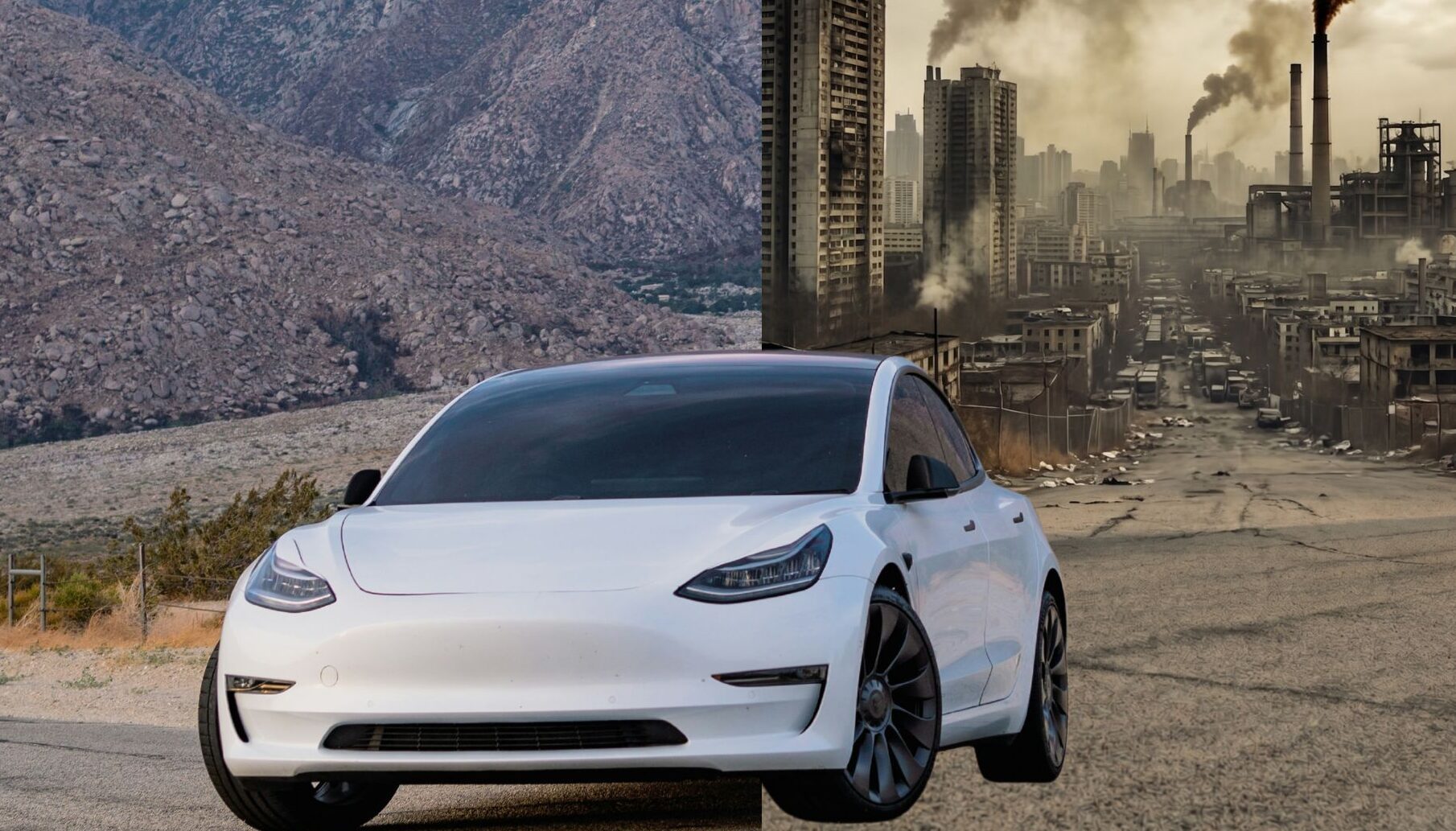
The U.S. EV market has been shaped by a complicated combination of industrial policy, tariffs, battery-sourcing rules, the expiration of federal consumer incentives, and the economics of building electric cars domestically. Sadly, what started out as protectionist policies meant to safeguard American interests is eventually becoming the thorn in its path to better growth.
The U.S. has imposed tariffs exceeding 100% on Chinese electric vehicles, while broader tariffs affect imported vehicles from other markets as well. At the same time, previous federal clean-vehicle incentives were tied to increasingly stringent North American battery and critical-mineral sourcing requirements. The consumer clean-vehicle tax credits themselves expired for vehicles acquired after September 30, 2025.
While the federal $7,500 purchase credit has ended, state-level incentives offer localized relief. Roughly 15 states still provide rebates, ranging from New York’s $2,000 point-of-sale discount to Colorado’s $3,250 low-MSRP credit and Maine’s $8,000 low-income grant – meaning a buyer’s ZIP code dictates whether new EV affordability remains entirely out of reach.

These policies were designed partly to encourage domestic production and reduce dependence on Chinese supply chains. But they also make it difficult for inexpensive overseas EVs to simply arrive in American showrooms and compete on price.
The result is an unusual market. The headline number needs context. Cox Automotive put the average U.S. new-EV transaction price at $54,754 in August 2026, compared with $50,089 for all new vehicles that are ICE or hybrids. In other words, the typical new EV costs about $4,665 more than the average new car.
That does not make $55,000 a price floor. Several EVs now start well below it. The real problem is further down the market. The U.S. still has relatively few mainstream new EVs in the 20,000-25,000 range. It is not that America gets EVs by the dozen, but when it does, it is mostly accessible to the upper strata of purchasing power. For instance, the new BMW i3.
Tariffs, domestic battery-sourcing rules, battery costs, vehicle size, manufacturing economics, and automaker strategy all contribute to that gap. Protectionist policies are part of the story, but they are not the entire explanation.
The great showroom reset
The industry is also going through an uncomfortable reset. Automakers are no longer treating every planned EV as something that must reach production simply because electrification remains a long-term priority.
Hyundai has discontinued the standard Ioniq 6 and paused imports of the 2026 Kona Electric, while Kia has discontinued the Niro EV. Tesla is also ending production of the Model S and Model X amid declining demand. Meanwhile, Kia has delayed the high-performance EV6 GT and EV9 GT indefinitely, citing changing market conditions.
This is, however, not a wholesale retreat from the EV arena.
Automakers are simultaneously developing cheaper, longer-range and faster-charging next-generation models. Online reports have us counting about 20 electric vehicles (including variants) that have been discontinued this year alone in the USA.
The reasons vary by vehicle. Tariffs have played a role in some cases, particularly for imported models, while weak demand, profitability, manufacturing costs, and changing product strategies are influencing other decisions. In Volvo’s case, as detailed by the Business Insider report, the company confirmed that U.S. sales of the EX30 and EX30 Cross Country will end after the 2026 model year, but did not publicly give a specific reason for the decision.
That distinction is important because this is not simply a story about automakers abandoning electric cars. It is a story about automakers becoming much more selective about which electric cars they are willing to build. The industry appears increasingly interested in EVs that can make economic sense at scale, rather than inexpensive first-generation models that may require heavy incentives to move.
The global divergence
Europe is seeing a growing selection of compact, relatively inexpensive EVs, while Chinese manufacturers have built enormous advantages in battery production and EV manufacturing scale. An IEA report revealed China accounted for more than 80% of global battery manufacturing capacity at the end of 2025 and produced nearly three-quarters of the world’s electric cars, about 16 million in production and 2.5 million in exports.
Ford CEO Jim Farley has repeatedly warned that Western automakers are running out of time to respond to China’s automotive advantage. The Hyundai Ioniq 3 is a useful example of what this competition can produce. Its £18,495 UK entry price, after the government grant, gets buyers into a compact EV with modern software and a substantial battery. The 61kWh model offers up to 308 miles of WLTP range.
That does not mean the Ioniq 3 is a $24,000 car in the U.S., nor does its specification automatically translate into an American-market range rating. It does, however, demonstrate how much technology and usable range manufacturers can now package into a relatively inexpensive electric hatchback.
American buyers are not completely locked out of affordable EVs. The market is finally moving downward. The Chevrolet Bolt is priced below $30,000, the Nissan Leaf starts around $31,500, and Kia’s EV3 is expected to sit below $32,000. But that is still a very different proposition from having a broad selection of new EVs below $25,000.
That missing price band is the real problem.
The used-EV escape hatch
For buyers who cannot or do not want to spend $30,000-plus on a new electric car, depreciation has created another route into the market. It is important not to exaggerate how cheap used EVs are. fCox Automotive says the average used-EV listing price was $37,441 in August 2026. That is nowhere near $15,000.
But the average hides a wide range of vehicles. Older EVs can be dramatically cheaper. iSeeCars, for example, puts the average price of a 2022 Nissan Leaf at roughly $14,923, while used Chevrolet Bolts, Leafs, and other early-generation EVs can be found around the $15,000-20,000 range depending on mileage, condition, and location.
That makes the used market particularly interesting for buyers who care more about inexpensive electric transportation than having the newest software, fastest charging, or longest range.
Having said that, there is one important precaution. A cheap EV is only a bargain if its battery is healthy. Buyers should request a battery State of Health report where available, or have the car independently inspected before purchase. Battery condition, warranty coverage, charging history, and remaining range matter far more on a used EV than they do on a three-year-old petrol hatchback.
The $25,000 EV remains the missing piece
The U.S. does not have a complete absence of affordable EVs. What it lacks is a broad, mature market of new electric cars around 20,000-25,000. That distinction matters. The Bolt, Leaf, and EV3 show that manufacturers can push prices downward, but the market still has a sizeable gap between today’s roughly $29,000 entry point and the 20,000-25,000 cars becoming possible elsewhere.
Closing that gap will require more than simply building batteries in America. Automakers will need cheaper platforms, higher production volumes, efficient supply chains, and lower-cost battery technology. LFP batteries can help, but they are only one part of the equation.
Until those pieces come together, the American buyer looking for genuinely inexpensive electric transportation has two choices: wait for the next generation of cheaper EVs (which are pretty far in the future based on the current market dynamics), or look backward instead of forward.
And right now, the used lot is often where the better bargain is hiding.
RELATED COVERAGE:
for informational purposes only. We do not claim ownership, accuracy, or liability for the content provided. All rights belong to the original publisher.