I was reluctant to get a 3D printer for my 11-year-old daughter. Perhaps I was being selfish, but, like a lot of parents, I spent the entire Christmas season dreading the phrase “some assembly required.” I didn’t know much about 3D printing beyond reading stories by tabletop gamers and Starbucks about its various uses. I do not aspire to play Warhammer or construct a coffee shop, and since I play with and assemble gadgets for work, I do not enjoy doing it recreationally.
But my 11-year-old daughter and her friends are into 3D printing. They’re forever buying and trading 3D-printed critters. She got a 3D printer pen last summer and spent a few weeks playing with it. By the time she started asking for a 3D printer, she already knew all about Thingiverse and Printables and had ideas about what she would want to print with her very own machine.
If you’re a technical person or have done some 3D printing yourself, you may be surprised to learn that many parents aren’t so sure they want to get involved in this trend. It’s a common enough conundrum that a number of Reddit threads function as forums for adults questioning whether elementary-school-age children can use a printer on their own. I found the answers there mostly unsatisfying, as the Redditors tended to immediately jump into semi-technical advice (“Don’t get them a resin printer, stick to PLA, PETG, and TPU!”) that doesn’t really answer the question for a normie.
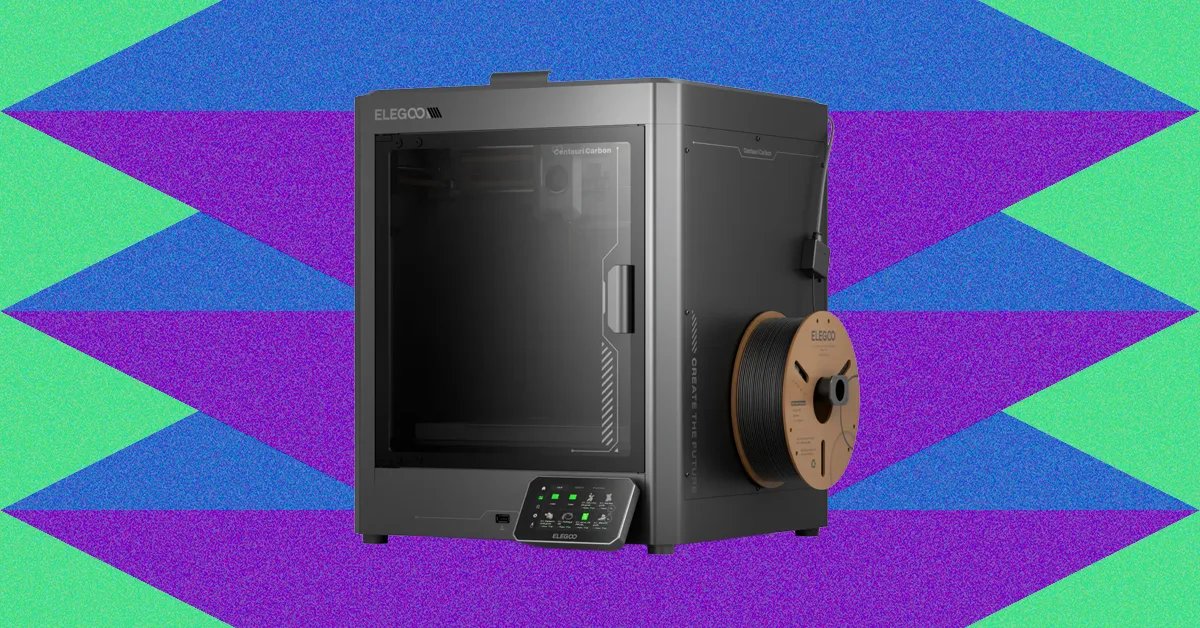
Ultimately, I decided to indulge my daughter’s wishes and see just how much of a hassle it would be to get her up and running on the new Elegoo Centauri Carbon 3D printer. I’m pleased to report that the printer is about as easy to set up and operate as a Barbie Dream House. I found it so simple, in fact, that I then agreed to test the Snapmaker U1, a far more advanced four-color printer. Likewise, I asked my colleague Divya Viswanathan, who was facing a similar printing push from her elementary-aged son, Leo Magnusson, to test a device specifically built for kids: the Toybox printer. The Toybox proved more limited in what it can print, but was even easier than both the Centauri Carbon and U1 to deal with, using an intuitive, kid-friendly app.
Based on our personal experience, here’s what Divya and I would share with other parents who are semi-reluctant to introduce their kids to 3D printing.
How Much Space Does It Take Up?
While I was pleasantly surprised by the ease required to get my daughter up and printing (I’ll discuss this more in a bit), I’ll concede that these devices do merit space considerations. I’m sure many other parents also gauge their willingness to buy their kid any gift at least partially by how much space it’ll require in the house.
The Centauri Carbon is certainly a large device—about the size of a laundry basket—at about 20 inches tall and 16 inches wide. And because 3D printers work by melting filament (in this case, PLA, which is a polyester), there are fumes. It won’t fog up your house with the stench of melted plastic, but I still wouldn’t want it operating in my daughter’s room all the time.
I had the Centauri Carbon sitting on an Ikea storage locker in my library corridor (I have a weird old house with rooms whose definitions do not neatly map to modern homes), and it doesn’t bother anyone. The printer is about as loud as my dishwasher, and I can hear the fan from the next room when it’s on. When it’s printing, the tool head rotates around on rails in a herky-jerky way; until I stabilized the locker against the wall, the whole thing shook.