Smart home forums are full of posts from people showing off the incredible dashboards that they’ve created, often displayed on wall-mounted tablets. While these dashboards can show you a lot of information about your smart home, there are many ways in which a simple E-Ink dashboard is a better option.
Why a tablet can fail as a smart home dashboard
Too much screen, too many options

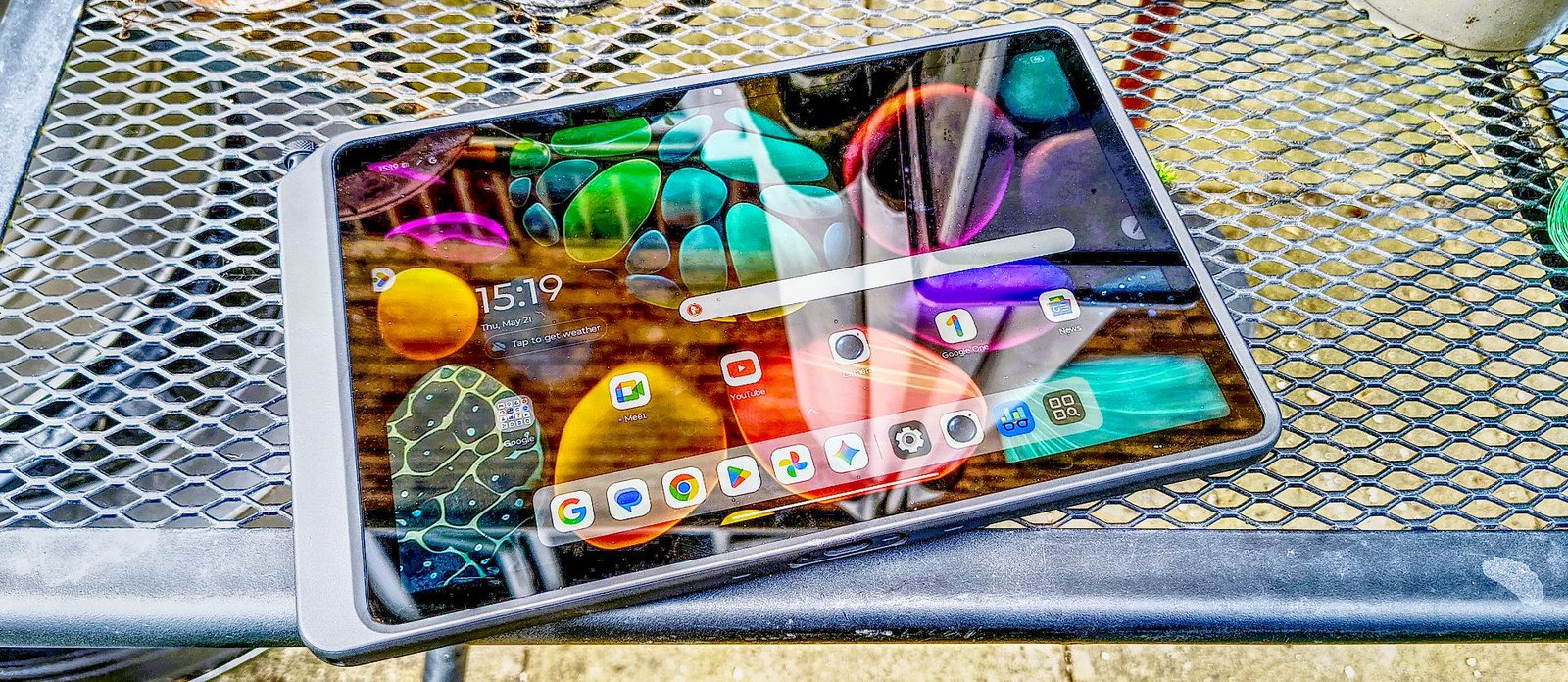
A tablet seems like the ideal way to display a dashboard in your smart home. There’s a large, high-resolution, color display, and the touch screen is perfect for interacting with the controls on the display. The flat form factor makes it a great fit for mounting on a wall as a central smart home control panel.
The problem is that these supposed benefits encourage complexity. With so much screen real estate to fill, it’s tempting to cram in as much information as possible, adding tiles for every device in your home, graphs of your energy consumption, smart camera feeds, media controls, and more. It can lead to the mindset that you should include everything you possibly can.
If you succumb to this urge, you end up with a smart home dashboard that’s so full of information that it’s almost impossible to take any of it in. It’s a wall of information in which nothing stands out, and nothing can be discerned with a quick glance. If you want to know what the temperature is, for example, you have to hunt around the screen to find where that information lives.

- Compatibility
-
Amazom Alexa
- Colors
-
White
Amazon’s Echo Hub is a centralized unit designed to help you take complete control over your whole-home automation. Connect to brands like Philips, Sengled, Govee, and Ring to manage individual apps, set scenes, or schedule device activation. The Echo Hub features an 8″ touchscreen that serves as the control panel to your smart home.
Why an E-Ink display is better
Low-power, beautiful, and always on

An alternative option for a smart home dashboard is an E-Ink display. Unlike an LCD or OLED screen that uses a light source to create an image, E-Ink uses tiny microcapsules that contain charged white and black particles suspended in fluid. When an electric field is applied, either the black or white particles move to the surface, effectively printing an image.
The beauty of E-Ink is that once the capsules are set, they don’t require any further power to stay there. You could remove the power from an E-Ink display, and the current image would remain there for a very long time. Power is only used when the display changes, which gives these devices incredible battery life.

This is great for a smart home dashboard. One of the biggest issues with a wall-mounted tablet is finding a way to keep the device powered without having to run unsightly cables up the wall or start drilling holes everywhere. You can stick a battery-powered E-Ink display to the wall without needing a permanent power cable.
An E-Ink display also looks stunning. It’s easily readable in ambient light, without the glare you can get from a tablet. The paper-like look gives it an analog aesthetic, and it’s always on, so you don’t have to worry about figuring out a way to wake the dashboard when you’re near it.
What to show on an E-Ink dashboard
Six things rather than sixty

Another key benefit of using an E-Ink display is that it forces you to create a much more focused dashboard. A small, simple monochrome display isn’t suitable for cramming with every single piece of information about your smart home you can possibly expose. It’s far better for displaying a few key pieces of information, which you can take in at a glance.
The real challenge is choosing what to display. There’s no point including control tiles if your E-Ink display doesn’t support touch, but it’s perfect for displaying key information. You might want to include data such as the current weather conditions, upcoming calendar events, indoor air quality, battery levels, home security status, or commute times.
You don’t want to include items that need to rapidly refresh, since this will reduce battery life significantly. The beauty is that you don’t have to get it right the first time. If you discover that some of the information isn’t that useful and that other information is more worthy of its place, you can just change what’s displayed until it’s perfect for your needs.
Build your own E-Ink display
Start from scratch or repurpose what you’ve got
An E-Ink display isn’t ideal for every purpose. You wouldn’t want to try to use one to show a live video feed, and if you don’t have a touchscreen display, you can’t use it for controlling your devices. If you’re just looking for a simple and stylish source of information, however, then you might want to build your own E-Ink display.
There are two main routes. You can buy an E-Ink screen and hook it up to a small microcontroller or single-board computer, such as an ESP32 or Raspberry Pi Zero 2 W, and have it pull data from your smart home system, such as Home Assistant. It gives you more flexibility to build exactly what you want, but requires more setup.
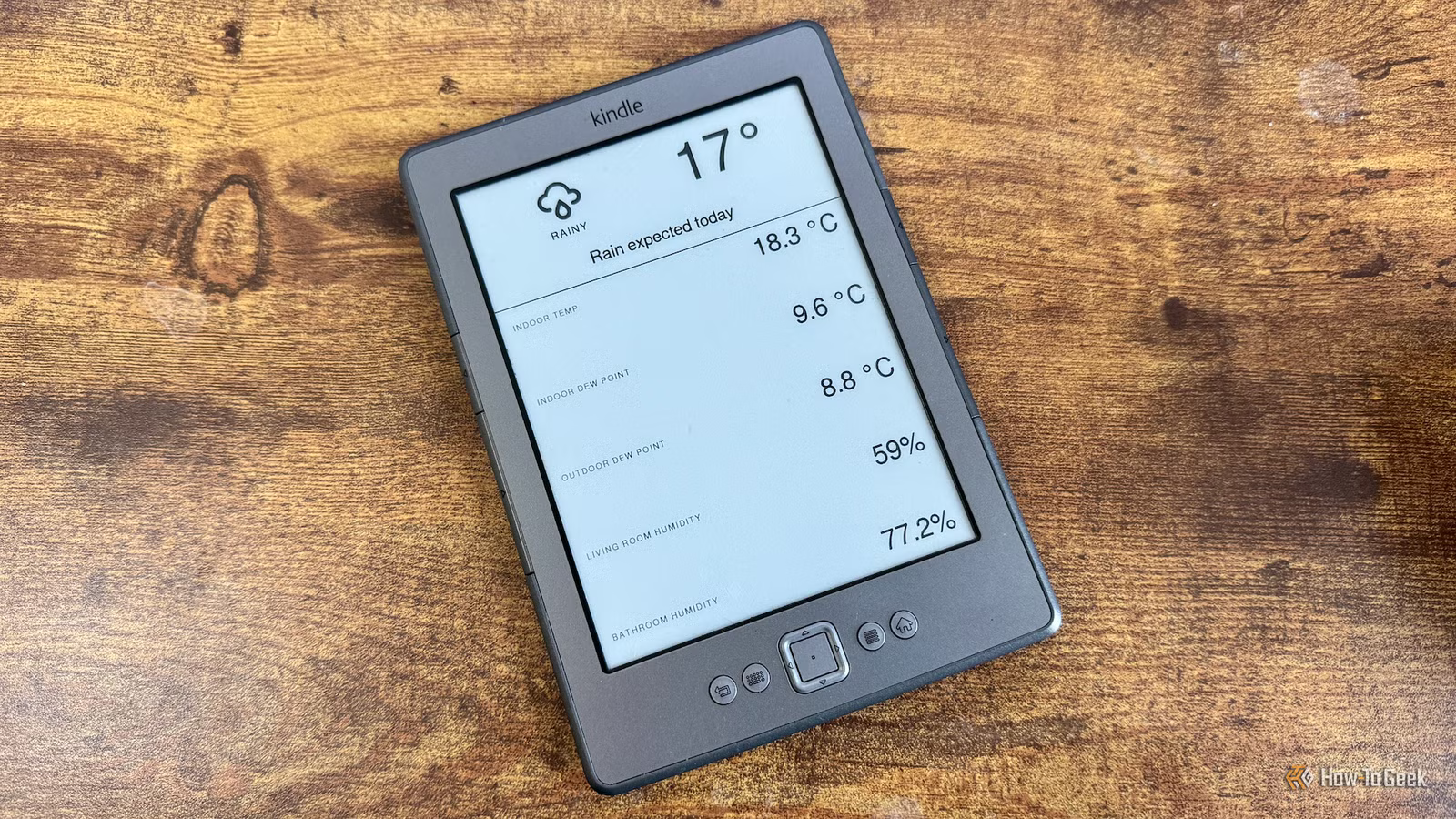
The other option is to repurpose an E-Ink display you already own, such as an old Kindle or E-Ink photo frame. There are plenty of ways to get these devices to display your dashboard, such as serving snapshots of your smart home dashboard from your server to the Kindle’s web browser or jailbreaking the Kindle and getting it to display your dashboard on the screen.
For example, my old Kindle now displays my smart home dashboard as its screensaver. When I’m not using it, my smart home dashboard is displayed, but when I want to read, I can open the KOReader app and dive into a good book.
Make a dashboard that’s actually useful
A wall-mounted tablet dashboard may look impressive, but if it displays too much, it stops being so useful. An E-Ink dashboard looks more stylish, can run for a long time on battery power, and can let you see the information you want without having to play a game of Where’s Waldo?