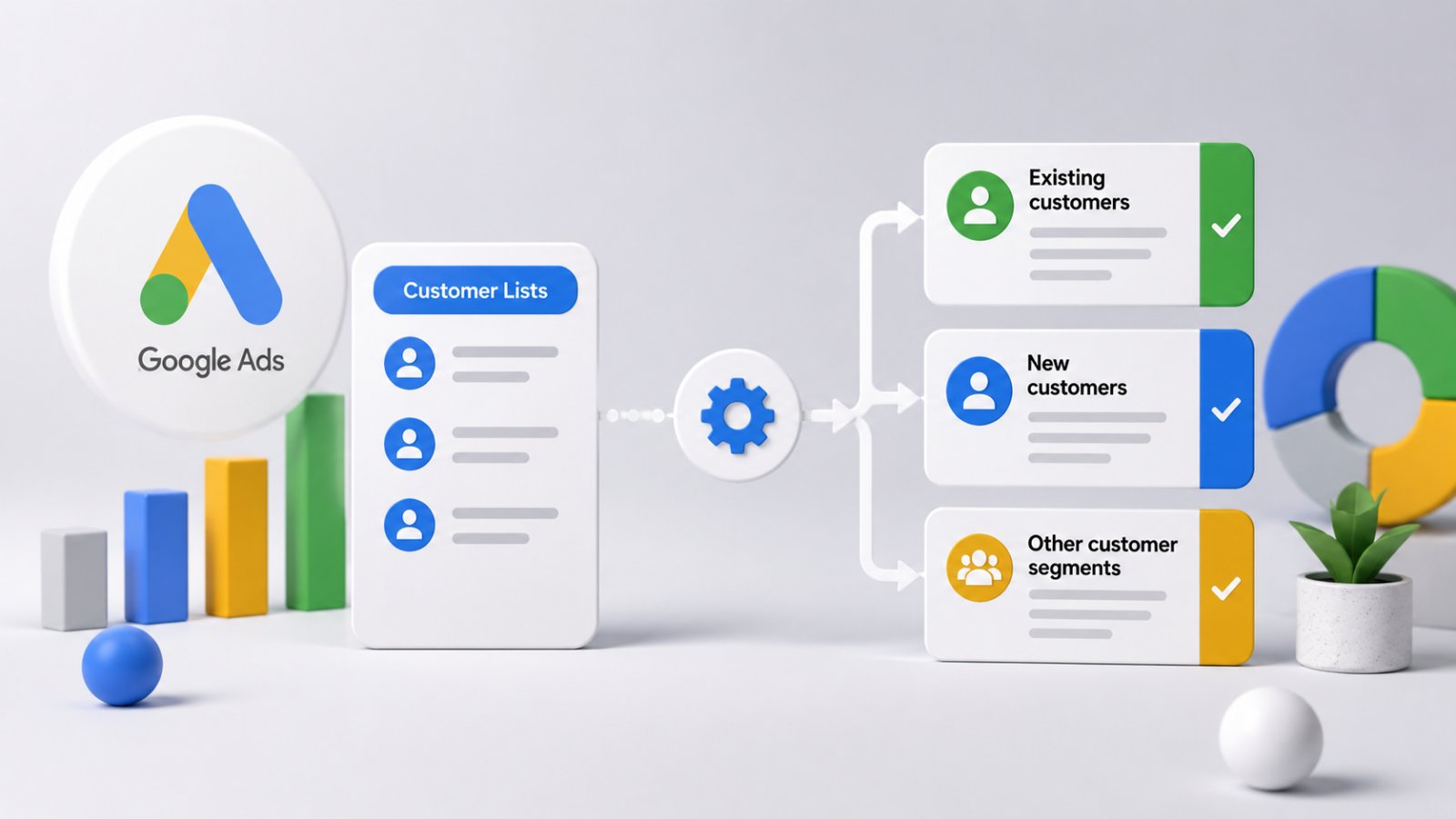
Google is removing a layer of advertiser control over Customer Match audience classification, automatically assigning customer types to conversion-based lists starting in August 2026.
Advertisers will no longer be able to leave eligible lists unclassified.
What’s changing. Beginning in August 2026, Google Ads will automatically assign conversion-based customer lists to one of several customer types, including:
- Existing customers
- New customers
- Other customer segments
Google is encouraging advertisers to review and update their audience classifications in Audience Manager before the change takes effect.
Why Google is making the change. The move appears aimed at improving audience consistency across Google’s growing suite of customer acquisition and retention tools.
By standardizing customer lifecycle classifications, Google can more accurately distinguish between prospecting and retention audiences, helping automated bidding and targeting systems make better optimization decisions.
Why we care. For advertisers using customer acquisition goals, new customer bidding, or retention-focused strategies, the accuracy of customer classifications could have a direct impact on campaign performance.
Misclassified audiences could affect how Google’s systems evaluate and optimize users throughout the customer lifecycle.
What advertisers should do. Advertisers using Customer Match lists derived from conversion data should use audience manager to audit their audiences before August.
Key questions include:
- Are customer lists currently categorized correctly?
- Which lists represent existing customers versus acquisition audiences?
- Will automatic classification align with internal customer definitions?
Reviewing audience settings now may help avoid unexpected changes once Google’s classifications become mandatory.
The bottom line. Google is taking a more active role in audience management, automatically assigning customer lifecycle labels to conversion-based customer lists and further standardizing the signals that power its automated advertising systems.
First spotted. This update was spotted by Google Ads expert Bia Camargo, who shared seeing the alert on LinkedIn.
Search Engine Land is owned by Semrush. We remain committed to providing high-quality coverage of marketing topics. Unless otherwise noted, this page’s content was written by either an employee or a paid contractor of Semrush Inc.