PPC budgeting in 2026 isn’t just about setting spend levels. It’s about knowing when to adjust budgets, when to scale campaigns, and how the data feeding Google’s automation influences those decisions.
Google’s automation systems have always followed the signals you give them. In 2026, they follow them faster and with more confidence than before, which means clean signal architecture matters more than ever.
The fundamentals of budget management haven’t changed. What has changed is how quickly a poorly architected account can waste budget.
Two budget mechanics you need to understand right now
Before you adjust targets, audiences, or bid strategies, make sure you understand how these two budget controls work.
The ad scheduling pacing change
Google now paces all campaigns with ad scheduling toward the full 30.4x monthly billing cap, regardless of how many days your ads actually run. Before this change, a $100 daily budget on a weekday-only campaign targeted roughly $2,200 in monthly spend across 22 active days.
Now it targets $3,040, compressed into those same weekdays. The billing ceiling hasn’t changed. The system pursues it more aggressively within your active windows.
If your campaigns use ad scheduling, recalculate your daily budget based on your intended monthly spend rather than active days: divide your monthly target by 30.4 and set that as your daily limit. A $2,200 monthly target becomes a $72 daily budget. Campaigns running 24/7 aren’t affected.
See exactly how your competitors win.
Uncover the keywords, ads, landing pages, and strategies driving your competitors’ paid search success—and find your next opportunity to outperform them.
Analyze your competitors
Campaign total budgets
Available for Demand Gen, Search, Standard Shopping, Performance Max, and YouTube campaigns, campaign total budgets let you set a fixed spend ceiling for a defined period rather than managing a daily limit.
For Search, Standard Shopping, and PMax, the window is three to 90 days. For Demand Gen and YouTube, it can run up to a year.
Unlike daily budgets, there’s no daily spending cap. The system can front-load or back-load spend within the flight to hit the total, which makes these useful for promotions and product launches, but worth monitoring closely when run alongside always-on campaigns.
Budget type can’t be changed after campaign creation, so the decision is final at setup.
What actually controls how Google Ads spends your budget
Efficiency targets usually constrain spend before budgets do
Smart Bidding treats your efficiency target as the primary constraint and your daily budget as the secondary one.
If you set a $50 tCPA and market conditions are returning leads at $80,the system restricts bids rather than generating conversions above your target. The daily budget cap never gets hit because the efficiency target is stopping spend first. What looks like a budget problem is usually a target problem.
When the gap between target and market reality is that wide, set your initial target closer to where the market is actually converting. Let the system accumulate conversion data and establish what efficiency looks like for your account, then gradually tighten toward your real goal.
The 10%-20% margin above target is a fine-tuning tool. It gives Smart Bidding enough room to find conversion opportunities when you’re already close to where you want to be, not when you’re $30 away.
Performance Max decides where your budget goes
Performance Max automatically distributes budget across Search, Shopping, Display, YouTube, and Discover. You set the total. Google decides the split.
Without brand exclusions, PMax will serve branded queries that would have converted through Search campaigns at a lower cost, which inflates its apparent efficiency while increasing your overall costs.
Campaign-level negative keyword lists for PMax have been available since January 2025, with the per-campaign limit expanded to 10,000 in March 2025. If your PMax campaigns predate that rollout, audit whether you have categorical exclusion lists built at the campaign level.
Jobs, salary, free, login, reviews, and any vertical-specific non-customer queries should be in there before the campaign launches, not added reactively from the search term report.
AI Max expands where your ads can appear
AI Max for Search, generally available since April, expands query matching beyond your keyword list, generates ad copy from your existing assets, and adjusts landing page targeting dynamically.
The budget risk is query drift: spend that was concentrated on your defined keywords now competes with AI-generated matches. AI Max provides search term reporting, which makes monitoring tractable. Review it closely during the first 60 days and proactively build categorical negatives.
Get the newsletter search marketers rely on.
The signal problem that makes budget allocation fail
An insurance broker running Smart Bidding toward form completions saw conversion volume rise 416% year over year while revenue stayed flat. The conversion action was firing on form starts, not form submissions.
The system had found the most efficient path to form page interactions and was scaling it confidently. A significant portion of those interactions were Cyrillic-language spam submissions from outside the service area. The dashboard was green. The pipeline was empty.
This is the core mechanism behind most budget waste in lead generation: identical conversion values across all form fills leave Smart Bidding with no basis to distinguish a qualified lead from a bounced session.
The system optimizes for volume and finds the cheapest path to completions. It follows its instructions precisely. The instructions are the problem.
Primary conversions should be high-intent, high-value actions that directly train Smart Bidding. Secondary conversions, such as newsletter signups, page views, and soft engagement, belong in reporting but should not influence bidding. Getting this distinction right is more consequential for budget efficiency than any adjustment to bid strategy.
Journey-aware bidding, currently in beta for Search campaigns on Target CPA, addresses the delayed-conversion problem that compounds this issue for B2B accounts.
Instead of optimizing only toward front-end actions, the system learns from the full lead-to-sale funnel — form submissions through closed deals — using intermediate stages as learning signals without counting them as biddable conversions.
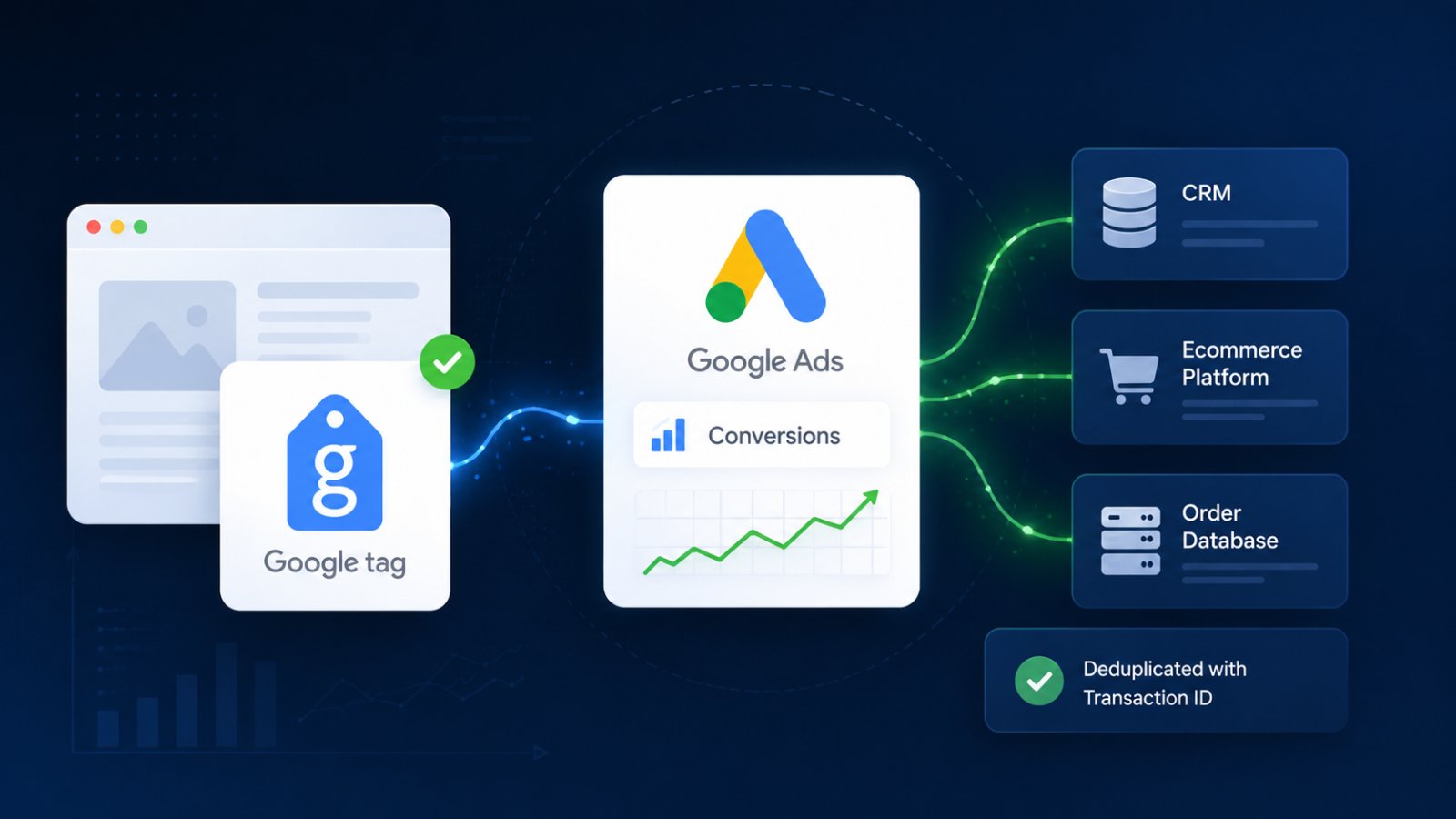
The feature requires first-party CRM data, connected via Offline Conversion Import or Enhanced Conversions for Leads, to function. Without that pipeline data, there’s nothing for the system to learn beyond the form fills it was already optimizing toward.
For accounts not yet in the beta, extending your conversion window to 90 days and evaluating performance over 60- to 90-day periods is the right workaround.
First-party data as budget guidance
Customer Match is the most direct way to tell automation what valuable traffic looks like. Google enforces a 540-day maximum membership duration for Customer Match lists, effective April 2025. Any record not refreshed within that window expires, which shrinks your list over time without regular uploads or a continuous CRM sync.
The most effective use of Customer Match for budget allocation is to exclude before expanding.
Apply your existing customer list as an exclusion on acquisition campaigns so the acquisition budget reaches new customers rather than people who are already buying from you.
Run retention separately, with its own budget, targets, and messaging. Mixing both in the same campaign with identical conversion goals produces a blended signal. Smart Bidding typically settles on the segment that converts most cheaply, which is rarely the most valuable one.
Note that using Customer Match for targeting and bid adjustments requires at least 90 days of account history and $50,000 in lifetime spend. Exclusions are available to all compliant accounts regardless of spend history.
Every click they win is a customer you lose.
See where competitors are investing, which keywords drive their results, and how to capture more of the market.
See who’s stealing your traffic
Scaling in 2026
For always-on daily budget campaigns, the 10-20% weekly increase guidance still applies. For campaigns using ad scheduling, work in monthly targets and divide by 30.4 rather than scaling daily limits.
Smart Bidding Exploration is now in open beta for Performance Max, with Shopping expansion announced at GML 2026. On Search campaigns, it generates, on average, 27% more unique converting users by pursuing queries the account wasn’t previously winning, temporarily relaxing efficiency targets to test new conversion sources. Short-term CPA or ROAS fluctuations during the exploration phase are expected. Evaluate on a 60-day window before drawing conclusions.
Demand-led pacing, announced at GML 2026 and rolling out for Search and Shopping campaigns, dynamically shifts daily spend toward periods of predicted higher consumer demand within your existing budget parameters. It’s a complement to daily budget management, not a replacement. Monitor your account for rollout availability.
For B2B accounts, scale on 60- to 90-day evaluation windows, not 30-day ones. Short windows systematically undervalue campaigns with long sales cycles by cutting spend before the attribution data has time to accumulate.
Contributing authors are invited to create content for Search Engine Land and are chosen for their expertise and contribution to the search community. Our contributors work under the oversight of the editorial staff and contributions are checked for quality and relevance to our readers. Search Engine Land is owned by Semrush. Contributor was not asked to make any direct or indirect mentions of Semrush. The opinions they express are their own.