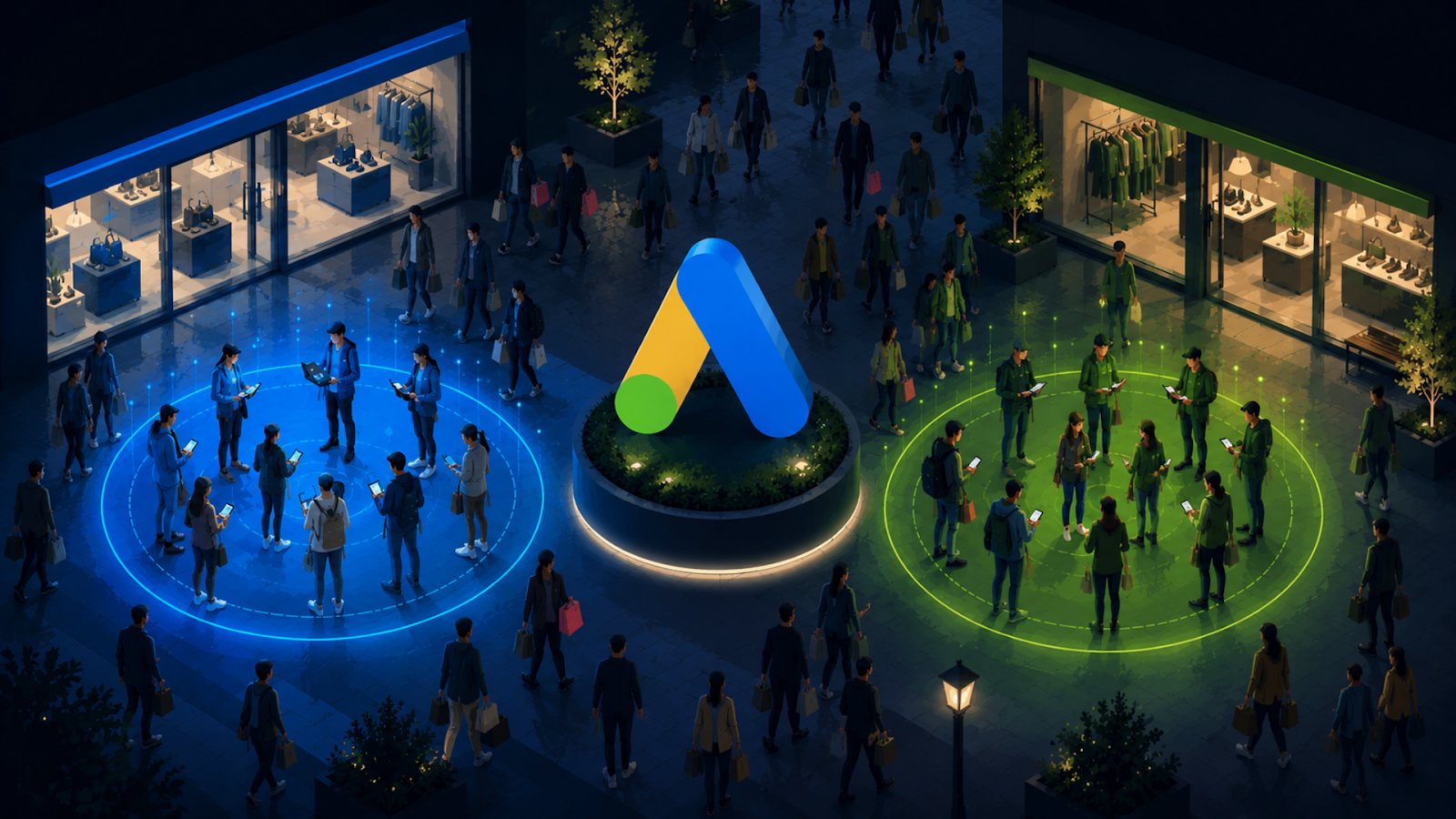
Traditional competitor campaigns often generate expensive clicks and disappointing results. People searching for a competitor’s brand are usually close to making a purchase, making your ad little more than a detour on their path to conversion.
Bidding on competitor brand terms isn’t your only option. Demand Gen campaigns and negative-intent keywords can help you reach competitor-aware audiences more efficiently and often at a lower cost.
Demand Gen: Your target audience at a fraction of the cost
Before we get into negative-intent keywords, let’s discuss another campaign type that can generate traffic unfamiliar with your brand: Demand Gen.
Demand Gen relies on two key elements: targeting and creative. Two non-negotiable components of that targeting are custom audience segments and lookalike audiences.
Custom segment targeting allows you to reach users who have searched for specific terms on Google or have particular interests or purchase intentions. It’s also one of the best ways to target users looking for your competitors at a lower cost than search.


Custom segments are the first targeting option available (right after the title) when creating a new audience within Demand Gen campaigns.
Select the second option, People who searched for any of these terms on Google, and enter as many competitors as you can think of. This puts you directly in front of your target audience at a lower cost than a search network click.
If you’re unsure which competitors to target, type your main product or service into Google Ads and see who appears. These are the primary businesses you’re competing with and, depending on which networks you opt into, your ads can appear across YouTube, Discover, and Gmail.
See exactly how your competitors win.
Uncover the keywords, ads, landing pages, and strategies driving your competitors’ paid search success—and find your next opportunity to outperform them.
Analyze your competitors
Designing conquesting landing pages for Demand Gen
When using Demand Gen for conquesting, it’s important to create a well-designed landing page for these ads. Include key differentiators and social proof that demonstrate why your company offers the best product or service.
Getting the click is only half the battle. Once searchers land on your page, your offer needs to be clear. Explain your offer clearly and thoroughly, and include a clear call to action that aligns with your messaging.
Get the newsletter search marketers rely on.
Negative-intent conquesting: Targeting competitor weaknesses
But what if you don’t have the assets to run a Demand Gen campaign?
Because high-quality video and image assets perform best across these networks, targeting the search network may make more sense if you don’t have access to those assets. This is where negative-intent conquesting comes in.
While we’re all familiar with traditional competitor search campaigns, searchers also look for alternatives to the company they’re searching for. This is where negative intent comes in.
This can happen at many stages of the sales funnel, but it frequently occurs during the consideration phase when users search for “companies like X” or “companies cheaper than X.” It also happens with branded products in searches like “dupe for X.” While not all of these may be biddable keywords due to search volume, this is where the research happens.
Building campaigns around competitor pain points
Perhaps you’ve recently heard about a company with a poor track record of customer service. Bidding on a keyword like “customer service complaints for [competitor]” could be helpful in this situation. You’ll want to keep this to a single ad group with different keyword variations.
Within the ad copy, address what makes your customer service team unique, different, or more helpful. Bear in mind that, due to trademark policy, it’s best to avoid mentioning the competitor directly by name in your ad text.
Traditional competitor campaigns focus on bidding on a competitor’s brand name. Negative-intent conquesting focuses on their weaknesses. Its specific use case involves users familiar with a brand but looking for an alternative.
This strategy can also be paired with a separate custom audience, allowing you to target users searching for these alternatives across Google’s networks.
For negative-intent conquesting to work post-click, however, the landing page remains a critical component. If a user clicks an ad that promises a solution to a competitor’s poor service or high prices, the corresponding landing page must validate that strength and provide the searcher with a unique value proposition that counters the competitor’s weakness.
Every click they win is a customer you lose.
See where competitors are investing, which keywords drive their results, and how to capture more of the market.
See who’s stealing your traffic
Target competitor audiences before the decision is made
The biggest challenge with traditional competitor campaigns isn’t the competitor. It’s timing.
When someone searches for a competitor’s brand name, they’ve often already narrowed their options and are close to making a decision. That’s why competitor keyword campaigns can be expensive and difficult to scale profitably.
Demand Gen and negative-intent conquesting approach the same audience from different angles. One reaches potential customers before they commit to a brand, while the other reaches them when they’re actively reassessing their options.
The goal is to reach potential customers when they’re most open to considering a different option.
Contributing authors are invited to create content for Search Engine Land and are chosen for their expertise and contribution to the search community. Our contributors work under the oversight of the editorial staff and contributions are checked for quality and relevance to our readers. Search Engine Land is owned by Semrush. Contributor was not asked to make any direct or indirect mentions of Semrush. The opinions they express are their own.