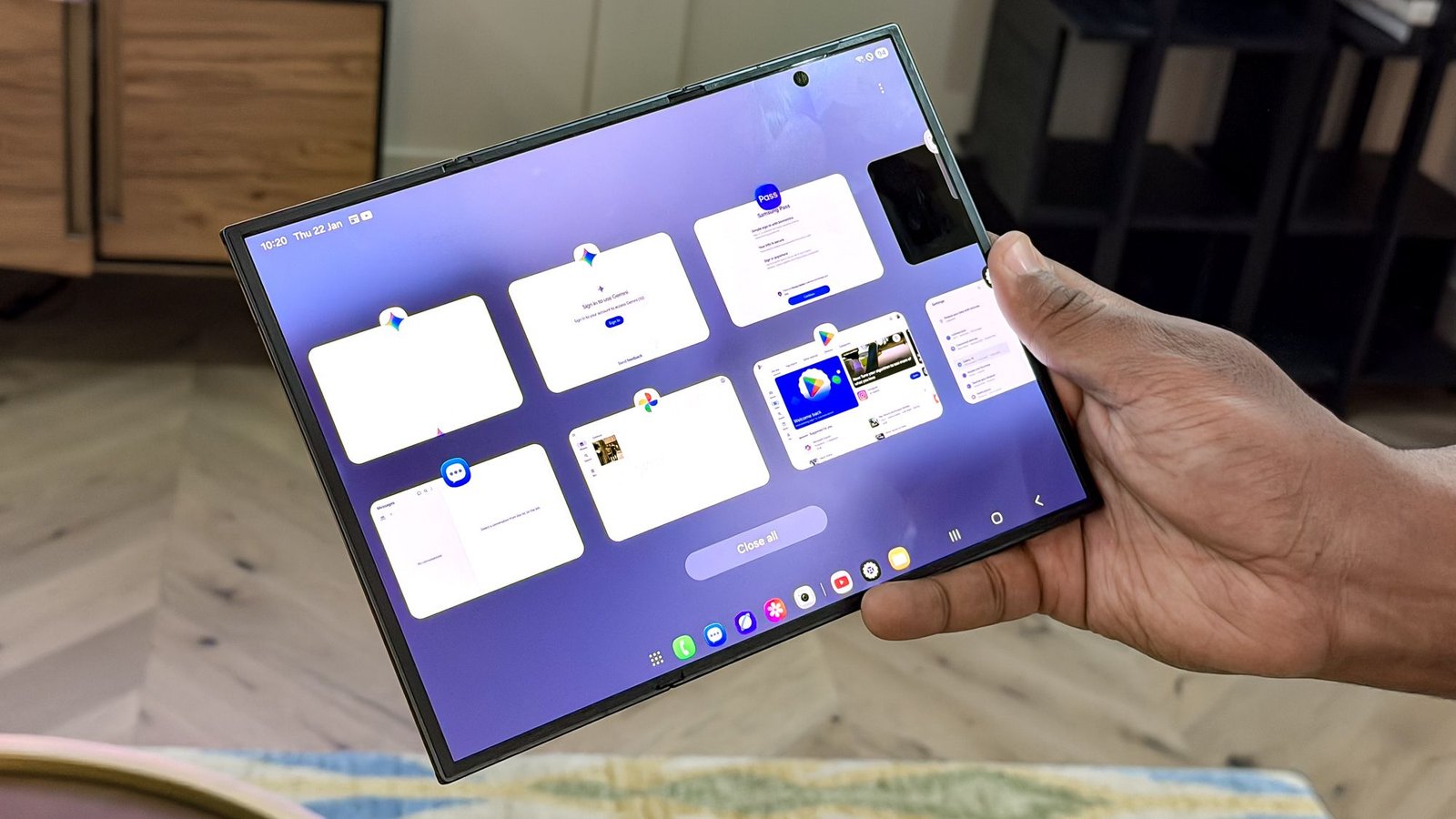
I’ve said it before, and I’ll say it again: the most exciting things in mobile today are foldables. After testing many of the best foldable phones over the last few years, I’ve slowly realized my main grievance with notebook-style foldables.
No, it’s not the crease that can be a distraction at the right angle, nor is it their durability. Instead, my issue lies with the practically square aspect ratios they all adopt when unfolded. Even though I’ve been dealing with this for years, all the leaks I’ve seen around the Galaxy Z Fold 8 Wide suggest Samsung is finally addressing my biggest concern.
As the name implies, this new model is expected to be wider, with previous reports hinting at a 16:10 aspect ratio. However, the latest rumors point toward a 4:3 display — making it more like an iPad. That shift alone could make it far more usable than any other notebook-style foldable to date. Here’s why.

Apps would fit way better
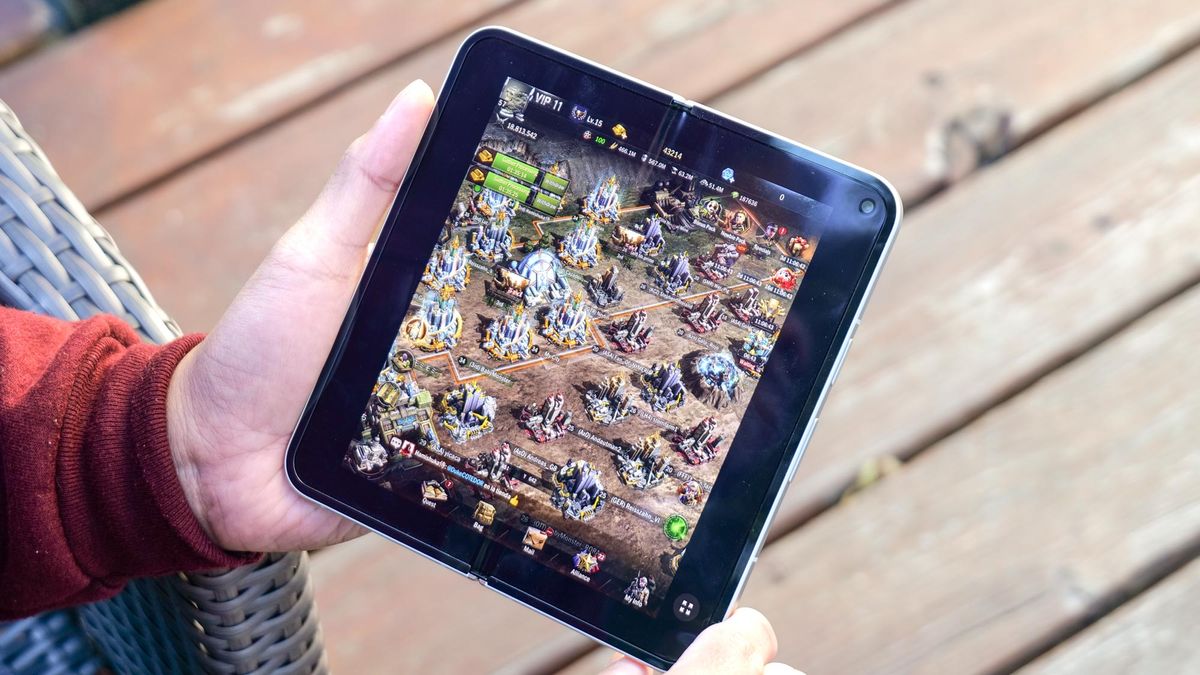
Foldables often feel like they’re in a constant tug-of-war with Android apps, and that struggle isn’t limited to notebook-style models. If you’ve ever tried running apps on the cover displays of flip-style phones like the Galaxy Z Flip 7 or Motorola Razr Ultra 2025, you’ve likely noticed how many aren’t optimized for those cramped aspect ratios.
Watching video reels on Instagram and TikTok is the biggest offender because the video is often cropped rather than shown in full, which cuts off the text and subtitles around the edges. I run into this same problem when I open notebook foldables like the, Pixel 10 Pro Fold and Galaxy Z Fold 7 — or a phone like the Unihertz Titan 2 Elite with its squarish main display.
By moving away from a squarish aspect ratio to the 4:3 rumored for the Galaxy Z Fold 8 Wide, Samsung would provide a canvas that better fits apps without requiring developers to heavily modify their layouts. Since app developers already have optimized layouts for tablets like the Galaxy Tab S11 Ultra, they could easily adapt those designs for a 4:3 display.
Way more suitable for watching video
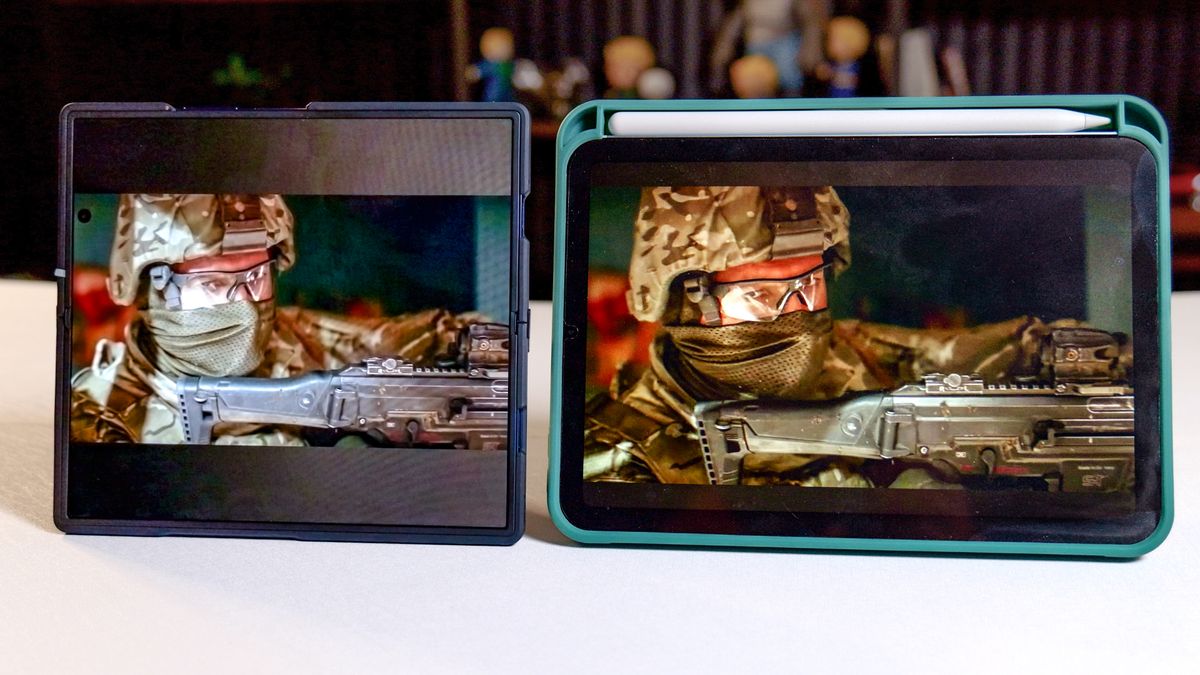
I’ll be honest: I don’t know how I convinced myself that current notebook-style foldables are ideal for watching movies and videos. They’re not. This is partly because most content is shot in 16:9 or more cinematic 21:9 aspect ratios, leaving the video surrounded by so many black bars that the actual picture ends up no larger than what you’d see on a standard smartphone.
That’s why watching the same content on a traditional tablet is much more satisfying — and the comparison above between the Z Fold 7 and iPad Mini perfectly illustrates this. Just look at the amount of wasted space at the top and bottom of the video on the Galaxy Z Fold 7.
It’s frustrating to know I’m not getting a larger picture despite having all that screen real estate. Sure, I could pinch-to-zoom to fill the gap, but then I’m cropping out details I might otherwise miss.
Z Fold 8 Wide takes after Galaxy Z Trifold failure
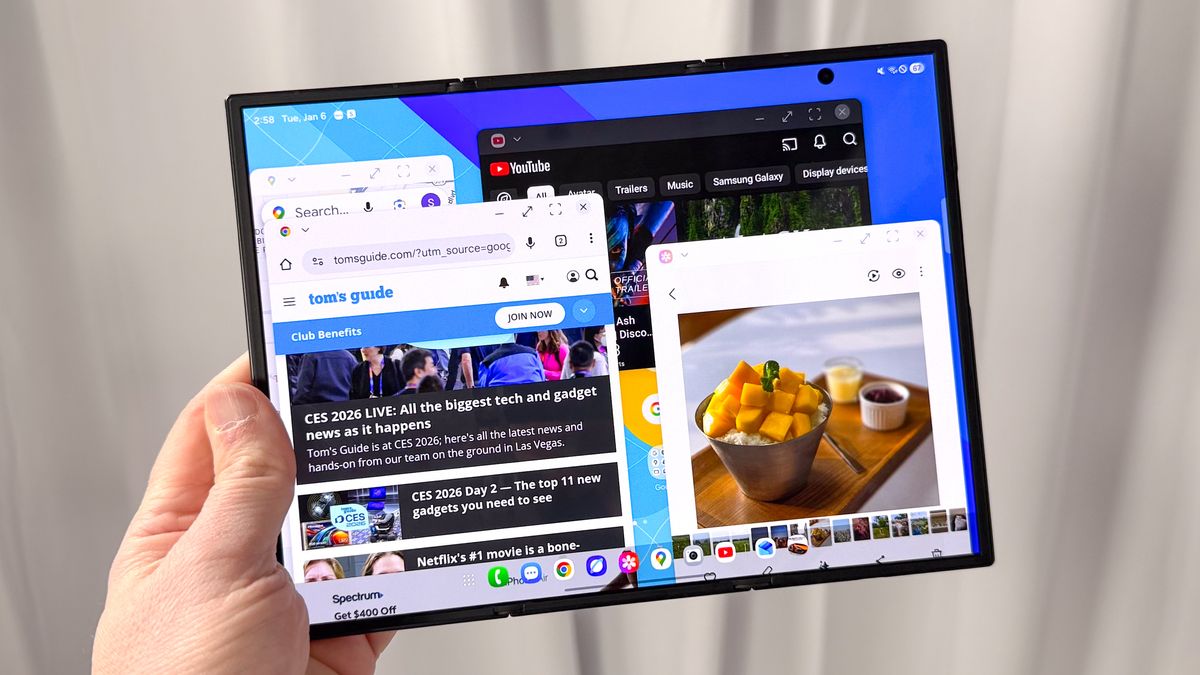
If the Galaxy Z Fold 8 Wide feels like a sudden course correction, that’s because it likely is. Now to better understand why I say this, you have to look back at the short-lived experiment that was the Galaxy Z Trifold.
The reality is that the Trifold felt like a true tablet when it was completely unfurled to reveal its 10-inch display. Despite its short lifespan, it proved to me that its wider aspect ratio was what notebook-style phones should have been chasing all along. It just makes sense.
The Galaxy Z Fold 8 Wide appears to be the spiritual successor, but in a form factor that is far more attainable. Rather than being weighed down by the complexities of multiple hinges — which drive up costs — the Z Fold 8 Wide is better positioned for success by removing the mechanical anxiety that plagued the Trifold.
I just hope Samsung doesn’t make it obscenely more expensive than the standard Z Fold 8.
Follow Tom’s Guide on Google News and add us as a preferred source to get our up-to-date news, analysis, and reviews in your feeds. Subscribe to Tom’s Guide on YouTube and follow us on TikTok.