When Lexus launched its LS 400 sedan in 1989, it introduced a new car with a new philosophy: deliver levels of refinement normally reserved for European luxury manufacturers, beat them on price, and back it with a level of quality the industry hadn’t seen before. That philosophy underscores every Lexus product to this day, including the LX, the brand’s full-size flagship SUV.
Now, the 2027 Audi Q9 is preparing to challenge it.
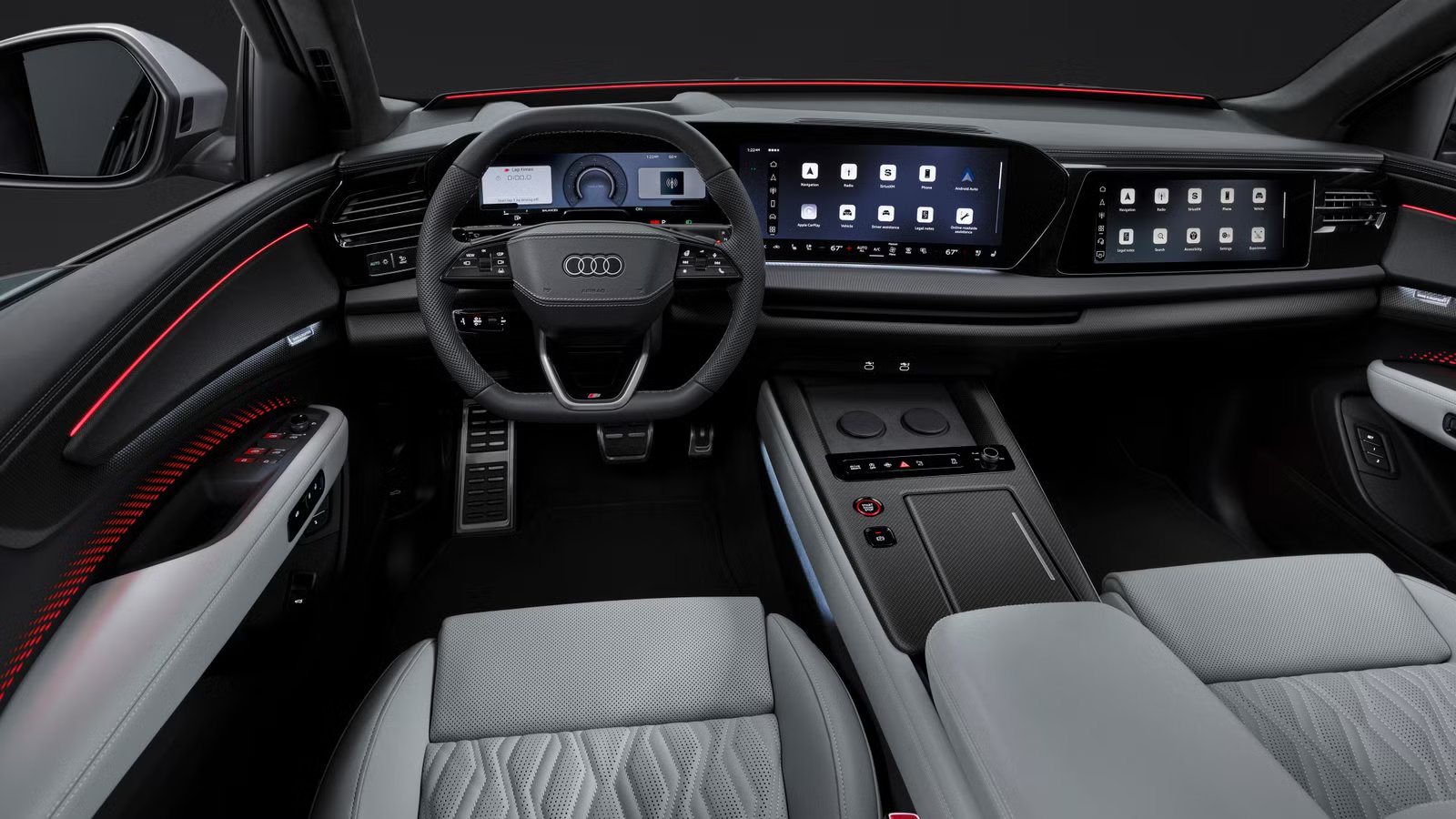
The Q9 makes its world debut on July 28th and is Audi’s first true full-size flagship SUV. While the exterior remains under wraps, Audi has opened the doors for a first look at the interior. What’s inside tells you exactly how Audi plans to compete with Lexus: not by matching the LX feature for feature exactly, but by redefining what in-cabin luxury means for the next generation of buyers.
Sanctuary versus a statement
Two different ideas of what a cabin should feel like
Both SUVs offer six- or seven-seat configurations, but their approaches are quite different.
The LX is built around omotenashi, the Japanese concept of selfless hospitality. The cabin is calm, quiet, and passenger-first in every detail. Semi-aniline leather is standard across most grades, while the Luxury trim adds genuine wood accents on the steering wheel and center console.
Meanwhile, the Ultra Luxury grade goes further with massaging captain’s chairs in the second row with a power-reclining function, a footrest, and rear wireless charging, all standard.
The Q9 takes its own approach, one that loyal Audi buyers may recognize and one that first-time Audi buyers may come to appreciate. Audi is offering Dinamica microfiber, leatherette blends, and Nappa leather, paired with inlays such as fine-grain ash and a carbon fiber weave with basalt gray accents.
Matte and textured finishes across the Q9’s interior replace the usual high-gloss plastic trim, minimizing fingerprints, oils, and smudges that leave you reaching for a towel. New colors like Tamarind Brown and Stone Beige are on offer and complete the Q9’s cabin, which feels inviting rather than stuffy.
For buyers who want those timeless luxury cues, the Lexus LX still sets the bar, but the Q9 makes its case regardless.

The Audi Q9 isn’t just chasing the BMW X7—it’s trying to redefine what luxury means
Digital-first philosophy that prioritizes the in-vehicle experience as the new definition of luxury.
Digital Stage vs. Lexus Interface
Screen real estate and how each brand uses it
Audi’s Digital Stage brings three displays into the Q9: a driver instrument panel, an OLED central touchscreen, and a dedicated front passenger display for personal entertainment.
Indirect lighting beneath the MMI panoramic display creates a subtle floating effect for the setup. The dedicated passenger screen is something the LX doesn’t offer at any trim level, which matters for buyers who frequently make long trips with someone up front (for example, parents with a teenager riding shotgun). Front-seat passengers can stream content from their own queue, whether that’s a YouTube video, a show on Netflix, or a podcast playlist, without interfering with anything on the driver’s side.
The LX uses a 12.3-inch upper touchscreen paired with a seven-inch lower touchscreen, dividing infotainment and climate controls between the two. Wireless Apple CarPlay and Android Auto are standard across all LX grades. Audi has not yet confirmed either for the Q9, though both would be expected for a vehicle in this segment.
The LX has an edge in rear-seat entertainment. The Ultra Luxury trim includes dual 11.4-inch rear displays as standard. Audi has not yet addressed a rear entertainment system for the Q9. Given that both the BMW X7 and Mercedes-Benz GLS offer rear screens, it would be in Audi’s best interest to confirm something similar when the Q9 is fully revealed on July 28th.

Audi’s Q9 challenges the Mercedes GLS with 4D audio and a digital cabin for 10K less
The primary difference between these two flagship SUVs lies in their digital architecture.
The sound of two different cabins
Bang & Olufsen versus Mark Levinson
Audio is where Audi makes its boldest move. The Bang & Olufsen 4D sound system uses physical actuators built into the front seats so occupants can feel low-end frequencies as well as hear them. The Dynamic Interaction Light, an LED strip at the base of the windshield, syncs its color and rhythm to the music.
Meanwhile, headrest speakers route phone calls and navigation prompts privately to the driver without disturbing other passengers.
The LX counters the Q9 with a 25-speaker Mark Levinson system, standard on the Ultra Luxury trim and available on the Luxury. The system is tuned specifically for the LX’s cabin acoustics and delivers a wide, detailed soundstage. It doesn’t vibrate your seat, but that’s a matter of preference. Both systems are genuinely impressive; the Q9 is more experiential, the LX is more for the everyday audiophile.

- Material
-
Oxford
- Special Feature
-
Foldable
This 13.5-gallon trunk organizer features compartments to organize and store groceries, sports equipment, emergency supplies, and other daily essentials.
Electric doors, smart glass, and cargo space
Audi Q9 goes further than expected
The Q9 debuts electric doors that open up to 90 degrees at the push of a button, with sensors that detect approaching cyclists and/or prevent the doors from opening into the path of an oncoming vehicle. Drivers close them by pressing the brake pedal or fastening their seatbelt.
As one might expect from a flagship SUV like the Q9, the panoramic sunroof spans approximately 16 square feet, with nine individually controllable glass segments that dim electronically, and an optional LED package that bathes the roof in up to 30 colors.
The LX keeps things more traditional with a standard power tilt-and-slide moonroof across all grades.
When it comes to cargo capacity, the LX 600 offers up to 46 cubic feet behind the second row. The Q9 introduces an aluminum rail system in the trunk that allows cargo to be secured in three dimensions. Audi also includes roof-rail crossbars as standard, something competitors in this segment may charge extra for.
2027 Audi Q9 coming soon
The 2026 Lexus LX 600 starts between $90,000 and $95,000, with the Ultra Luxury trim pushing past $135,000. The LX 700h hybrid delivers a combined 457 horsepower and 583 lb-ft. of torque, a high power output despite only a modest price premium over the LX 600.
The 2027 Audi Q9 is expected to start around $80,000, with higher trims landing between $90,000 and $95,000. However, a fully loaded configuration could potentially exceed $100,000. That could put the Q9 roughly $10,000 to $15,000 below a comparably equipped LX, something Audi can leverage when marketing to new buyers.
Audi will reveal the full details on the Q9 on July 28th, with North American deliveries expected as early as this November.