Dolby Atmos is everywhere. I’ve seen wireless speakers and soundbars with Dolby Atmos support. I’ve used streaming services touting spatial audio powered by Atmos. Most recently, the new Motorola phone I’m reviewing has Dolby Atmos speakers. Frankly, I think Dolby is playing too loose with the Atmos brand. If the catchy name is on basically every audio product and streaming service, it’s hard to know what seeing the Dolby Atmos logo actually tells you. The one thing you should know about Dolby Atmos is that not all Atmos content is the same quality.
There are many misconceptions about Dolby Atmos, but the most concerning one is that it’s an audio codec. Rather, Dolby Atmos is an immersive, object-based audio format that uses surround technology to place sounds in your environment. It’s a format, not a codec. Just like how stereo audio formats can be encoded in AAC or FLAC, Dolby Atmos masters comes in lossy and lossless codecs. There’s no point in spending thousands of dollars to upgrade your home theater when the cheap move to lossless Dolby Atmos is right in front of you.

Dolby Atmos is great until you realize your setup isn’t actually using it
To use Dolby Atmos, every device in your media setup must support it, from your PC and streaming box to your receiver and speakers.
Dolby Atmos isn’t what you think
On streaming services, Dolby Atmos is a lossy audio format
You’re probably listening to “fake” Dolby Atmos. The true Dolby Atmos experience can only be had with a baseline 5.1.2 speaker configuration. You need five ear-level speakers, one subwoofer, and two height speakers — plus a compatible Dolby Atmos receiver and input source — to get the room-filling experience of Atmos surround sound. The mastering process for Atmos involves producers using seven ear-level speakers, a subwoofer, and four overhead speakers to figure out exactly where each sound should come from. This precision is why great Dolby Atmos content played through a rich sound system sounds like you’re really in the theater or concert hall.
Dolby Atmos-compatible headphones, speakers, and soundbars try to imitate this experience using software tricks, but it’s nothing like the real thing. That’s why a true Dolby Atmos setup starts with a 5.1.2 sound system, a good AV receiver, and Dolby Atmos content. If any part of the stream lacks proper Atmos support, the sound will fall flat. This is where most people slip up when upgrading their home theater or audiophile listening station. Don’t spend an exorbitant amount of money on speakers until you’ve ensured the input source is the best quality it can be.
This is exactly where streaming content becomes problematic. Dolby Atmos uses the Dolby Digital Plus audio codec when it is streamed, and this is a lossy format. It’s an upgrade over standard Dolby Digital, but it’s appealing for streaming platforms due to its efficiency. It can deliver surround sound at reasonable bitrates, which is perfect for streaming. For audiophiles or theater buffs, though, efficiency is the opposite of what you want. You want the highest quality possible, and Dolby Atmos simply doesn’t deliver that when streamed using a service like Netflix or Disney Plus.

Check these 3 things before streaming music in Dolby Atmos
If you fail to watch for these three Dolby Atmos limiting factors, you’ll end up missing out on the spatial audio experience you crave.
Blu-ray discs offer lossless Dolby Atmos
A better way to enjoy physical Dolby Atmos albums and movies
Lossless Dolby Atmos does exist, but you’ll only find it on select Blu-ray discs (and private home media servers). While the streaming version of Dolby Atmos uses Dolby Digital Plus, the Blu-ray version of Atmos uses Dolby TrueHD. This format offers up to eight full-range channels of 96kHz/24-bit quality and six full-range channels of 192kHz/24-bit quality, according to Dolby. It’s true lossless audio that surpasses CD-quality, with bitrates of up to 18Mbps supported. That’s much higher than Dolby Digital Plus’ bitrate of up to 1.7Mbps.
Finding lossless Dolby Atmos can be tricky. Blu-ray discs can offer either Dolby Digital Plus or Dolby TrueHD codecs, and it depends on the release as to which ones you get. Sometimes, TrueHD is reserved for the main language audio track, while other languages get Digital Plus. Many studios reserve lossless Dolby TrueHD masters for 4K Ultra HD Blu-ray discs, leaving standard Blu-rays with lossy Dolby Digital Plus. In fact, not every Blu-ray will offer Atmos at all — some will be limited to standard surround sound.
As such, you need to seek out Blu-ray discs with Dolby Atmos (and specifically, the Dolby TrueHD variant). Sites like Blu-ray.com are an excellent resource for identifying disc releases with lossless Dolby Atmos support. Find the Blu-ray disc you have or want to buy in the site’s database, and you’ll see the specific audio format and quality supported, down to the individual language tracks.

I saved hundreds on a Dolby Atmos system using this simple strategy most people miss
Some audiophiles swear by buying new gear, others live or die on the resale market. There’s a better way, and it’s the perfect middle ground.
Bandwidth is the culprit
4K video with lossy Atmos streaming is already demanding

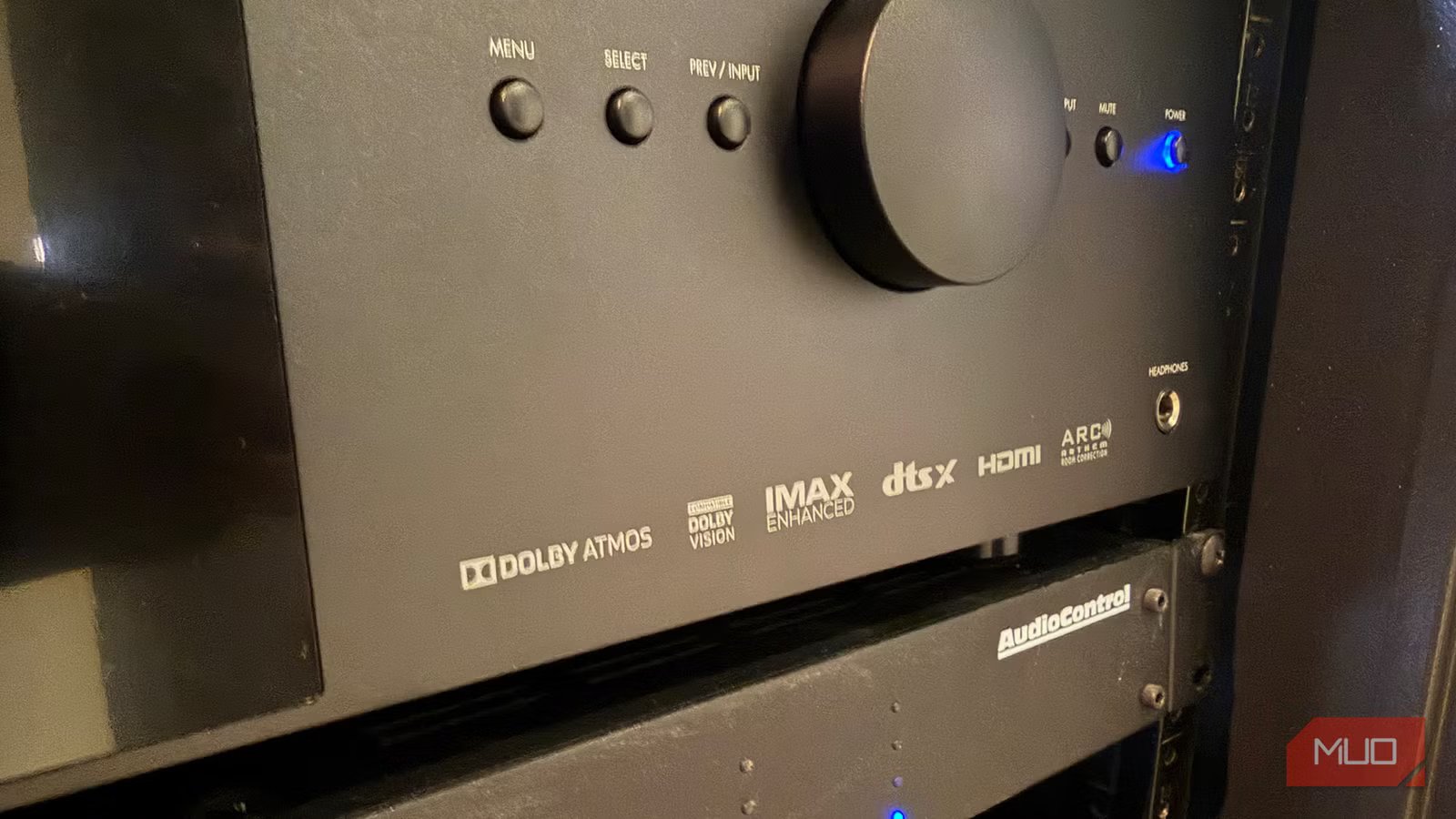
Jonathon Jachura / MUO
If you’re wondering why streaming services don’t offer lossless Dolby Atmos, there’s a simple reason: bandwidth. A 4K video stream paired with Dolby Digital Plus audio is already quite demanding, especially on wireless networks. Smooth video streaming requires consistent speeds and reliable birates, and the more bandwidth required, the more likely you are to run into buffering or stutters.
It’s a limitation of streaming, similar to how 4K UHD Blu-ray discs outperform 4K streaming content. Investing in a 4K UHD Blu-ray player and seeking out lossless Dolby Atmos discs makes for a better upgrade than buying a new sound system for this reason. It’ll probably save you money, too.

- Brand
-
Sony (UBPX700U)
- Ports
-
Ethernet, Wi-Fi, HDMI, Coaxial
- Connectivity
-
Dolby Atmos, Dolby TrueHD, DTS:X
Sony’s UBPX700U 4K Ultra HD Blu-ray Player is the perfect solution for playing lossless Dolby Atmos discs. It supports Dolby Atmos, Dolby TrueHD, DTS:X surround sound modes, with HDMI and coaxial audio outputs. The player also has Dolby Vision and HDR for visuals. In addition to Blu-ray discs, this player can handle DVDs and CDs.