We may earn a commission from links on this page.
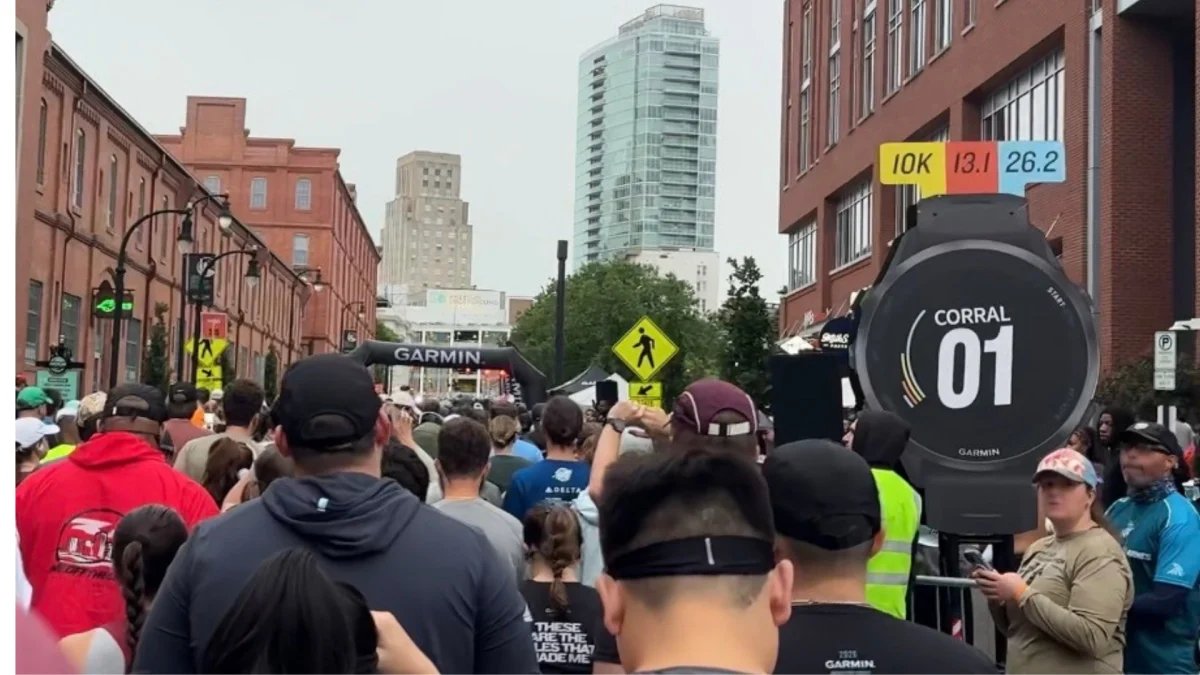
Last weekend, I strapped two Garmin running watches to my wrists and raced a 10K—the top-of-the-line Forerunner 970 on one arm, and the budget-friendly Forerunner 165 Music on the other. Whether you’re toeing the line at your first 5K or chasing a marathon PR, one thing I learned is that even the most powerful running watch in the world won’t help you on race day if you haven’t set it up properly beforehand. Here’s the checklist I wish I’d had before race day.
How to train with a Garmin watch before a race
Once you’ve registered for a race, it’s time to start training. Step one: Set up a training plan in Garmin Connect. Once in the Garmin Connect app, navigate to Training & Planning > Training Plans to browse free plans for distances from 5K to marathons. Once you select a plan and sync it to your watch, daily workouts will push directly to your wrist.
Beginner-friendly Garmin Coach plans are compatible with many models, including Forerunner 55, Vivoactive 5, and Venu 2/3. You start getting daily suggested workouts and more personalized, adaptive training plans with Garmin Run Coach in the more advanced watches, like the Forerunner 165 and 265. Jump up to the 570, you’ll get projected race time and pace. The most advanced coaching features—like real-time stamina and endurance scores—are selling points for higher-end models, like the Forerunner 965 and 970.
Before race week, take a look at your HRV Status and Training Readiness score. In theory, these metrics tell you whether your body has actually absorbed your training, or whether you’ve been digging yourself into a hole. HRV Status is available on the Forerunner 255 and above. Training Readiness is available on the Forerunner 265 and above, including the 955 and 970. The Forerunner 165 gives you a simpler “Body Battery” reading, which is still useful, albeit less granular.
And remember to manually add your race as an event. Open Garmin Connect and go to Training & Planning > Courses, or look for the “Events” section. Add your race by entering the distance, date, and location. This does more than just mark the calendar—on supported watches, it activates a Race Calendar widget and begins surfacing a race-day countdown.
If your race doesn’t show up in the Garmin calendar, but it does have a published GPX or course file, you can download it and load it onto your watch via Garmin Connect. On race day, this gives you turn-by-turn navigation, elevation previews, and the ability to see exactly where you are on course (with compatible watches).
What do you think so far?
How to set up your Garmin watch the night before your race
Here’s the checklist I’ve cooked up after several races with several different watches:
Charge your watch fully. Obvious, but easy to forget after a week of tapering distractions. Plug it in the night before so you start race morning at 100%.
Confirm your data screens. Set up your race activity profile so the data fields you actually want—pace, heart rate, lap pace, distance—are front and center. Go to Settings > Activities & Apps > Running > Data Screens. Edit your screens so you’re not fumbling through menus mid-race. An extra tip here: For racing, less is more. A cluttered screen with eight data fields is harder to read at race pace than two or three big numbers.
Set up alerts. Pace alerts, heart rate alerts, or time alerts can keep you disciplined in the early miles. Set a minimum and maximum pace range if you tend to go out too fast, or a heart rate ceiling if you’re racing by effort. Custom alert configurations are available across most Forerunner models, but heart rate zone alerts and the ability to set complex multi-condition alerts are more robust on the 265 and above.
Configure auto lap. By default, Garmin watches auto-lap every mile or kilometer. For a race, decide whether you want to lap by distance, by the race’s official kilometer markers, or manually. If you want to manually control your laps, which is useful for shorter races like 5Ks, turn off Auto Lap and use the lap button yourself. In the 970 exclusively, you can toggle on the “Timing Gate” option, and your watch will automatically trigger laps as you pass the predefined official course marker, in addition to showing the actual distance run.
Check satellite signal. The night before, open the running activity on your watch and let it acquire a GPS signal. This helps pre-load satellite data so you get a faster lock on race morning.
Set up Garmin’s race day features. On higher-end models, make sure you toggle on any race-specific tools available on your watch. This might include Garmin’s PacePro feature, which gives you a customized pacing plan for your race. Enter your goal time, and it will account for elevation changes and suggest a smart pacing strategy mile by mile.
Another feature I plan to use during my next half-marathon is real-time stamina, available on the 970. This feature estimates how much energy you have left in the tank and projects whether your current pace is sustainable. It’s a great reality check in the middle miles.
How to set your Garmin watch on the morning of your race
Get a GPS lock early. Open your activity before getting into your corral. Wait for the GPS signal indicator to go solid. Don’t start running until you have a clean lock, or your first splits will be inaccurate.
Put on your heart rate monitor (if using one). If you race with a chest strap like the HRM-Pro Plus, strap it on and let it connect to your watch before the start. I personally don’t race with one, but a chest strap will give you more accurate heart rate data when wrist-based optical sensors can struggle to keep up.
Enable music (if using it). If you’re racing with music, queue up your playlist before you get to the start corral. On any watch with “Music” in its name, you can store and play music directly from the watch without your phone.
How to use your Garmin watch during a race
Use the lap button intentionally. Hit the lap button at official mile or kilometer markers if they don’t line up with your auto-lap. This gives you splits that actually reflect the race course rather than GPS-calculated distances that can drift by several seconds per mile.
Glance, don’t stare. It’s easy to become a data zombie mid-race. Train yourself to glance at your watch for one or two numbers—current pace and heart rate, for example—and then get your eyes back on the road. The watch should be a tool, not a distraction.
Trust your training. No watch can run the race for you. At some point, put the data in the background and run on feel. The best use of a race-day watch is to keep you honest in the first half so you have something left for the finish.
What to do on your Garmin watch after a race
Save and sync immediately. When you cross the finish line, let the watch record for a few extra seconds before stopping your activity. (Damn you, Strava tax!) Then sync to Garmin Connect over Bluetooth while your phone is nearby. Your race data, including splits, heart rate graph, and elevation, will all be waiting for you in the app.
Review your race analysis. In Garmin Connect, pull up the race activity and review your pace curve, heart rate response, and cadence data. Look for where you faded, where you had a surge, and how your heart rate tracked to your perceived effort. This is some of the most valuable post-race coaching you can get.
Whether you’re wearing a $199 Forerunner 55 or the $750 Forerunner 970, working through this checklist before race day will make you a smarter, more prepared racer. The fancier watch gives you more tools—but only if you actually know how to use them.