
3 features that make Google Pixel’s “context-aware” voice typing better than any keyboard
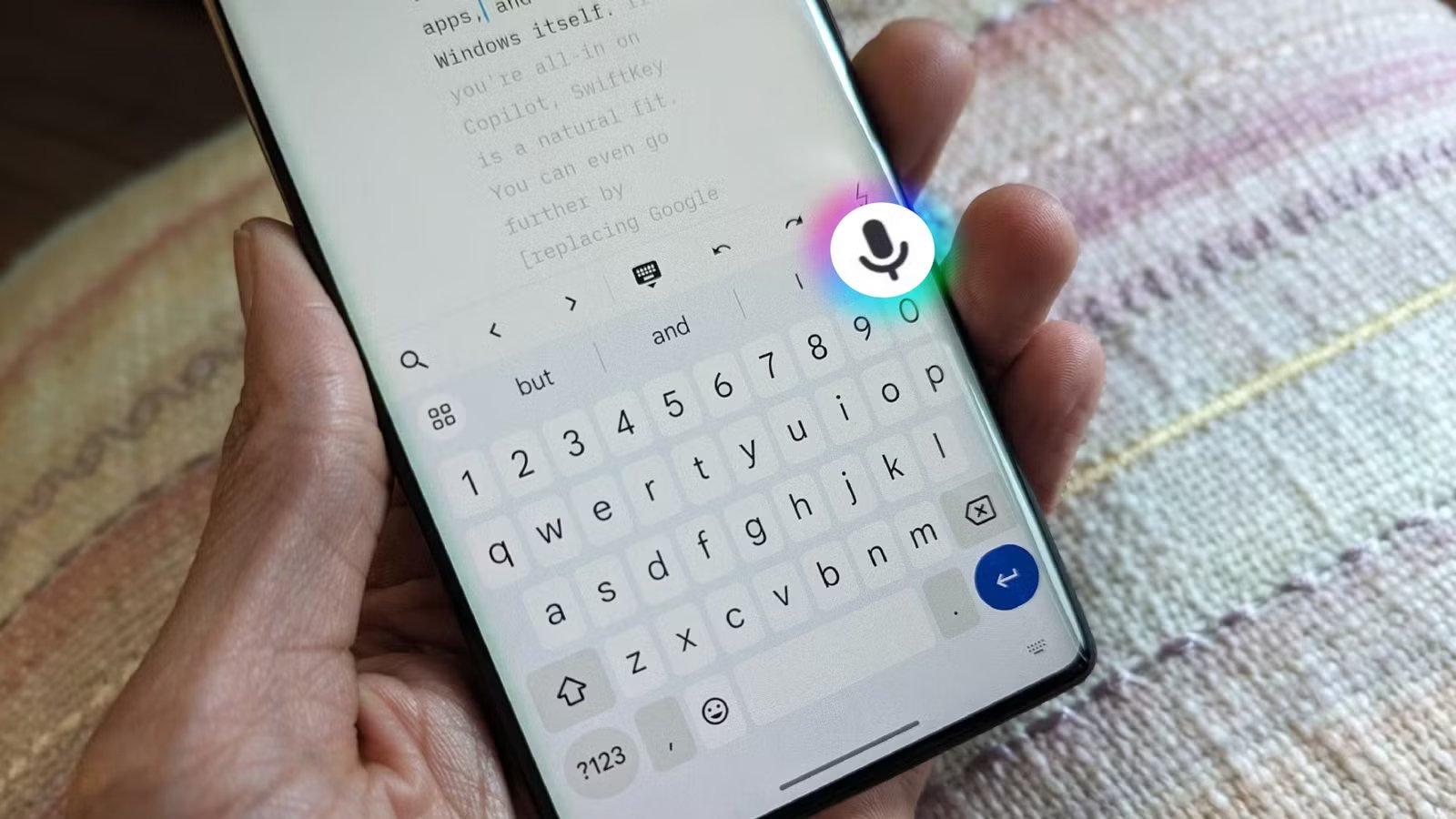
You probably already know Gboard offers a great voice typing experience. What you might not know is that on a Pixel device, Gboard also supports voice editing. You can take a messy voice draft and use commands to make precise edits, formalize it, or rewrite it—all without touching the screen.
Here are three core features that make Gboard’s voice typing on the Pixel better than any other keyboard.

- Brand
-
Google
- SoC
-
Google Tensor G5
- Display
-
6.3-inch Actua OLED, 20:9
- RAM
-
12 GB RAM
- Storage
-
128 GB / 256 GB
- Battery
-
4970mAh
Looking to upgrade to a Pixel but not sure if you need all the bells and whistles of the more expensive models? You won’t be disappointed with the standard Pixel 10 model. Coming in striking colors, Gemini features, and seven years of updates, you can’t go wrong with this purchase.
Use your voice to insert punctuation
Stop poking at your screen just to add a comma

Gboard on Pixel already does a solid job of placing punctuation automatically as you speak. Most of the time, you don’t have to think about it—it just figures out where the commas and periods go.
However, it’s not perfect. Sometimes it misses an obvious comma, and other times you might want to deliberately place punctuation in a specific spot. In those cases, you can simply say the punctuation out loud: “comma,” “period,” “question mark,” “exclamation point,” or “new line.” Based on your pauses and speech patterns, Gboard can usually tell whether you mean the word “exclamation” or the punctuation—and it’s very accurate in my experience.
Beyond punctuation, you can also use your voice to insert emojis into your message. Instead of pausing to find the right emoji, just say—“crying laughing emoji” or “fire emoji”—and it appears inline. Just don’t do this around other people. Saying “laugh emoji” four times in a row is a quick way to get some awkward looks.

Stop using these emojis wrong: 16 emojis people constantly misunderstand
Official names tell one story. Real usage tells another. Here are the emojis most often misread, plus what people actually mean today.
Hands-free text editing
From voice typing to voice editing
If mistakes happen when you type by hand, they’re even more likely when you type by voice. Thankfully, Gboard lets you fix those mistakes using voice commands—so you don’t have to pick up your phone and switch to the keyboard. For example, if the last word you dictated was wrong, you can say “delete last word” to remove it. If the entire transcription is a mess, just say “clear” to wipe it. And if everything looks perfect, say “send” to fire off the message.
The more powerful layer is detailed editing commands which are available on Pixel 8 and later. These let you make precise edits entirely by voice. For example, say you dictated:
“John went to the cafeteria.”
But you meant “Johnny” instead of “John.” You can say, “Change John to Johnny” or “Replace John with Johnny,” and Gboard will fix it automatically. You can also say “delete John” to remove that word. You can delete specific words, capitalize text, and even spell out unusual names character by character. It might sound fiddly at first, but once you get used to it, you can compose and edit an entire message without ever touching your phone.
Here’s a list of all the commands:
- Delete last word: Deletes the most recently spoken/typed word.
- Delete [word]: Deletes the most recent instance of the specific word from the text.
- Clear: Deletes the last sentence. Example: “Good morning. How are you?” > say “Clear” > “Good morning.”
- Clear all: Clears the entire text field. Example: “Meeting at 5pm tomorrow” > say “Clear all” > empty field
- Send: Sends the current message.
- Stop: Turns off the microphone.
- Insert before/after [word]: Inserts a word before or after a specified word. Example: “I want coffee and tea” > say “Insert hot before coffee” > “I want hot coffee and tea”
- Change [word] to [word]: Replaces a specific word. Example: “Let’s meet on Monday” > say “Change Monday to Friday” > “Let’s meet on Friday”
- Spell [word] as [letters]: Forces a custom spelling. Example: Say “The new app is called Nate. [pause] Spell Nate as K-N-A-T-E” > “The new app is called KNATE”
- Capitalize [word]: Capitalizes a specific word. Example: “meeting with dr. Sharma” > say “Capitalize dr.” > “meeting with Dr. Sharma”
- Lowercase [word]: Lowercases a capitalized word. Example: “Send this to HR Department” > say “Lowercase Department” > “Send this to HR department”

I’m a professional writer, but I barely touch my keyboard—here’s what I use instead
Writing is about sharing your thoughts—not using a particular tool!
Proofread and rewrite entire messages with your voice
Just say “fix it”
This feature is available on Pixel 9 and later (excluding the 9a), and it’s where voice typing starts to feel genuinely powerful—and like a genuine keyboard replacement. After you dictate a message, you can say “proofread this” or “fix this,” and the keyboard’s built-in AI will clean it up for you. It corrects typos, grammar mistakes, and punctuation issues, leaving you with a polished, readable message.
As you’d expect, this completely streamlines the editing process. You don’t have to worry about editing mistranscriptions, missed punctuation, or filler words—all of it is handled for you. The main limitation is proper nouns the AI doesn’t recognize—those are usually the only things you’ll need to fix manually.
You can also use this feature to rewrite your message. If your voice drafts tend to be too casual to send to your boss or colleagues, you can say “formalize the text” to make it more professional. You can go the other way, too—make your message more casual, friendly, or even add emojis. You can also expand a short message or shorten a long one.
When you use the rewriter, a new dialog box appears with multiple versions of your message. You can cycle through them by saying “next” or “previous.” Once you find one you like, say “use this,” and it will replace the original text.
There are still some hiccups
It’s not perfect—but it’s almost perfect

The first time you use Gboard’s advanced voice typing features, it can feel a bit hit or miss. That’s not because the feature doesn’t work—it’s because there’s a specific way to use it. However, once you get the hang of it, the workflow feels surprisingly intuitive.

I hated Gboard until I changed these settings
Your Gboard experience can be a lot more pleasant with just a few tweaks.
You need to pause for the commands to register
The most important thing to understand is the pause. You need to pause for at least a second before saying a command—otherwise, it gets typed out as regular text. For example, if you say “John said to delete the word John” without pausing, the entire sentence will be typed. But if you say “John said to [pause] delete the word John,” Gboard will interpret the command and remove “John,” leaving “said to.”
That said, you don’t need to worry about accidental commands. If Gboard isn’t sure whether you meant something as a command or as text, it defaults to typing it out and highlighting it. You can then say “apply” to execute it as a command.
The AI can only ‘see’ the last couple of sentences
Voice commands are limited to the last few sentences from the location of the text cursor. So if you say “delete John,” it removes the most recent instance of “John.” I would’ve liked to have more advanced targeting options, like “delete the second instance of John,” but it isn’t supported—at least not at the time of writing. This limitation also applies to AI features like “fix it” or rewriting, where the AI only processes the last two or three sentences.
However, it’s not a dealbreaker. You can easily tap to select the word manually and then use voice commands to edit it. It’s a viable workaround, but it breaks the hands-free workflow.
The experience is optimized for short messages
Overall, Gboard’s advanced voice typing and voice command features work best with shorter messages. If you’re dictating a couple of sentences, everything feels seamless—the AI can process the full context, and voice edits work reliably.
But if you try dictating a 500-word block and then run “fix it,” the experience becomes a lot more janky due to the limited context window. A practical workaround is to dictate in chunks—two or three sentences at a time—run “fix it,” and then continue. It’s not ideal, but it works.