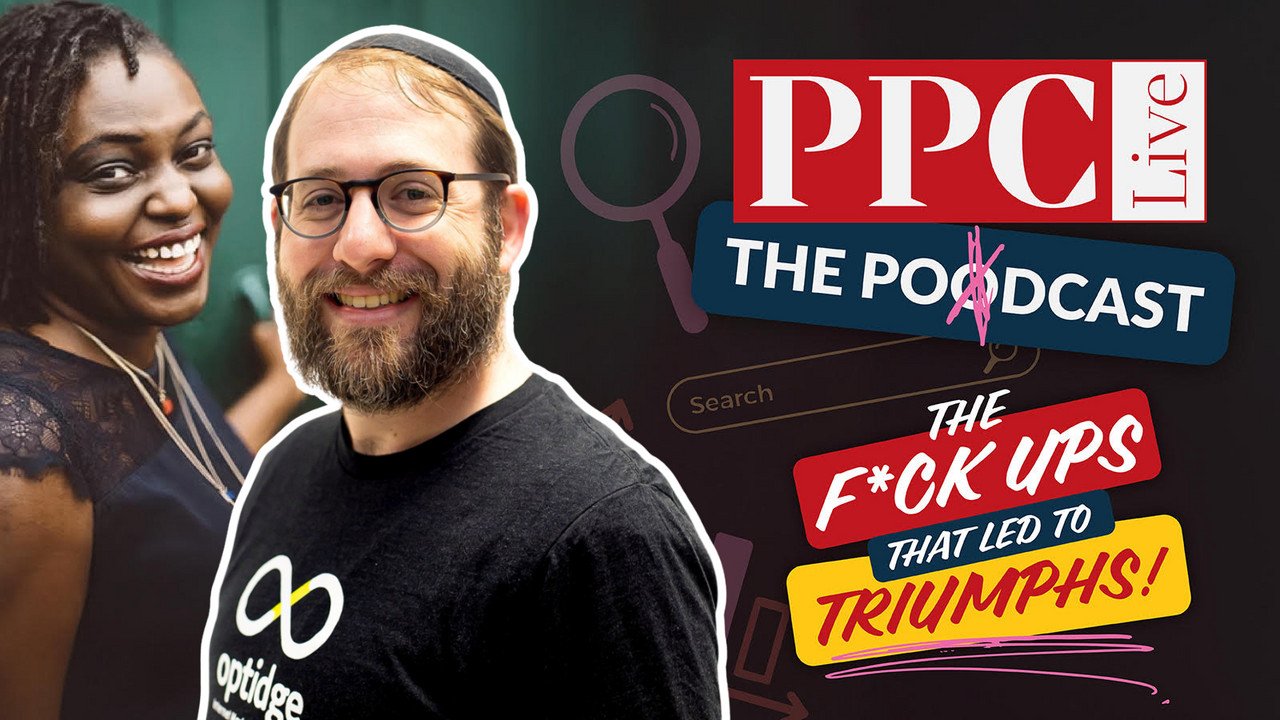
Every PPC professional has a story they wish they could erase. For Danny Gavin, founder of Optidge, it wasn’t a failed bidding strategy or a campaign that overspent. It was something far simpler—and arguably much more painful.
Danny joined me on PPC Live The Podcast, to talk about the technical issue that meant leads generated through a landing page never reached the client. For one to two months, the campaigns continued delivering qualified prospects while the client believed nothing was working.
The mistake that no one spotted
At the time, Danny’s agency was still small, with just a handful of people managing client accounts. One client, an autism therapy provider, was seeing healthy campaign performance inside Google Ads.
Clicks were increasing. Cost per lead looked strong. Everything inside the platform suggested success.
Yet the client was becoming increasingly frustrated because no enquiries were arriving.
The problem wasn’t Google Ads.
It wasn’t the landing page.
It was the email notification system.
Every lead submitted through the form was successfully stored in the database, but a technical failure meant the notification emails stopped reaching the client. Since neither side realised the emails had failed, the issue continued unnoticed for weeks.
By the time the problem was discovered, dozens of leads had gone cold.
Why the emotional impact was worse than the technical problem
For Danny, the financial loss wasn’t the hardest part. The hardest part was feeling that his agency had let the client down. Because the client was someone he knew personally, the mistake felt deeply personal.
His team had spent weeks proudly reporting positive campaign performance while the client saw no return from their investment.That disconnect created feelings of guilt, regret and helplessness.
As Danny explained, it felt as though they had taken the client’s money without delivering value—even though the campaigns themselves had actually worked.
Honesty became the first step
When the problem became clear, there was no attempt to hide it. Danny believes honesty is the only viable response when mistakes happen.
Rather than making excuses, the agency investigated immediately, exported every lead stored in the database and supplied the client with everything they had recovered. While many of those opportunities had already gone cold, at least the client had access to the data that still existed.
From there, the focus shifted from blame to prevention.
Building systems that stop the same mistake happening twice
The experience fundamentally changed the agency’s processes.
Instead of relying on a single notification email, they introduced multiple safeguards, including:
- CC’ing the agency into every lead notification.
- Automatically logging every lead into a shared Google Sheet.
- Regularly testing forms to confirm both submissions and notifications work correctly.
- Routinely checking with clients that leads are actually being received.
These checks are now part of the agency’s standard operating procedures rather than assumptions that technology is working correctly.
Why communication matters as much as optimisation
Looking back, Danny believes the technical issue wasn’t the only problem. Communication also failed, no one had asked the simple question: “Are you actually receiving the leads?”
Today, communication is one of Optidge’s core values.
Rather than expecting PPC specialists to handle constant client communication alongside campaign management, the agency introduced dedicated account managers whose primary responsibility is keeping clients informed.
The lesson is simple – campaign metrics alone don’t define success.
Success only happens when the client experiences the results you’re reporting.
Sometimes clients remember how you responded
Initially, the relationship with the client ended. Danny assumed the mistake had permanently damaged any trust they had built.
Years later, however, the same client reached out again about potentially working together. In her email, she described Optidge as the most professional agency she had worked with. It reminded Danny that while clients don’t forget mistakes, they often remember how agencies respond to them.
Transparency, professionalism and genuine effort to improve can leave a stronger impression than perfection.
Common PPC mistakes Danny still sees today
Although the incident happened years ago, Danny believes many agencies continue making similar mistakes.
One of the biggest is focusing purely on traffic rather than business outcomes. Sending visitors is no longer enough.
Successful lead generation requires understanding what happens after someone clicks.
He regularly audits accounts where agencies fail to:
- Feed qualified lead data back into advertising platforms.
- Review search terms thoroughly and maintain negative keywords.
- Build landing pages tailored to campaign intent.
- Measure lead quality rather than simply counting conversions.
Without these fundamentals, campaign optimisation is based on incomplete information.
Where AI is genuinely helping lead generation
Danny believes AI has significant potential for lead generation—but not in the way many marketers expect.
One of the biggest opportunities is analysing phone calls.
Instead of manually listening to every conversation, AI can now:
- Generate call transcripts.
- Categorise calls by quality.
- Identify whether a call became a genuine sales opportunity.
- Help agencies feed qualified conversion data back into Google Ads.
This allows optimisation based on real business outcomes instead of surface-level metrics.
Why AI still needs human oversight
Despite embracing AI, Danny warns against treating it as an infallible system.
Like automation inside advertising platforms, AI can make mistakes, misunderstand context and confidently produce incorrect conclusions.
For industries with strict privacy requirements, such as healthcare, AI may not even be suitable for handling sensitive customer information.
His advice is to trust AI enough to improve efficiency—but always verify its work.
Human expertise remains essential.
The biggest lesson
Every PPC professional will make mistakes.
What defines a successful agency isn’t avoiding them completely.
It’s being honest when they happen, fixing the immediate problem, putting safeguards in place and ensuring the same issue never happens again.
As Danny puts it, a mistake only becomes valuable when you’ve genuinely learned from it.
Search Engine Land is owned by Semrush. We remain committed to providing high-quality coverage of marketing topics. Unless otherwise noted, this page’s content was written by either an employee or a paid contractor of Semrush Inc.