Buying a sports car usually means accepting one painful reality: depreciation. Most performance cars lose value quickly, especially once newer and faster models arrive. While practical cars like the Toyota Corolla are famous for holding their value well, enthusiast cars typically sit on the opposite end of the spectrum.
That isn’t always true, though. A handful of sports cars have quietly become some of the best long-term buys on the market, retaining their value shockingly well over time. Some even depreciate slower than the Corolla, which is practically the gold standard for affordable resale value.
Part of that comes down to reliability and a strong brand reputation. Another part is much simpler. A lot of the cars on this list offer something increasingly rare in today’s market. They feel special. As sports cars continue disappearing and electrification takes over, simple, enthusiast-focused machines are becoming more desirable, and the used market is responding accordingly.
In order to give you the most up-to-date and accurate information possible, the data used to compile this article was sourced from various manufacturer websites and other authoritative sources, such as the EPA and CarEdge. Models are ranked based on their estimated residual value after five years on the road.

These 5 sporty cars keep smiles high and fuel bills low
Fun behind the wheel doesn’t have to mean pain at the pump.
5
2026 Lexus LC
Residual value after 5 years: 70.7%
In our minds, the Lexus LC is one of the most underrated sports cars of this generation. We think it got some flak early on for not living up to the legendary LFA, but we think that’s an unfair comparison. Yes, the LC isn’t quite as sharp as some of its rivals, but its fantastic design, satisfying transmission, and sonorous V-8 make it one of the most emotionally stirring cars ever built.
Performance and efficiency
Years of ownership | Depreciation |
|---|---|
1 | 3% |
3 | 9% |
5 | 29% |
7 | 40% |
10 | 49% |
Lexus is considered to be the builder of the most reliable cars on the road right now, which is a big part of what gives the LC its edge. Interestingly, the Japanese grand tourer holds its value exceptionally well in its first three years on the road. Its value then dips pretty heavily before smoothing out again. We think the LC is a future classic, though, and in years to come we will see its value begin to rise again, but that’s more opinion than fact.
Pros
Cons
- Its rivals are much more performance-oriented
- Infotainment system feels a little outdated
- Brake pedal is too spongy for a sports car
4
2026 Lexus RC
Residual value after 5 years: 72.6%
Unfortunately, Lexus decided last year that the RC had a good run, and it was time to retire the nameplate. There are still a couple of new models on dealership floors, but they are steadily being bought up. The RC isn’t so much a dedicated sports car as it is a baby grand tourer, focusing a little more on comfortable cruising than canyon-carving handling. This rubs some people the wrong way, but we think time will soften people’s attitudes to this fantastic-looking coupe.
Long-term depreciation
Years of ownership | Depreciation |
|---|---|
1 | 12% |
3 | 24% |
5 | 27% |
7 | 33% |
10 | 49% |
The RC isn’t the greatest deal when bought new, which is why its first three years show slightly steeper depreciation than some other models on this list. However, the fact that it’s a Lexus means that depreciation inevitably plateaus. Its excellent build quality and the proven reliability of its platform mean that even much older models will outlast some new cars.
The high-octane F models, which come equipped with a roaring V-8, hold their value a little better than the RC 350. The 350 isn’t far behind at all, though.
Pros
- Very comfortable interior
- Excellent curb appeal
- Very good reputation for reliability
Cons
- Rear seat is very small
- Not as powerful or sharp as some rivals
- Quite heavy on fuel

Hyundai’s $35,000 sedan embarrasses the Toyota GR Corolla on the track
A family sedan that punches far above its weight on track.
3
2026 Subaru BRZ
Residual value after 5 years: 76.4%
Built in partnership with Toyota, the BRZ is one of the most affordable and enjoyable sports cars on the market. It may start a little more expensive than some of its rivals at $35,860, but that’s because trim levels have been cut, and the starting model comes pretty well-equipped. Regardless, you buy a BRZ for the driving experience, and in that regard it is an extremely successful car.
Long-term depreciation
Years of ownership | Depreciation |
|---|---|
1 | 13% |
3 | 17% |
5 | 24% |
7 | 27% |
10 | 42% |
Cheap and simple cars always tend to hold their value on the used market, which is why the BRZ does so well in the long run. It’s cheap to buy, cheap to run, and cheap to maintain. Where sports cars are usually a pretty bad investment, the Subaru BRZ is a lower-risk purchase than you might think.
Pros
- More practical than it looks
- More engaging than most sports cars, regardless of price
- Very easy to live with
Cons
- Doesn’t sound as good as you’d hope
- A little heavier than a Miata
- Not as sharp as the Toyota GR86
2
2026 Toyota GR86
Residual value after 5 years: 76.9%

All the things that make the Subaru BRZ so good also make the GR86 good. This is because they were developed in partnership, side-by-side. It must be said that the GR86 is definitely the more enthusiast-focused car, with a livelier setup that is better suited for the track. In contrast, the BRZ feels like the softer option, but that makes it an easier car to live with if you plan to drive it every day.
Long term depreciation
Years of ownership | Depreciation |
|---|---|
1 | 12% |
3 | 15% |
5 | 23% |
7 | 27% |
10 | 42% |
Toyota’s affordable sports car benefits from a number of factors that help keep its depreciation low. The badge that it wears on its nose is obviously a major plus, with Toyota being synonymous with quality and reliability. Like the BRZ, the raw simplicity of the GR86 also helps quite a bit, with there being few differences between three-year-old and five-year-old models, for example.
Pros
- Affordable starting price
- One of the best steering setups out there
- The torque dip from the original 86 is gone
Cons
- Quiet a lot of road noise in the cabin
- Rear seats mostly exist to be folded away
- Very simple and old-fashioned dashboard setup

Why buy a new Toyota Corolla when this 275-horsepower hot hatch costs less?
A budget-friendly buy with serious performance credentials.
1
2026 Toyota GR Supra
Residual value after 5 years: 76.9%
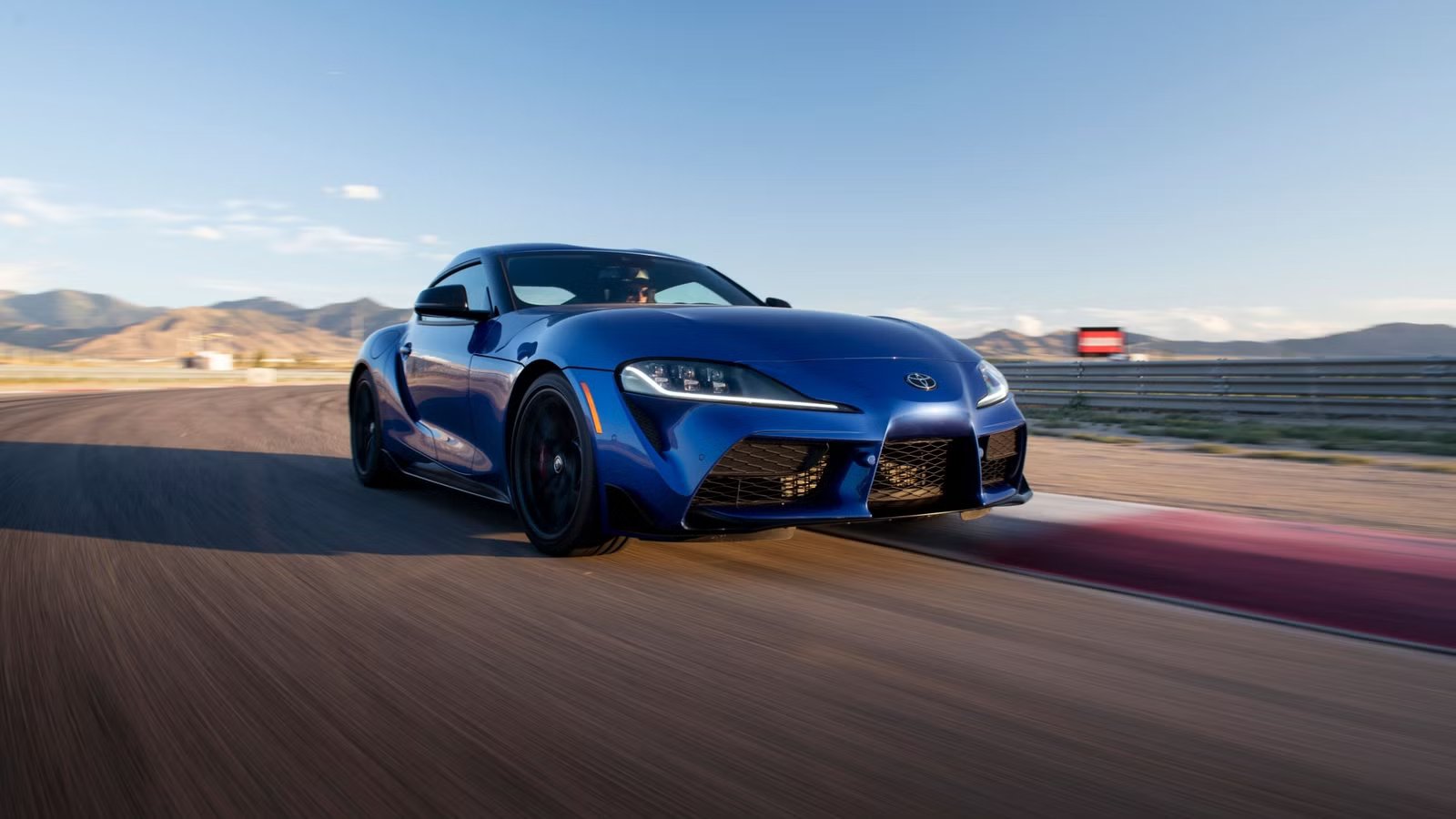
Like the GR86, the GR Supra is another product of partnership, but this time it’s with BMW. When the new Supra launched, it was ridiculed for being a rebadged BMW Z4 because it has a B58 inline-six under the hood. Regardless of how big a role each automaker played, the result is one of the sharpest and most rewarding sports cars made.
Long-term depreciation
Years of ownership | Depreciation |
|---|---|
1 | 2% |
3 | 19% |
5 | 23% |
7 | 27% |
10 | 42% |
In the long run, CarEdge estimates that the GR Supra will retain the percentage of its value as the GR86. However, in the first two years, they claim that depreciation is basically nonexistent. This may be because Toyota has announced that they will be discontinuing the Supra, meaning demand for one is exceptionally high right now.
Pros
- Smooth and powerful turbo-six under the hood
- Pretty affordable compared to its rivals
- Can still be had with a manual transmission
Cons
- Somewhat cramped interior
- No option for Android Auto
- Hard to get your hands on one right now
These sports cars are better investments than you’d expect
On average, a new car will lose around half its value in its first five years on the road. The Toyota Corolla is particularly good at holding its value, only depreciating by around 35 percent. Usually, buying a sports car means you’re accepting that you’re going to lose more money in the long run, but its worth it for the fun you’re getting. The above cars, however, prove that isn’t always the case. If you shop smart, you can get a sports car that is easier on your wallet than a lot of new cars in the long run.